
Most enclosed trailer flooring is plywood laid over the frame's crossmembers, and treated plywood is the common choice because it holds up well under most work use. The upgrades worth considering are RTP coated flooring or rhino liner for messy loads, tread plate where the ramp door takes the most wear, and properly mounted anchor points. Protecting the floor comes down to keeping water out, spreading heavy loads, and catching soft spots early. Here is how each one works, plus the signs a floor needs repair.
Key takeaways: Enclosed trailer floors are typically plywood over crossmembers. RTP coating, rhino liner, or rubber mats protect against liquids and stains. Water from roof seams and door seals is the main threat to a wood floor, so inspect those first. Mount D-rings through the floor with a backing plate, and probe for soft spots near the edges and doorway at least once a year.
What Enclosed Trailer Flooring Is Made Of
Enclosed trailer flooring is the deck panel inside the box that carries the load, usually plywood fastened to the steel or aluminum crossmembers of the trailer frame. The floor works together with the frame underneath it, so the condition of both determines how much the trailer can safely carry and how long it lasts.
Plywood Over the Frame
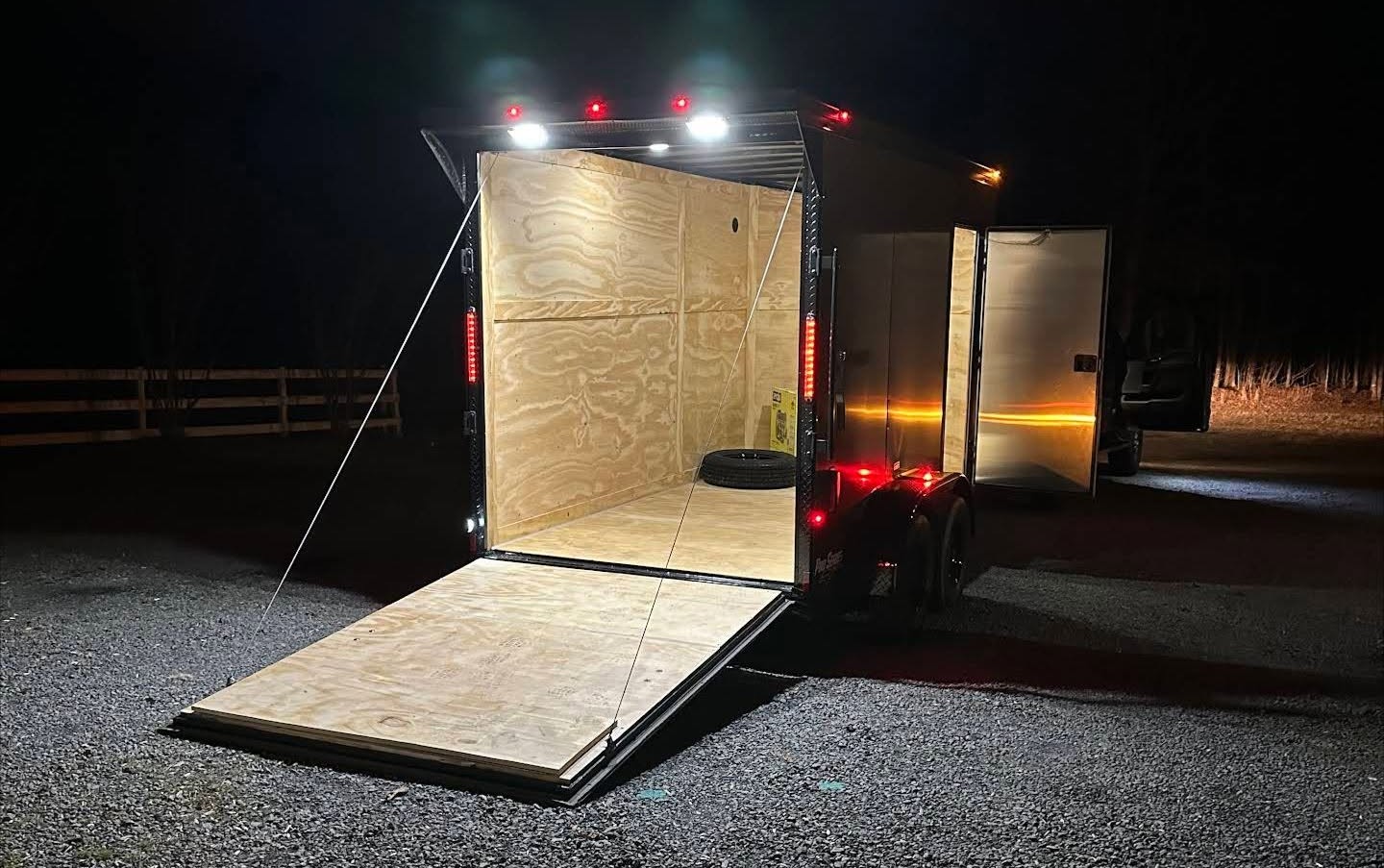
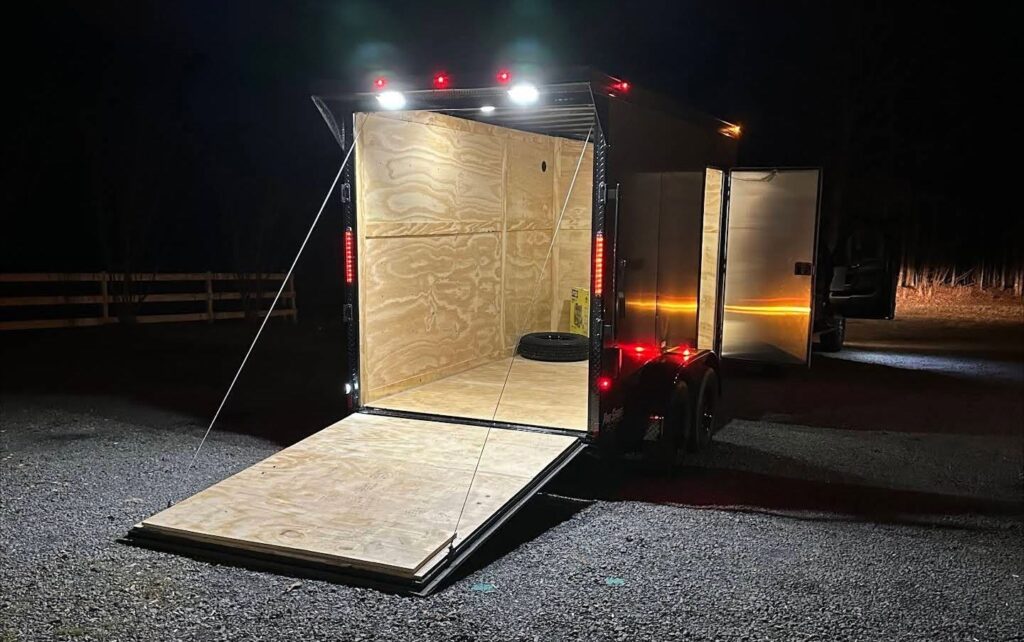
Plywood is the standard floor for enclosed cargo trailers. Treated plywood is common and holds up well under most work use. Underneath it, a steel-frame trailer uses steel crossmembers and an all-aluminum trailer uses aluminum, and steel frames gradually rust at welds and fastener holes while aluminum frames do not. Our comparison of aluminum vs. steel enclosed trailers explains how the frame choice affects weight and long-term maintenance.
Ask for the Floor Specs
Floor thickness and the spacing of the crossmembers underneath vary by manufacturer, model, and option package. If you haul heavy or concentrated loads, ask for both numbers on the specific trailer you are considering, and compare them across the models on your list. A spec sheet answers that question faster than a walk-around can.
Enclosed Trailer Flooring Upgrades
A bare plywood floor does the job for general hauling. Upgrades earn their keep when your loads are messy, heavy, or rolled in every day. Ask before you decide, because ordering a trailer built with the options from the factory can cost less than buying it plain and upfitting it later.
RTP, Rhino Liner, and Rubber Mats
Flooring choices, including RTP coated flooring or rhino liner, hold up better than plain plywood. For trades that work with liquids or materials that stain, a coating seals the surface of the wood and makes cleanup easier. Rubber mats add a removable layer you can pull out, clean, and replace when worn.
Tread Plate at the Ramp Door
The ramp door and the floor just inside it take heavy wear, because every load rolls or walks across them. Heavier ramp door builds use aluminum or steel tread plate. If you load wheeled equipment daily, ask about tread plate on the ramp and at the threshold when you spec a new trailer.
Match the Floor to What You Haul
The right floor setup depends on your cargo. A trailer that carries boxed inventory needs less protection than one that hauls mowers with wet decks or pallets of supplies.
Wheeled Equipment and Heavy Loads
Wheels and heavy items concentrate weight on small patches of floor, and tie-downs pull hard on wherever they are anchored. D-rings mount through the floor with a backing plate underneath, which spreads the load across the structure instead of tearing at the plywood. Our step-by-step guide on how to install D-rings in a trailer shows how they go in, and a common recessed pan D-ring is stamped with a 1,665 lb safe working load.
Liquids, Chemicals, and Messy Loads
Fuel, paint, cleaning chemicals, and wet equipment all soak into bare wood. If your trailer doubles as a workspace, a coated floor or mats are worth adding from day one. Our guide to using an enclosed trailer as a mobile workshop covers floor, shelving, and power choices for work trailers.
How to Protect an Enclosed Trailer Floor
Water and neglect cause much of the floor damage you can prevent. Both are easier to stop early than to repair later.
Keep Water Out of the Box
Water that gets past a roof seam or door seal ends up on the floor, and it shows up as staining, soft spots in the ceiling, or rust tracking down from roof seams. Check the roof seams, front and rear caps, and the rubber seals around every door at least twice a year. A small leak caught early is often a sealant fix. The same leak left for a year can mean replacing floor panels.
Daily Habits That Extend Floor Life
Sweep out dirt and debris, which hold moisture against the wood. Let wet equipment drain or dry before you close the doors for the night, and wipe up fuel or chemical spills right away. Rotate where heavy items sit if you can, so the same patch of floor does not take every load.
Signs Your Trailer Floor Needs Repair
Probe the floor in several locations, paying attention to the edges and anywhere moisture would pool. Any area that gives under pressure instead of resisting indicates structural compromise and needs attention before the trailer is loaded again.
Soft Spots, Rot, and the Frame Underneath
Edges and corners trap moisture and degrade first, so start there and work toward the center. When you can get under the trailer, inspect the crossmembers and supports for rust and section loss at the same time, because a sound plywood panel on a rusted crossmember is still a weak floor. Replacing floor boards or panels on a simple wood floor is manageable for someone with basic carpentry skills, but rust in the crossmembers or frame is a job for a trailer shop.
Enclosed Trailers and Floor Help at NC Trailers
We sell enclosed cargo trailers at both our Thomasville and Winston-Salem lots and stock D-rings, backing plates, straps, and other cargo control hardware. If you are unsure whether a soft floor is a weekend fix or a structural problem, our trailer service team can tell you what you are dealing with.
If you are shopping for a new trailer, browse our enclosed trailer inventory and ask about floor upgrades for the way you work, or call 336-475-5054 to have our team look at the floor on the trailer you already own.
Trailer floor going soft?
Call us to set up a service appointment, or just to get some honest advice about keeping your trailer on the road.
 About the Author