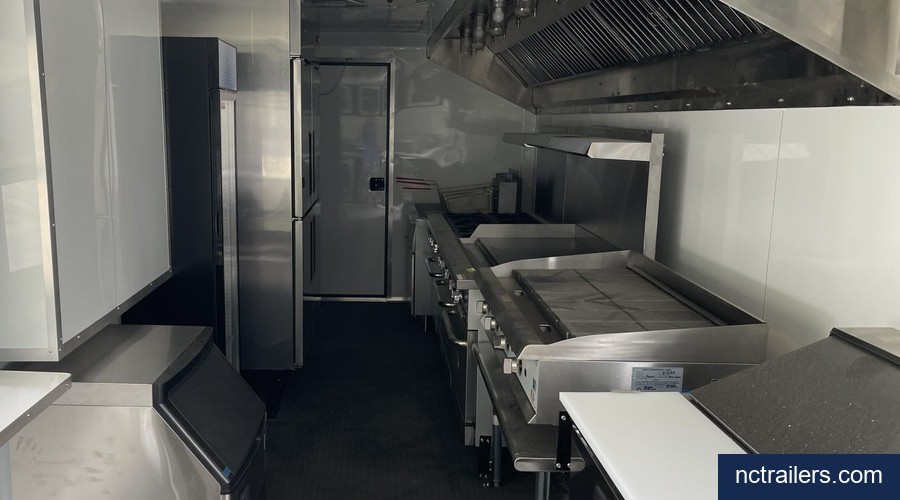
If your menu uses open flame or produces grease-laden vapors, plan for a commercial exhaust hood with a fire suppression system for your food trailer before you buy, because it has to be designed around your cooking equipment. In North Carolina, the county health department reviews the trailer against the Food Code, and local fire officials can require their own permit for the hood and suppression system. Getting both right at the build stage is easier than retrofitting after the trailer is finished. Here is what the system does, when your menu needs one, who to call, and how to spec it into a build.
Key takeaways: Any open-flame cooking needs a fire suppression system integrated with the hood. Ventilation is sized to the type and number of cooking appliances, so choose your menu and cook line first. Talk to your county health department and local fire marshal before you buy. Building the hood and suppression into the trailer from the start is often more cost effective than upfitting later.
What a Food Trailer Fire Suppression System Does
A food trailer fire suppression system is an automatic fire extinguishing system built into the exhaust hood above cooking appliances that produce grease-laden vapors. The hood captures smoke, heat, and grease from the cook line, and the suppression system protects the appliances under it. The two are designed as a unit, so budget them as one line item.
Hood, Exhaust, and Suppression Work Together
The hood and exhaust fan move smoke and heat out of the trailer, and the suppression system covers the cooking equipment beneath the hood. A trailer with a commercial fryer and a griddle needs a significantly more capable exhaust system than one with only a steam table and a coffee machine. That means the size and layout of the system follow the appliances, not the size of the trailer.
Does Your Menu Need a Fire Suppression System for a Food Trailer?
The answer starts with your cooking equipment. Make a list of every appliance you plan to run, along with its fuel type, before you look at trailers.
Open Flame and Grease-Producing Equipment
Any open-flame cooking equipment requires a fire suppression system integrated with the hood. Deep fryers and flat-top grills used for proteins are common examples of equipment that produce grease-laden vapors. Local health departments typically set hood and exhaust requirements by the type and number of appliances. Get the requirements for your equipment from your county before you buy a trailer, because a lighter menu may need less.
Who Sets the Rules in North Carolina
Two offices shape what goes into your hood system, and each looks at the trailer for different reasons. Contact both early, ideally before you finalize the layout.
The County Health Department
County environmental health departments issue the food service permits required to operate a food trailer in North Carolina and inspect the trailer against the North Carolina Food Code before issuing a permit. Counties also require you to submit plans for review before a mobile food unit is built, so settle the hood placement and equipment list with the county early. Our overview of North Carolina food trailer health code requirements covers the permit process in more detail.
The Local Fire Marshal
Fire permits vary by jurisdiction, and a food trailer can work across several of them. Ask the fire marshal in each place you plan to operate whether you need a permit for a trailer with appliances that produce smoke or grease-laden vapors. Local hood requirements can be detailed. The Lincoln County Fire Marshal's general hood and fire suppression permit application, for example, asks for shop drawings, the installer's North Carolina contractor license number, a list of every appliance under the hood and its fuel type, a K-type fire extinguisher, a 5 lb ABC extinguisher in the kitchen area, and shunt cut-offs for electrical and gas.
Plan the Hood Into the Build
The hood ties into the cook line, the power, and the fuel system, so it is hard to move once the kitchen is built. Design around it from the first sketch.
Place the Cook Line First
The hood and fire suppression follow the cooking equipment, so place the cook line before anything else in the layout. Decide which appliances sit side by side under the hood, then build prep, service, and cleaning zones around them. Our guide to concession trailer layouts shows three common floor plans and where the hood fits in each.
Build It In or Upfit Later
It is often more cost effective to have a trailer built with the options you need than to buy it plain and upfit it afterward. Cooking hoods are one of the things we can special-order on a concession trailer, along with serving windows, sinks, water systems, and electrical packages. For budgeting, a factory-installed hood on a Cynergy build runs about $4,500 to $6,500 and fire suppression about $5,500 to $6,500. We price a fully equipped 24-foot concession trailer with commercial cooking equipment, an exhaust hood, fire suppression, a generator, and a finished interior at $55,000 to $75,000 or more.
Extinguishers and Ongoing Upkeep
A suppression system is not the only fire protection a food trailer carries. Portable extinguishers and regular service keep the whole setup ready for inspection and for an actual emergency.
Portable Extinguishers and Service Records
Keep extinguishers easy to reach near the cook line, and match their type to your local requirements, since a jurisdiction like Lincoln County calls for both a K-type and an ABC extinguisher alongside a hood system. Ask your suppression installer for the inspection and service schedule your system requires, and keep the service paperwork with the trailer so it is on hand at inspection. Train everyone who works the cook line on where the extinguishers are and how the suppression system is activated, following the installer's instructions.
Concession Trailers at NC Trailers
We sell concession trailers at both our Thomasville and Winston-Salem lots and can special-order units built to your specifications, including cooking hoods. If you are worried about buying a trailer and then learning it will not pass for your menu, we can work through your equipment list and build options with you first, so you take a clear plan to your county and fire marshal. The county and the fire marshal have the final say. Financing is available on concession trailers through our trailer financing program.
Bring your menu and equipment list to either lot, browse our concession trailer inventory, or call 336-475-5054 to talk through hood and suppression options for your build.
Planning a food trailer build?
Call us, stop by either lot, or fill out the financing request just below and we will get right back to you.
 About the Author