

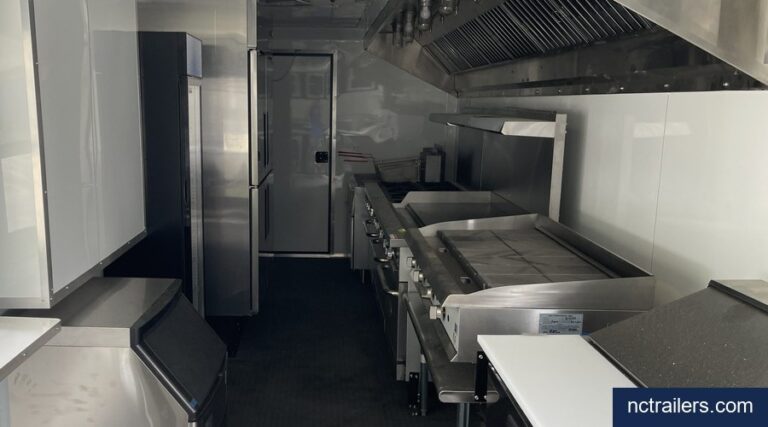
Food Trailer Fire Suppression and Hood Systems: What NC Vendors Need to Know
If your menu uses open flame or produces grease-laden vapors, plan for a commercial exhaust hood with a fire suppression system for your food trailer before you buy, because it has to be designed around your cooking equipment. In North Carolina, the county health department reviews the trailer against the Food Code, and local fire officials can require their own permit for the hood and suppression system. Getting both right at the build stage is
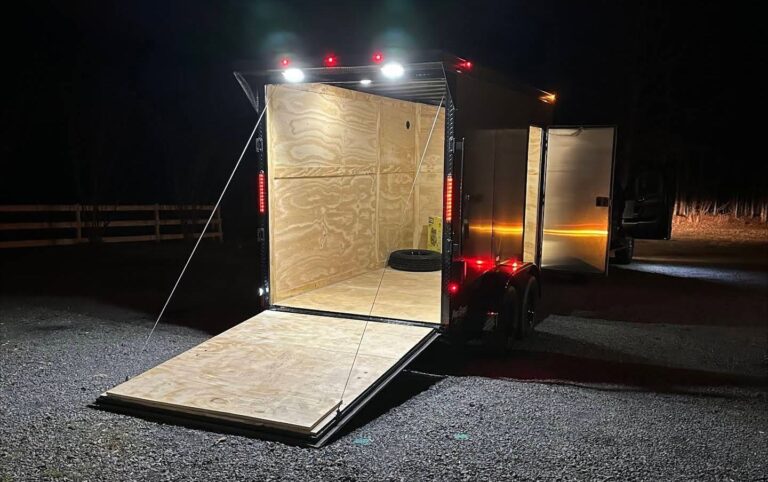
Enclosed Trailer Flooring: Options and How to Protect It
Most enclosed trailer flooring is plywood laid over the frame's crossmembers, and treated plywood is the common choice because it holds up well under most work use. The upgrades worth considering are RTP coated flooring or rhino liner for messy loads, tread plate where the ramp door takes the most wear, and properly mounted anchor points. Protecting the floor comes down to keeping water out, spreading heavy loads, and catching soft spots early. Here is
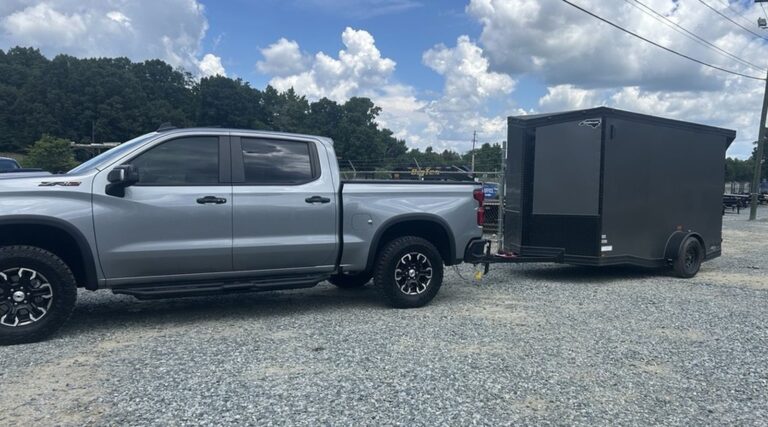
Enclosed Motorcycle Trailers: Sizing, Tie-Downs, and What to Look For
The right enclosed motorcycle trailer is sized for the number of bikes you haul, has a rear door opening tall enough to clear them, loads through a ramp door, and has solid anchor points and a wheel chock for every bike. A standard enclosed cargo trailer handles motorcycles well if you check those four things before you buy. Here is how to size it, what to measure at the door, which tie-down hardware to use,
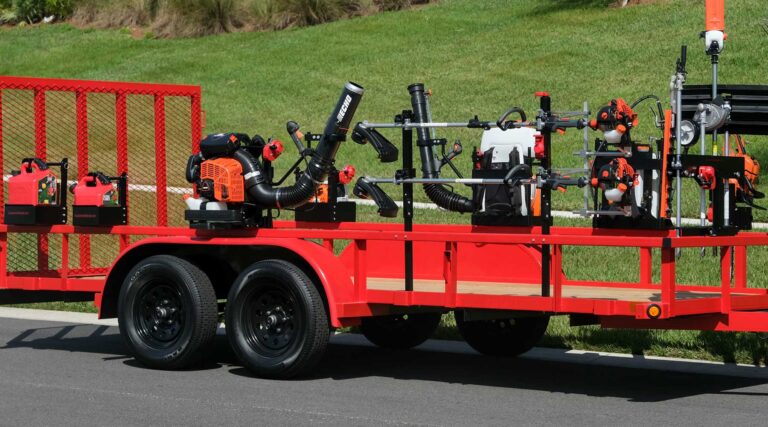
Landscape Trailer Setup: Racks, Tie-Downs, and a Layout That Loads Fast
A good landscape trailer setup puts every piece of equipment in a fixed spot: the heaviest machine just forward of the axle, trimmers, blowers, and hand tools locked in racks on the rails or walls, fuel cans upright in their own racks, and everything strapped so nothing can shift. Set it up once and your crew loads faster and loses less at the job site. Here is how to plan the layout, which racks are
Used Enclosed Trailers: What to Inspect Before You Buy
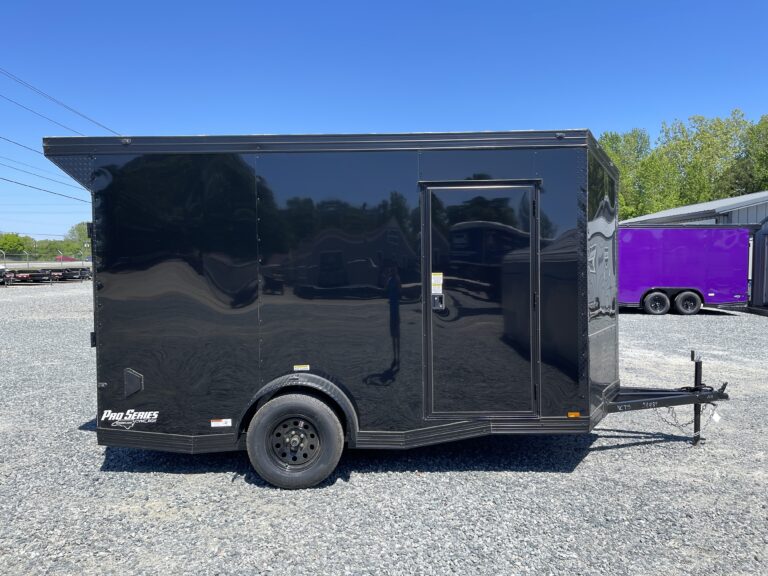
Used enclosed trailers can save you real money, but the box that protects cargo also hides problems, so inspect the roof seams, walls, floor, doors, frame, running gear, and paperwork before you pay. Plan on twenty to thirty minutes, not a quick walk-around, and bring a flashlight so you can see under the frame and into the corners. Here is the order we would go in, what counts as normal wear, what is a dealbreaker,
Trailer Couplers Explained: Types, Inspection, and When to Replace One
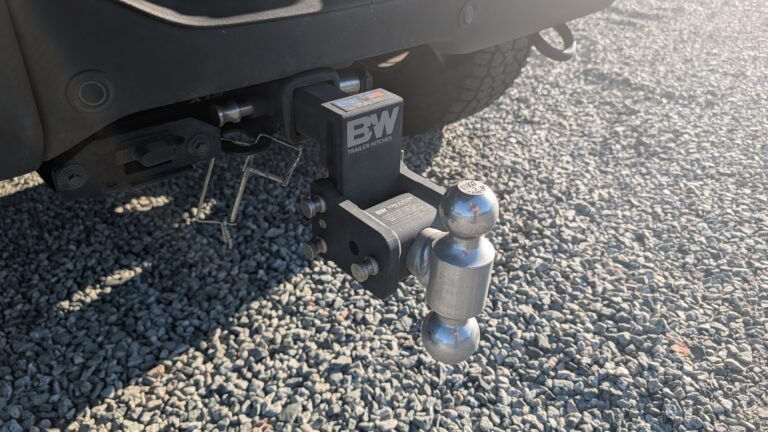
A trailer coupler is the part on the front of the tongue that locks over your hitch ball, and it is the one point holding the trailer to the truck. Match the ball size and rating stamped on the coupler to your hitch, check the latch before every trip, and replace the coupler when it wears instead of adjusting around it. Here is how the common types work, what to check, what North Carolina requires
Food Truck vs. Food Trailer: Which One Fits Your Business?
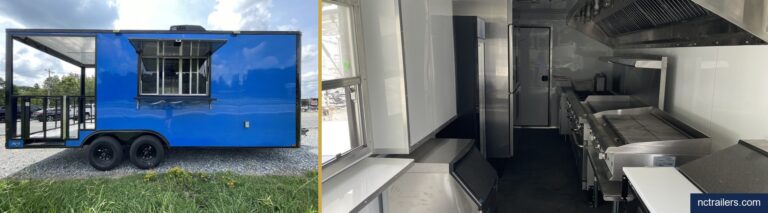
The food truck vs. food trailer decision comes down to one thing: a food truck has its own engine, and a food trailer gets towed by a separate vehicle. That one difference drives your startup cost, what happens when something breaks, how you move between stops, and how you set up once you get there. A food trailer, also called a concession trailer, usually gets you more kitchen for the money. A food truck is
Enclosed Drop Deck Trailers: How Air-Tow Loads at Ground Level
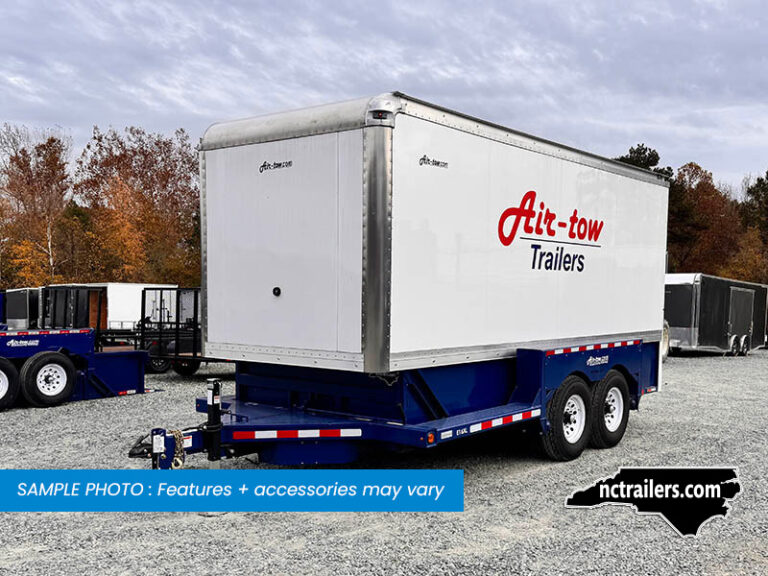
An enclosed drop deck trailer is an enclosed cargo trailer whose whole floor lowers to the ground for loading, then lifts back to travel height. Instead of pushing a heavy load up a ramp door, you roll it straight in at ground level. Air-Tow builds its enclosed line this way, and we carry Air-Tow at both of our lots. For a closer look, see our post on Air-Tow single-axle trailers. Here is how the design

Concession Trailer Layouts That Maximize a Small Kitchen Footprint
A good concession trailer layout gives every job its own zone and lines those zones up in the order food moves: storage, then prep, then the cook line, then the service window. In a small trailer that order matters more than square footage. Get it right and two people can work a rush without running into each other. This guide covers the zones every kitchen needs, three common floor plans, where the sinks and hood
Cargo Trailers: Open vs. Enclosed and How to Decide
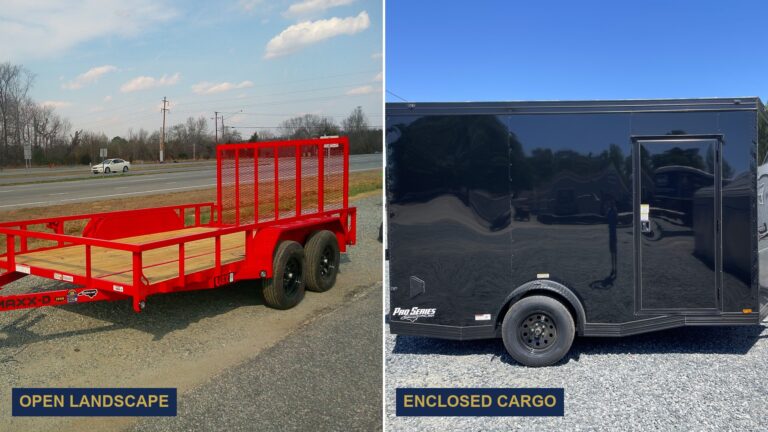
Cargo trailers come in two basic forms. Open trailers have a flat deck with low or mesh sides. Enclosed trailers have walls, a roof and locking doors. Which one you need comes down to whether the load has to be locked up or kept dry, how heavy it is, and how you get it on the trailer. Open trailers cost less for the same capacity and load faster. Enclosed trailers protect what you haul and
Food Trailer Fire Suppression and Hood Systems: What NC Vendors Need to Know
If your menu uses open flame or produces grease-laden vapors, plan for a commercial exhaust hood with a fire suppression system for your food trailer before you buy, because it has to be designed around your cooking equipment. In North Carolina, the county health department reviews the trailer against the Food Code, and local fire officials can require their own permit for the hood and suppression system. Getting both right at the build stage is
Enclosed Trailer Flooring: Options and How to Protect It
Most enclosed trailer flooring is plywood laid over the frame's crossmembers, and treated plywood is the common choice because it holds up well under most work use. The upgrades worth considering are RTP coated flooring or rhino liner for messy loads, tread plate where the ramp door takes the most wear, and properly mounted anchor points. Protecting the floor comes down to keeping water out, spreading heavy loads, and catching soft spots early. Here is
Enclosed Motorcycle Trailers: Sizing, Tie-Downs, and What to Look For
The right enclosed motorcycle trailer is sized for the number of bikes you haul, has a rear door opening tall enough to clear them, loads through a ramp door, and has solid anchor points and a wheel chock for every bike. A standard enclosed cargo trailer handles motorcycles well if you check those four things before you buy. Here is how to size it, what to measure at the door, which tie-down hardware to use,
Landscape Trailer Setup: Racks, Tie-Downs, and a Layout That Loads Fast
A good landscape trailer setup puts every piece of equipment in a fixed spot: the heaviest machine just forward of the axle, trimmers, blowers, and hand tools locked in racks on the rails or walls, fuel cans upright in their own racks, and everything strapped so nothing can shift. Set it up once and your crew loads faster and loses less at the job site. Here is how to plan the layout, which racks are
Used Enclosed Trailers: What to Inspect Before You Buy
Used enclosed trailers can save you real money, but the box that protects cargo also hides problems, so inspect the roof seams, walls, floor, doors, frame, running gear, and paperwork before you pay. Plan on twenty to thirty minutes, not a quick walk-around, and bring a flashlight so you can see under the frame and into the corners. Here is the order we would go in, what counts as normal wear, what is a dealbreaker,
Trailer Couplers Explained: Types, Inspection, and When to Replace One
A trailer coupler is the part on the front of the tongue that locks over your hitch ball, and it is the one point holding the trailer to the truck. Match the ball size and rating stamped on the coupler to your hitch, check the latch before every trip, and replace the coupler when it wears instead of adjusting around it. Here is how the common types work, what to check, what North Carolina requires
Food Truck vs. Food Trailer: Which One Fits Your Business?
The food truck vs. food trailer decision comes down to one thing: a food truck has its own engine, and a food trailer gets towed by a separate vehicle. That one difference drives your startup cost, what happens when something breaks, how you move between stops, and how you set up once you get there. A food trailer, also called a concession trailer, usually gets you more kitchen for the money. A food truck is
Enclosed Drop Deck Trailers: How Air-Tow Loads at Ground Level
An enclosed drop deck trailer is an enclosed cargo trailer whose whole floor lowers to the ground for loading, then lifts back to travel height. Instead of pushing a heavy load up a ramp door, you roll it straight in at ground level. Air-Tow builds its enclosed line this way, and we carry Air-Tow at both of our lots. For a closer look, see our post on Air-Tow single-axle trailers. Here is how the design
Concession Trailer Layouts That Maximize a Small Kitchen Footprint
A good concession trailer layout gives every job its own zone and lines those zones up in the order food moves: storage, then prep, then the cook line, then the service window. In a small trailer that order matters more than square footage. Get it right and two people can work a rush without running into each other. This guide covers the zones every kitchen needs, three common floor plans, where the sinks and hood
Cargo Trailers: Open vs. Enclosed and How to Decide
Cargo trailers come in two basic forms. Open trailers have a flat deck with low or mesh sides. Enclosed trailers have walls, a roof and locking doors. Which one you need comes down to whether the load has to be locked up or kept dry, how heavy it is, and how you get it on the trailer. Open trailers cost less for the same capacity and load faster. Enclosed trailers protect what you haul and