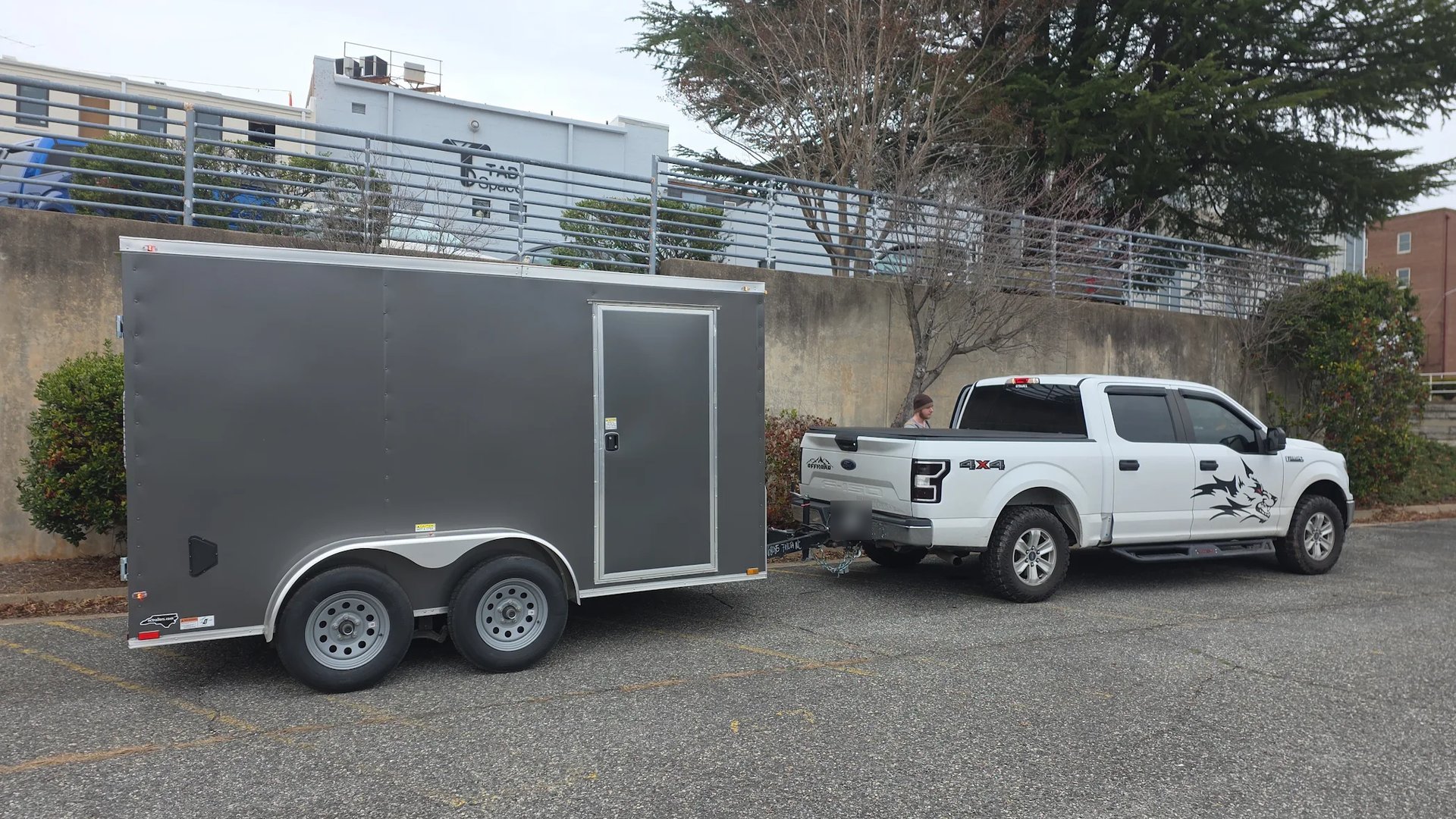

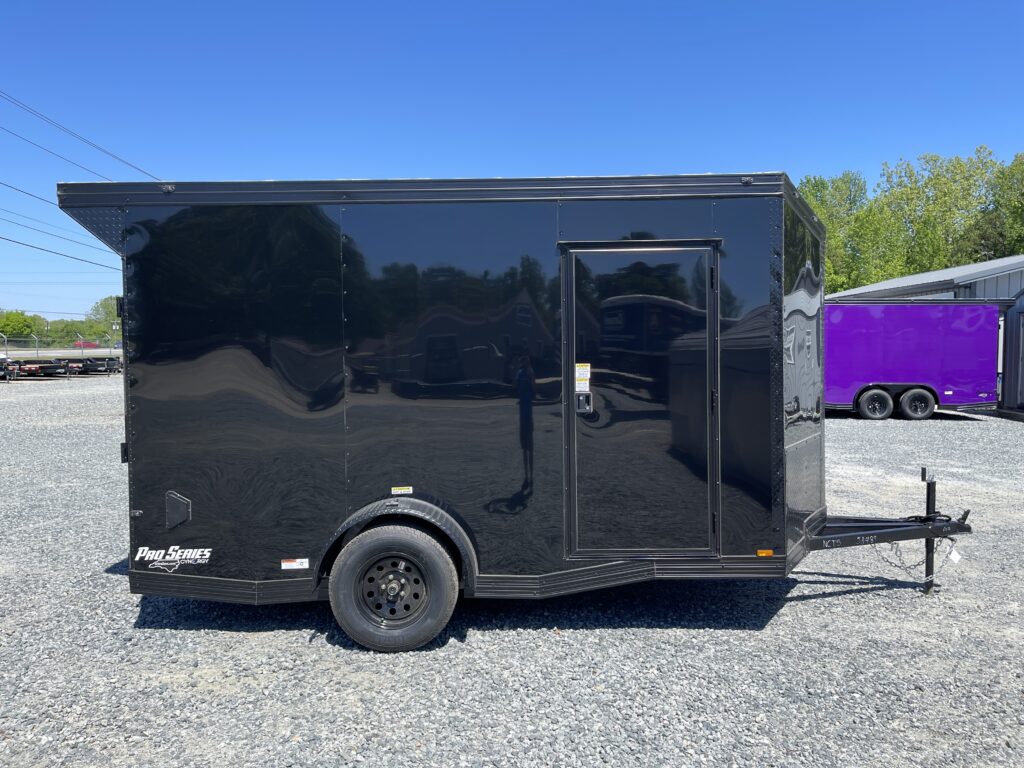
Contractors, tradespeople, and small business operators have been repurposing enclosed cargo trailers as mobile workspaces for years, and the logic is straightforward. A properly outfitted enclosed trailer travels with the truck, stays on the job site, secures tools and materials overnight, and gives the crew a protected workspace that does not depend on what the job site provides. For trades where showing up with everything needed and leaving with everything secured is part of running a tight operation, a work trailer is not a luxury. It is practical infrastructure.
This guide covers the most common work uses for enclosed trailers, the interior features worth looking for when buying for work use, how to approach shelving, lighting, and power for specific trades, and what size range makes sense for different applications.
Common Work Uses for Enclosed Trailers
Enclosed trailers serve as mobile workspaces across a wide range of trades and service businesses. The applications share a common set of needs: secure tool and material storage, a weatherproof environment for work or staging, and the ability to move the entire setup between job sites without multiple trips.
Electrical and Plumbing Contractors
Electrical and plumbing contractors typically work from a truck and trailer combination because the volume and variety of materials they carry exceeds what a truck bed can hold. Conduit, wire spools, fittings, fixtures, tools, and test equipment all need to travel with the crew and be accessible on site. An enclosed trailer with organized shelving allows materials to be staged by job type, reduces the time spent searching for what is needed, and keeps everything secure when the crew is not on site. A trailer outfitted with interior lighting and a small workbench also gives electricians and plumbers a protected space to prep materials at the job site rather than working in the weather.
Mobile Detailing and Service Businesses
Mobile detailing businesses, mobile pet groomers, and similar service operations use enclosed trailers as a self-contained work environment that travels to the customer. The trailer carries the equipment, the chemicals, and in some setups the water supply and waste water tank. For detailers, having a consistent, organized setup in an enclosed trailer means every job starts from the same baseline rather than unpacking and reassembling a setup from scratch at each location. These trailers benefit from interior lighting, power access for equipment, and wall-mounted organization systems that keep supplies accessible without creating trip hazards.
Tool Storage and Job Site Supply Trailers
General contractors, remodeling companies, and small construction operations use enclosed trailers as a mobile tool and supply depot that parks at the job site for the duration of a project. Power tools, hand tools, fasteners, adhesives, and job-specific materials all live in the trailer rather than being transported from a shop location every day. The trailer locks at night, which is a meaningful advantage on longer projects where tool security on an open job site is a real concern. This use case generally benefits from a larger trailer size, heavy-duty shelving rated for the tool weight, and an E-track or similar anchor system for securing larger equipment during transport.
Key Interior Features to Look for When Buying for Work Use
Not all enclosed trailers are built to the same standard, and the differences that matter for work use are different from those that matter for personal cargo hauling.
Interior wall finish affects how easily the trailer can be outfitted with shelving and organization systems. Trailers with V-nose aluminum or wood-lined walls accept screws and mounting hardware directly, making it straightforward to install shelving without specialized fasteners. Smooth wall interiors are cleaner but require surface-mount anchor tracks or standalone shelving units.
Floor material matters for work trailers that will see heavy tools and materials loaded daily. Treated plywood floors are common and hold up well under most work use. For trades that work with liquids or materials that can stain, a floor coating or rubber mat system makes cleanup easier and protects the floor from long-term damage.
Door configuration should match how the trailer will be accessed. Rear barn doors that open fully provide the widest access for loading equipment and materials. A side door in addition to the rear door is useful for work trailers where crew members need to access the interior while the rear is blocked by a vehicle or equipment. Verify that door hardware is commercial-grade, as work trailer doors see significantly more cycles than personal use trailers.
Shelving, Lighting, and Power Options for Outfitting a Work Trailer
Outfitting a work trailer effectively is a separate project from purchasing it, but the decisions are connected. Buying a trailer that does not support the outfitting you need wastes both the purchase price and the outfitting investment.
Shelving systems for work trailers range from off-the-shelf bin and shelf units designed for van and trailer interiors to custom welded steel shelving for heavier applications. For most trade work trailers, an adjustable aluminum shelving system that can be reconfigured as the job mix changes is the most practical choice. E-track or ladder rack systems along the side walls provide anchor points for securing larger equipment, pipe, conduit, and lumber during transport.
Interior LED lighting makes the trailer usable during early morning staging and late afternoon cleanup, which are the times of day when contractors are most often working out of the trailer. LED strips mounted to the ceiling provide broad, even illumination without the heat of incandescent fixtures. For trailers that will be used as a workspace rather than just storage, task lighting above the workbench area improves the quality of the work environment significantly.
Power options depend on how the trailer will be used. A trailer wired with a shore power connection and interior outlets allows power tools, battery chargers, and a work light to run off a standard 120V connection when site power is available. A trailer with its own generator provides power independence on sites without available electricity. For most trade work trailers, a shore power connection with a 30-amp inlet is the practical baseline that handles the majority of power needs.
Size Recommendations for Different Trades
The right trailer size for a work application depends on how many crew members need to access and work in the trailer simultaneously, how much material needs to be carried, and whether the trailer will stay at a job site for an extended period or move daily.
Solo operators and two-person crews doing residential service work, such as mobile detailers, mobile pet groomers, or residential electrical contractors, typically find a 7x14 or 7x16 trailer provides adequate space for organized tool and material storage without being difficult to maneuver in residential neighborhoods. Larger trailers in the 8.5x20 range suit operations that need more floor space for material staging, a dedicated workbench area, or enough room for two or three crew members to work inside simultaneously.
Interior height is worth specifying carefully for work trailers. A six-foot interior height allows most adults to work comfortably inside without constant head contact. Trailers with a lower interior height are practical for storage but not for extended work sessions.
NC Trailers Enclosed Trailer Inventory and Financing
NC Trailers carries enclosed cargo trailers across a range of sizes suited for work use at both the Thomasville and Winston-Salem locations. Walking through the interior of a specific configuration before purchasing is the most reliable way to assess whether the dimensions, wall finish, and door configuration fit the outfitting plan for your trade.
Current available units are listed on the enclosed trailer inventory page. The team at either location can walk through which configurations are best suited for specific work applications and answer questions about interior dimensions and outfitting compatibility.
Financing is available for qualified buyers through NC Trailers' lender network. A work trailer purchased for business use may also qualify for Section 179 tax treatment in the year of purchase, which is worth discussing with your accountant before year end. More information on financing options is on the trailer financing page. Contractors and tradespeople from across North Carolina, including those working out of the Charlotte, Greensboro, and Raleigh markets, visit both NC Trailers locations to evaluate enclosed trailer options for work use.
An enclosed trailer that is outfitted well for the trade it serves pays back in time saved, tools secured, and the ability to show up at every job site fully prepared. Getting the size, interior features, and power setup right from the start is what makes the difference between a trailer that works and one that is always just one more modification away from being useful.
Looking for an enclosed trailer to work out of?
Call us, stop by either lot, or fill out the financing request just below and we will get right back to you.
 About the Author