
The food truck vs. food trailer decision comes down to one thing: a food truck has its own engine, and a food trailer gets towed by a separate vehicle. That one difference drives your startup cost, what happens when something breaks, how you move between stops, and how you set up once you get there. A food trailer, also called a concession trailer, usually gets you more kitchen for the money. A food truck is easier to move several times a day. Here is how the two compare so you can pick the one that fits how you plan to sell.
Key takeaways: A food trailer keeps the kitchen separate from the vehicle, so engine trouble does not park your kitchen. A food truck needs no tow vehicle and gets in and out of a spot faster. In North Carolina both are permitted as mobile food units, and both have to operate out of a commissary. The deciding questions are how often you move in a day and whether you already own a truck that can pull the trailer.
How a Food Truck and a Food Trailer Differ
A food truck is a self-propelled vehicle with a kitchen built into it. A food trailer is a kitchen built on a trailer chassis that you tow behind a truck. Both can carry the same equipment, serve the same menu, and pass the same health inspection. The difference is whether the engine and the kitchen are one unit or two.
The Kitchen and the Engine
On a food truck, the kitchen and the drivetrain share one vehicle, so the engine, transmission, and kitchen all wear out on the same clock. A food trailer has no engine at all. You can tow it with a pickup you already own, and once the trailer is set up for the day, the truck is free for other work.
How North Carolina Classifies Both
North Carolina's food rules treat both as mobile food units. The Catawba County Environmental Health guide, which lays out the state rules in 15A NCAC 18A Section .2600, quotes the definition: a food establishment or pushcart designed to be readily moved and vend food. That covers trucks and trailers alike, so the permit process is largely the same either way.
Food Truck vs. Food Trailer Cost Comparison
Cost is where the two split the most, because a food truck's price includes a commercial vehicle and a food trailer's does not.
| Factor | Food Truck | Food Trailer |
|---|---|---|
| Vehicle | Engine and drivetrain built in | Needs a separate tow vehicle |
| Startup cost | Includes the cost of a commercial vehicle | Kitchen and trailer only, plus a tow vehicle if you do not own one |
| Mechanical downtime | Engine trouble takes the kitchen out of service | Tow vehicle repairs do not affect the kitchen |
| Moving between stops | Drive away quickly | Hitch, unhitch, and level at each stop |
| Kitchen space for the money | Limited by the vehicle body | Usually more kitchen per dollar |
What a Concession Trailer Costs
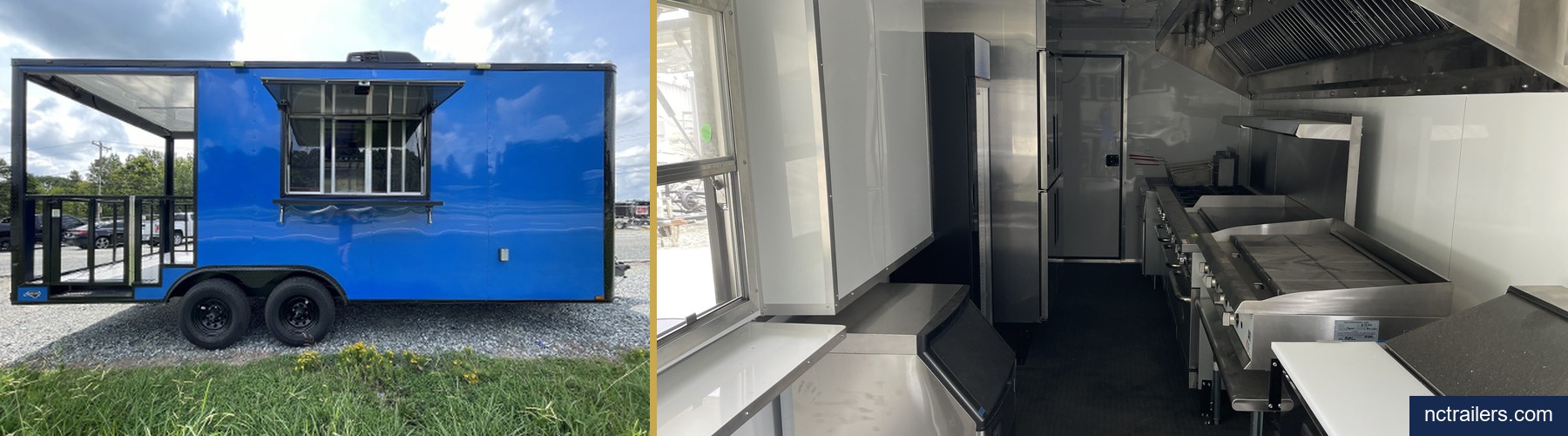
A basic 10-foot concession trailer with a finished interior and a few appliances starts around $15,000 to $25,000. A fully equipped 24-foot trailer with commercial cooking equipment, an exhaust hood, fire suppression, a generator, and a finished interior runs $55,000 to $75,000 and up, and the cooking equipment package drives most of that high end. Budget $500 to $2,500 a year for maintenance, depending on size, options, mileage, and how many generators you run. Our breakdown of what it really costs to own a concession trailer walks through years one through three.
Factor In the Tow Vehicle
A food trailer only saves money if you have, or can afford, a truck rated to tow it loaded. A fully built concession trailer is heavy, so check its loaded weight against your truck's towing capacity before you buy. If you already own a capable truck, the trailer's cost advantage is real. If you have to buy one, put that in the comparison too.
Permits and Commissary Rules in North Carolina
Food trucks and food trailers follow the same North Carolina permit rules, so the format does not change your paperwork much. Plan on a county food service permit, which typically runs $100 to $500, and a commissary kitchen.
The Commissary Requirement
A mobile food unit has to operate in conjunction with a permitted restaurant, food stand, or commissary and report to it at least once a day for supplies, cleaning, and servicing. The county where the commissary sits issues the permit. Line up your commissary agreement early, because it affects where you can practically operate.
Plan Review Before You Build
North Carolina requires plan review before construction and an inspection before the permit is issued. Equipment has to be commercially made and approved by a third-party certifier such as NSF. Truck or trailer, talk to your county environmental health office before you buy, and read our North Carolina food trailer health code guide for the details.
Choosing Between a Food Truck and a Food Trailer
The right choice depends on how often you move during a working day and what you already drive. Most vendors can answer both before they ever price a kitchen, and the answers usually point one way.
When a Food Truck Is the Better Choice
A food truck makes more sense when you move several times a day, like a lunch route with multiple stops. Driving off in a few minutes beats unhitching and leveling a trailer at every location. It also suits owners who do not have a tow vehicle and do not want one, or who work tight city spots where a truck and trailer is hard to maneuver.
When a Food Trailer Is the Better Choice
A food trailer fits vendors who set up for a full day or a weekend at festivals, breweries, farmers markets, and catering jobs. It also fits owners who already have a capable truck and want more kitchen for their budget. And because the kitchen has no engine, a broken-down truck does not take your business off the road. Any other truck rated for the load can pull the trailer.
Start Your Mobile Food Business With NC Trailers
A trailer usually wins on kitchen space for the money and keeps working when your truck is in the shop. A truck wins on speed between stops. We sell concession trailers at our Thomasville and Winston-Salem lots, and our shop installs appliances, plumbing, electrical, propane, and generators in-house. You can also order a trailer with those options built at the factory, which is sometimes more cost effective than upfitting after the fact, so ask before you decide. Browse concession trailers in stock, review our guide to concession trailer financing, and apply for financing to see what your budget supports.
Leaning toward a food trailer?
Call us, stop by either lot, or fill out the financing request just below and we will get right back to you.
 About the Author