
Used enclosed trailers can save you real money, but the box that protects cargo also hides problems, so inspect the roof seams, walls, floor, doors, frame, running gear, and paperwork before you pay. Plan on twenty to thirty minutes, not a quick walk-around, and bring a flashlight so you can see under the frame and into the corners. Here is the order we would go in, what counts as normal wear, what is a dealbreaker, and when new is the better buy.
Key takeaways: Water damage is hard to spot in a used enclosed trailer, so start at the roof and work down. Check door springs, hinges, and seals on every opening. On steel-frame trailers, look for rust at welds and fastener holes. Read the tire date codes, match the VIN to the title, and compare the price against a new unit before you commit.
Why Used Enclosed Trailers Need a Different Inspection
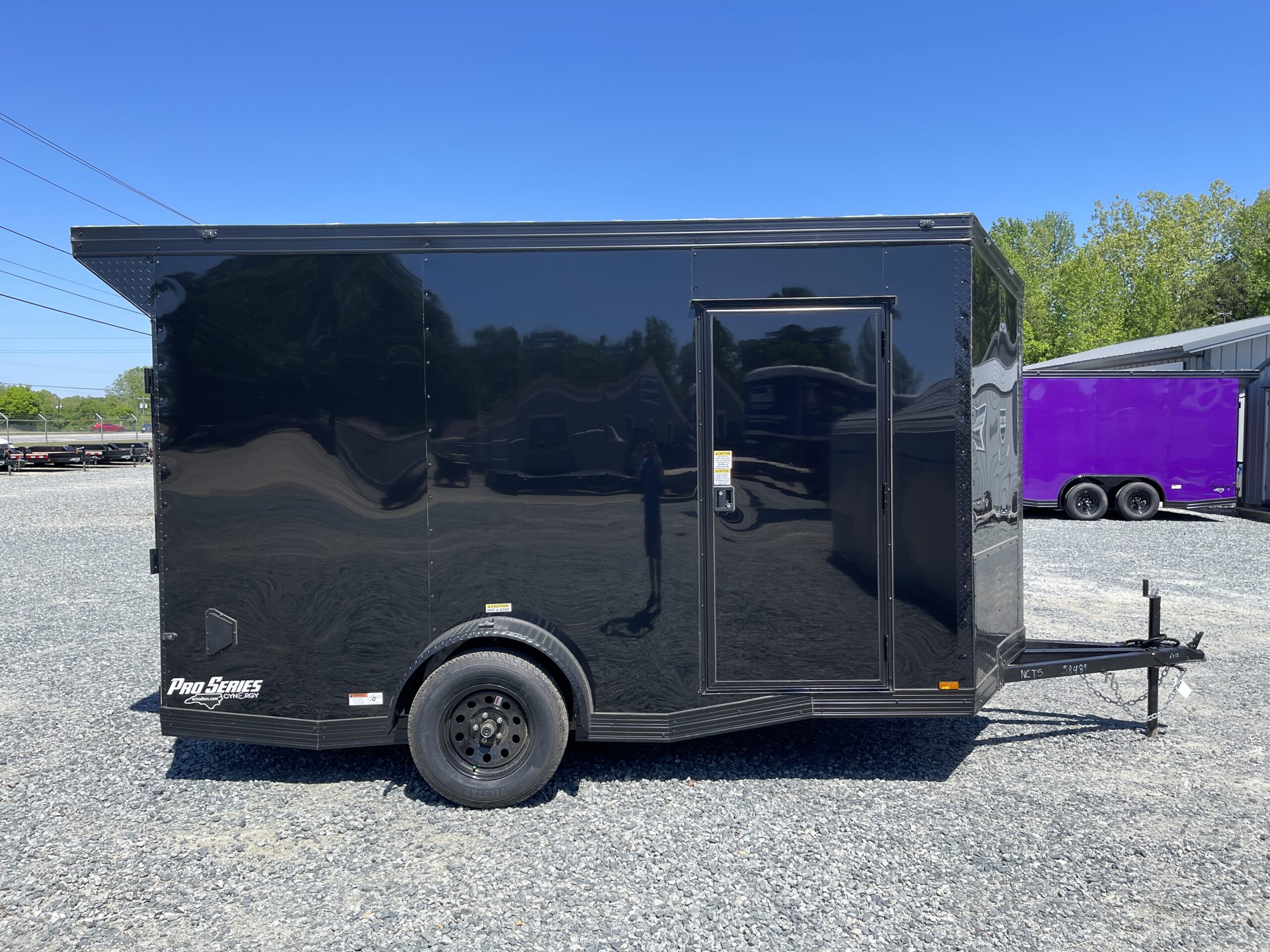
An enclosed trailer, often listed as a cargo trailer, has solid walls, a roof, and lockable doors, built to keep weather and theft away from what you haul. That design means you cannot see the frame, the floor edges, or the inside of the walls from the outside, so a clean exterior proves very little. Open trailers show their problems. Enclosed trailers hide them until you go looking.
What the Box Hides
On most enclosed cargo trailers the exterior skin is aluminum, and the real structure is the frame underneath. Most steel-frame trailers are wrapped in .030 aluminum sheet or .080 polycore aluminum, while all-aluminum models use aluminum for the frame and skin. Steel frames gradually rust at welds and fastener holes, and aluminum frames do not rust but are harder to weld well in the field. Knowing which build you are looking at tells you where to spend your inspection time. Our comparison of aluminum vs. steel enclosed trailers covers the tradeoffs in detail.
Roof, Walls, and Leaks
A slow leak can soak the floor and wall panels of an enclosed trailer for months before anyone notices, which makes water the first thing to rule out. Start overhead and work down, since that is the direction water travels.
Roof Seams and Water Stains
From the outside, look along the roof seams and the front and rear caps for cracked sealant, lifted edges, or patches. Then step inside, close the doors, and look up. Daylight showing at a seam or corner means water gets in too. Stains, swelling, or dark streaks on the ceiling and upper walls show where it has already happened.
Interior Walls and Floor
Press on the wall panels near the floor and around any staining to feel for softness. Walk the full floor, paying extra attention to the front corners and the area behind the ramp door, and feel for soft spots or flex. A floor is one of the simpler trailer components to replace, so a worn floor on an otherwise solid trailer can still be a fair buy. A soft floor next to stained walls is different, because it usually means water has been getting in for a long time.
Doors, Ramps, and Seals
You open the rear door on every load, so its condition matters as much as the size of the box. Work every door through its full range before you agree on a price.
Ramp Door Springs and Hinges
A ramp door is hinged at the bottom and uses spring assist so one person can raise and lower it. The spring hardware usually sits in the header across the top of the rear opening. Lower and raise the door yourself. It should move smoothly and stay under control, and a door that slams down or fights you on the way up points to worn springs or cables. Check the bottom hinge for cracks or repairs and make sure the ramp sits flat on the ground. If you are deciding between door styles, our guide to enclosed trailer ramp doors vs. barn doors explains how each one works.
Side Doors, Latches, and Seals
Open and lock the side door and every rear latch. Look at the rubber seals around each opening for gaps, cracking, or sections that have pulled away, since a bad seal lets in the same water a roof leak does. Locks that stick or latches that do not pull the door tight are cheap to fix but worth noting when you talk price.
Frame, Axles, Tires, and Brakes
The running gear on a used enclosed trailer gets the same checks as any used trailer, but you will be doing them on your back with a flashlight. The table below lists the main points and the warning signs for each.
| Area | What to Check | Warning Sign |
|---|---|---|
| Frame | Main rails, crossmembers, tongue, and welds | Rust that has pitted or flaked the metal, cracks, or repairs |
| Suspension | Leaf springs and spring hangers | Cracks, breaks, or repairs that suggest overloading or impact |
| Tires | Cracks, plugged holes, matching size, and load capacity | Mismatched tires or a date code more than six years old |
| Brakes and bearings | Drums, shoes, magnets, and bearing condition | Grinding, play in the wheel, or no service history |
| Lights | Every running, brake, and turn light | Dead lights the seller cannot explain |
Frame Rust on Steel-Frame Trailers
Surface rust can be wiped off and treated. Rust that has pitted or flaked the metal, especially at a weld, has taken material out of the structure. Cracks or repairs along the frame can also show that the trailer has been overloaded, so ask what it hauled and how often.
Reading the Tire Date Code
Trailer tires age out before they wear out, and NC Trailers recommends replacing them six years from the date code on the sidewall no matter how much tread is left. Federal rules under 49 CFR 574.5 require a tire identification number on the sidewall, and its last four digits show the week and the year the tire was made. A tire ending in 2621, for example, was made in the 26th week of 2021. Budget for a set of tires if the codes are old, even when the tread looks fine.
Paperwork, VIN, and Price
Check the paperwork before you talk numbers. A used trailer is no deal if the seller cannot legally sell it to you.
Matching the VIN to the Title
Find the VIN stamped on the trailer and confirm it matches the title and registration. Ask for valid registration and verify that the seller is the current owner. Irregularities with the title can be a sign of stolen equipment, and that is reason enough to walk away.
When New Is the Better Value
Do not pay more for a used trailer than a comparable new one, and remember the gap shrinks fast once you add tires, seals, or a floor. Price a new trailer of the same size and build in our enclosed trailer inventory before you settle on a used unit. A new trailer comes with a known history, while a used one carries whatever the last owner did to it.
Buying a Used Enclosed Trailer from NC Trailers
We sell new and used trailers at both our Thomasville and Winston-Salem lots, and we take trade-ins. Our pre-owned trailers get inspected before we sell them, which takes a lot of the guesswork out compared with a private sale.
Financing a Used Trailer
Buying used does not mean paying cash. NC Trailers offers financing on used trailers, and our guide to used trailer financing explains how it works and what to check before you apply.
Use this checklist on any used enclosed trailer you look at, wherever you shop. When you are ready to see what we have, browse our used trailer inventory or call 336-475-5054 to ask about used enclosed trailers and used cargo trailers at our Thomasville and Winston-Salem lots.
Shopping for a used enclosed trailer?
Call us, stop by either lot, or fill out the financing request just below and we will get right back to you.
 About the Author