

Trailer plugs and lights: 4-way vs. 7-way, and the lights wide trailers need
The plug at the back of your truck decides what it can do for your trailer. A 4-way flat runs the trailer's lights and nothing else. A 7-way carries those same lights plus the circuit for electric brakes, a 12-volt power line and a reverse-light circuit. This page covers how to tell the two apart, which one your trailer needs, and the extra lights federal rules call for once a trailer is 80 inches wide or more.
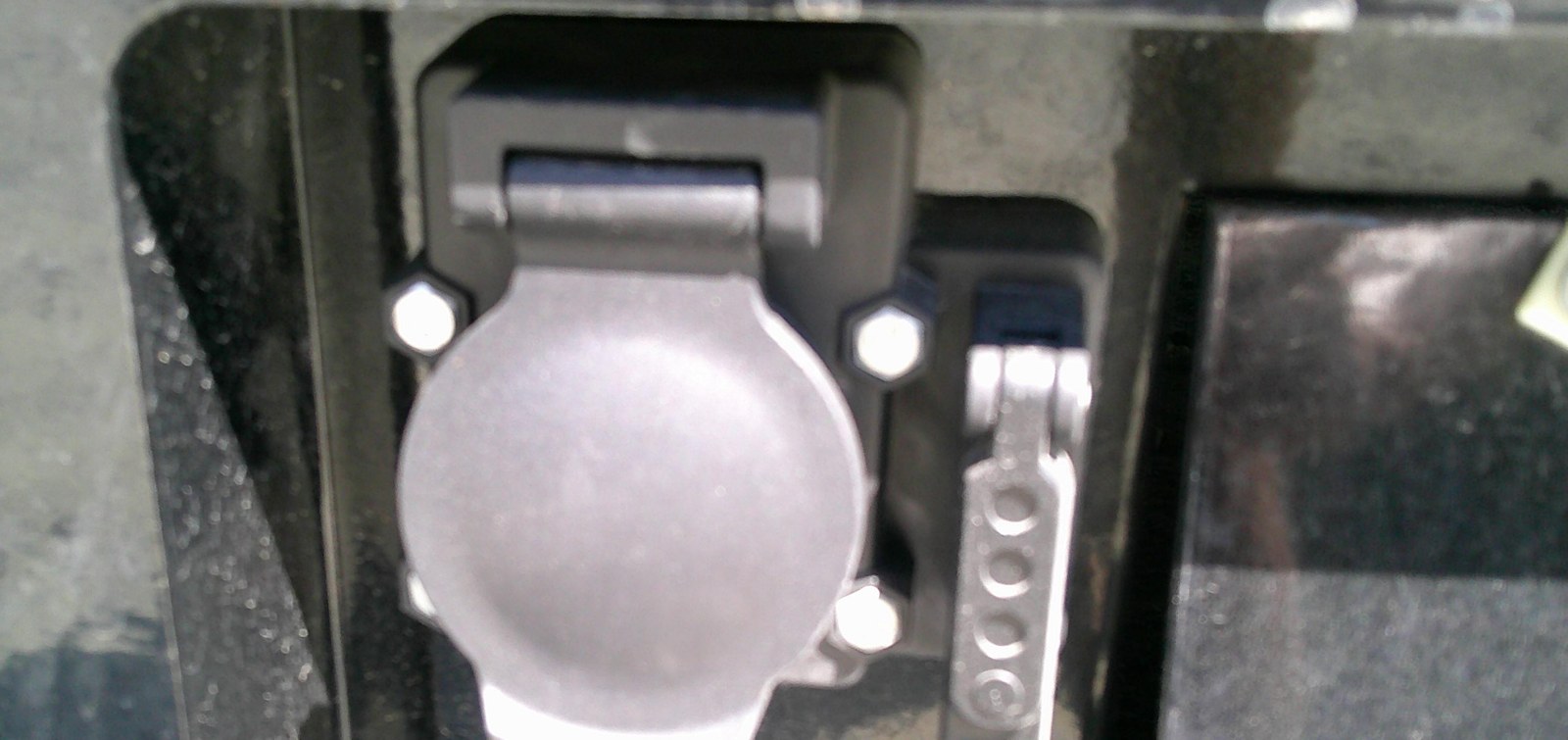
What each plug carries
- 4-way flat: the left turn and brake light, the right turn and brake light, the taillights, and a ground. That is lighting only. There is no wire in a 4-way for trailer brakes.
- 7-way: the same lighting circuits and ground, plus an electric brake circuit, a 12-volt auxiliary power line and backup lights. Hopkins lists exactly those added circuits in the instructions for its 4-flat to 7-blade kit (part 47200).
Which plug does your trailer need?
It comes down to the brakes.
- Electric brakes need a 7-way and a brake controller. Dexter's service manual describes the controller as the part that "provides power to the magnets to actuate the trailer brakes." The 7-way is only the path that power travels through. Without a controller in the truck, the brake wire has nothing on it. Dexter also says to always ground the trailer brakes through the connector.
- Surge brakes do not use a brake wire. A surge actuator on the tongue applies the brakes when the trailer pushes against the truck, so the plug only has to run the lights.
- A trailer with no brakes only needs its lights connected, which a 4-way flat handles.
So when does a trailer need brakes at all? Plan around 3,000 lbs. Most states require brakes above that weight, and South Carolina requires brakes on all wheels plus a breakaway system on any trailer over 3,000 lbs gross. North Carolina's own line is 4,000 lbs, so a 3,500 lb trailer without brakes can be legal in North Carolina and out of compliance the moment it crosses into South Carolina. Our North Carolina trailer laws page has the statutes.
Will an adapter fix it?
Only partly. A 4-flat to 7-way adapter brings the lighting circuits over from the 4-way. Hopkins' instructions for its kit have you wire the brake, auxiliary power and reverse circuits to the truck separately, so the adapter alone will not make electric brakes work. You still need a brake controller wired to the 7-way's brake circuit.
Match wires by what they do, not by color
Hopkins starts its install instructions with one rule: locate the wires on the vehicle by function only. Wire colors are not something to bet your brake lights on. Test each wire with a circuit tester before you connect anything, and seal the connections. Dexter notes that loose or corroded connectors add resistance and cut the voltage that reaches the brake magnets.
The extra lights on trailers 80 inches or wider
Federal Motor Vehicle Safety Standard No. 108 sets the lights every trailer is built with. Every trailer gets taillights, stop lights, turn signals, side markers and reflectors. Once a trailer's overall width reaches 80 inches (2,032 mm), the standard adds these:
- Two amber clearance lamps on the front, marking the full width of the trailer, as near the top as practicable.
- Two red clearance lamps on the rear, marking the width the same way.
- Three red identification lamps on the rear, in a horizontal row as close to the center line as practicable, with the lamp centers 6 to 12 inches apart, as near the top as practicable.
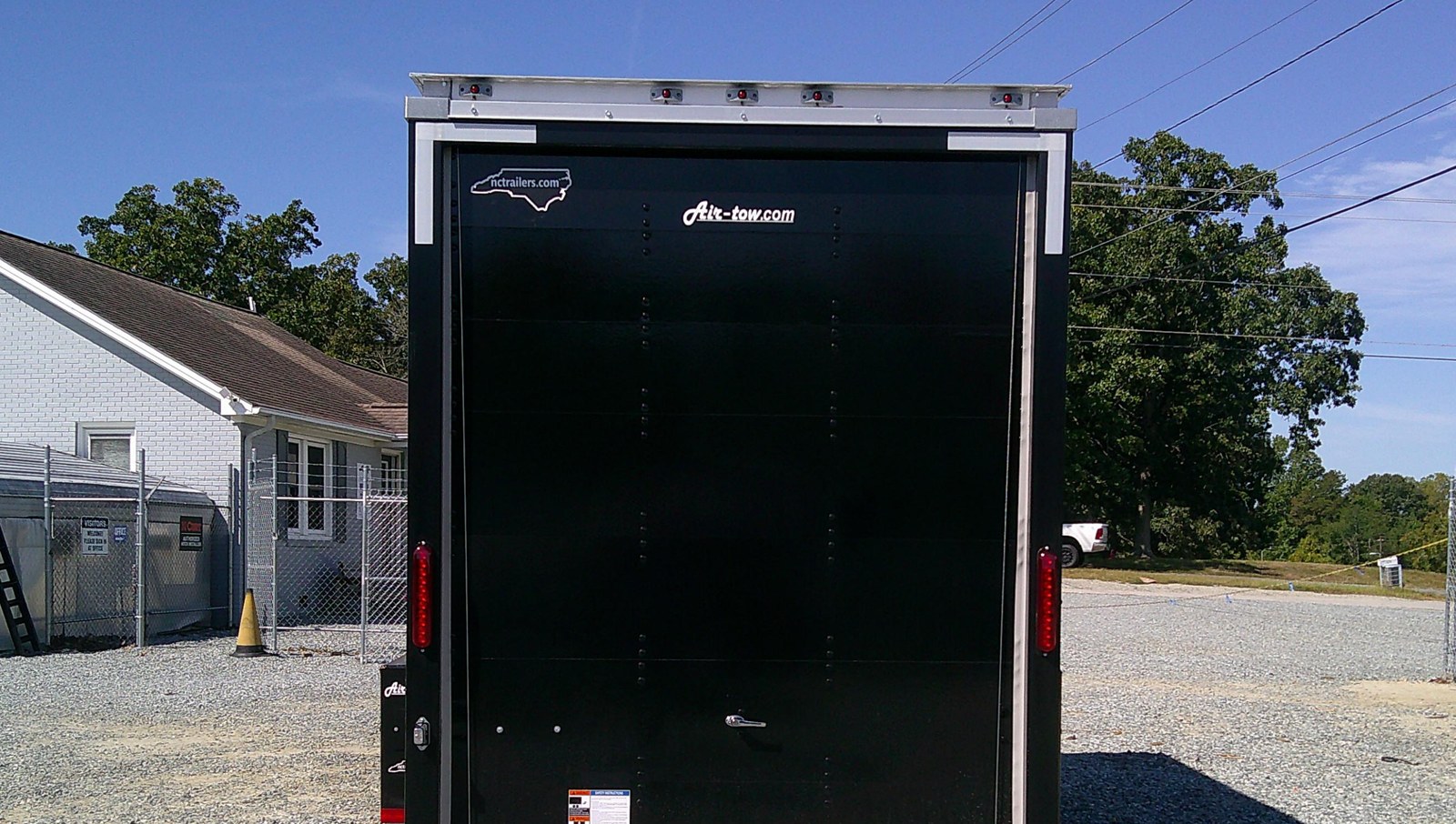
Overall width is measured at the widest part of the trailer. The standard does not count lamps, mirrors, mud flaps or flexible fender extensions toward it. The standard describes identification lamps as lamps used in groups of three to identify certain types of vehicles.
The trailer's compliance label is where the manufacturer certifies that it met the federal safety standards in effect on the day it was built. If a lamp goes out or gets knocked off, replacing it keeps the trailer the way it left the factory.
When the lights stop working
Our trailer light troubleshooting guide walks through the checks in order, starting with a 12-volt tester. If you would rather hand it off, our service department repairs trailer wiring, lights and plugs and installs brake controllers.
Not sure what your truck and trailer need? Bring them by and we will check the plug, the lights and the brake setup with you.
Thomasville: (336) 276-0329
Winston-Salem: (336) 499-9888
Rather type than talk? Send us a message. Or see what our service department handles.
Related guides
- Troubleshooting trailer light wiring problems.
- Trailer breakaway systems, the battery and switch that stop a trailer that comes loose.
- North Carolina trailer laws, including the brake weight thresholds.
- How to choose the right hitch for your trailer.
- Pre-trip towing inspection checklist, lights included.
- Trailer service at NC Trailers.
Sources
- Hopkins Towing Solutions, 4 Wire Flat to 7 Blade installation instructions, part 47200, for the circuits each plug carries and the wire-by-function rule.
- Dexter, Operation Maintenance Service Manual, for the brake controller, the connector ground and connector corrosion.
- 49 CFR 571.108, Federal Motor Vehicle Safety Standard No. 108, Table I-b, for the clearance and identification lamps on trailers 80 inches or wider.