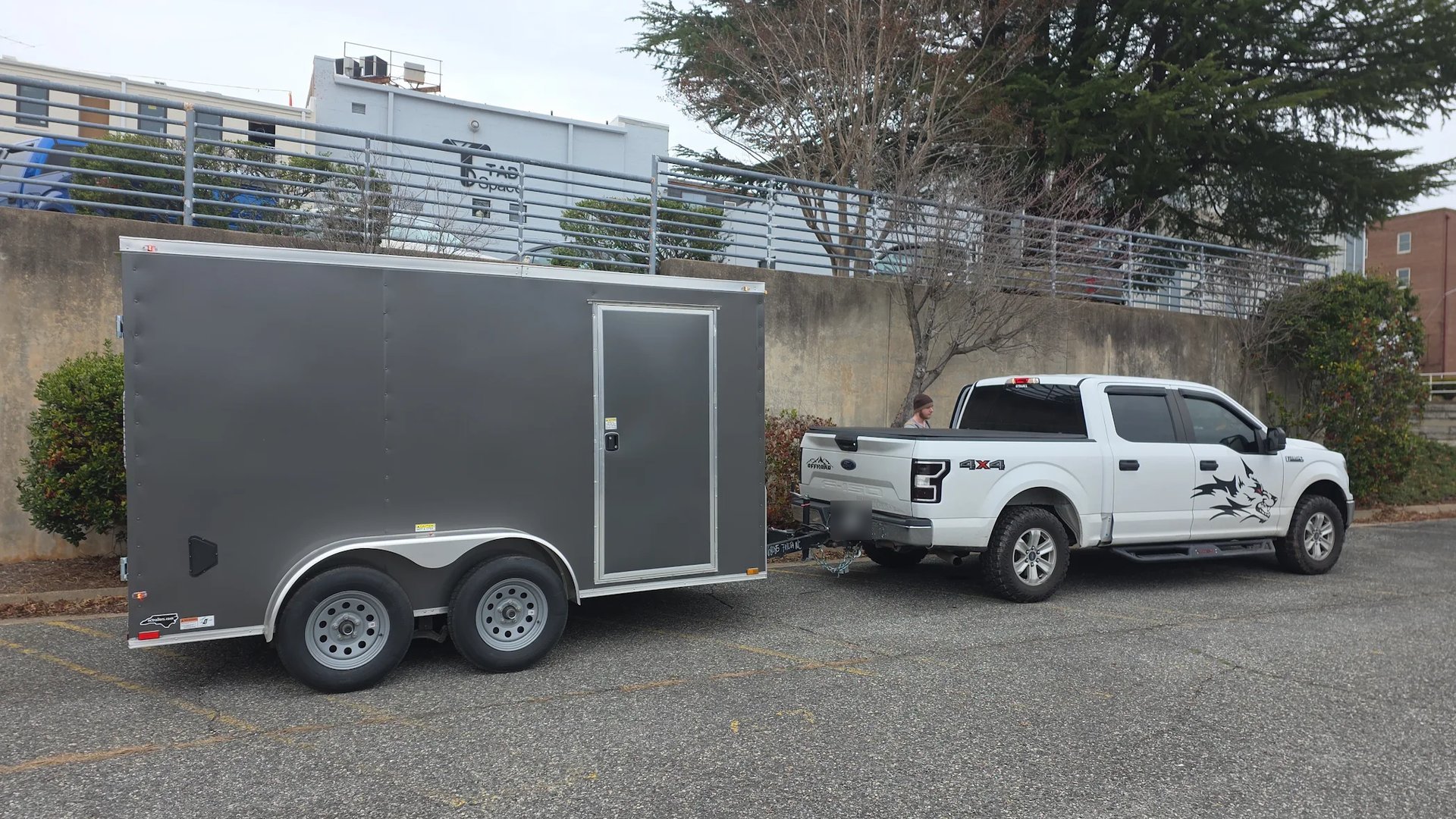

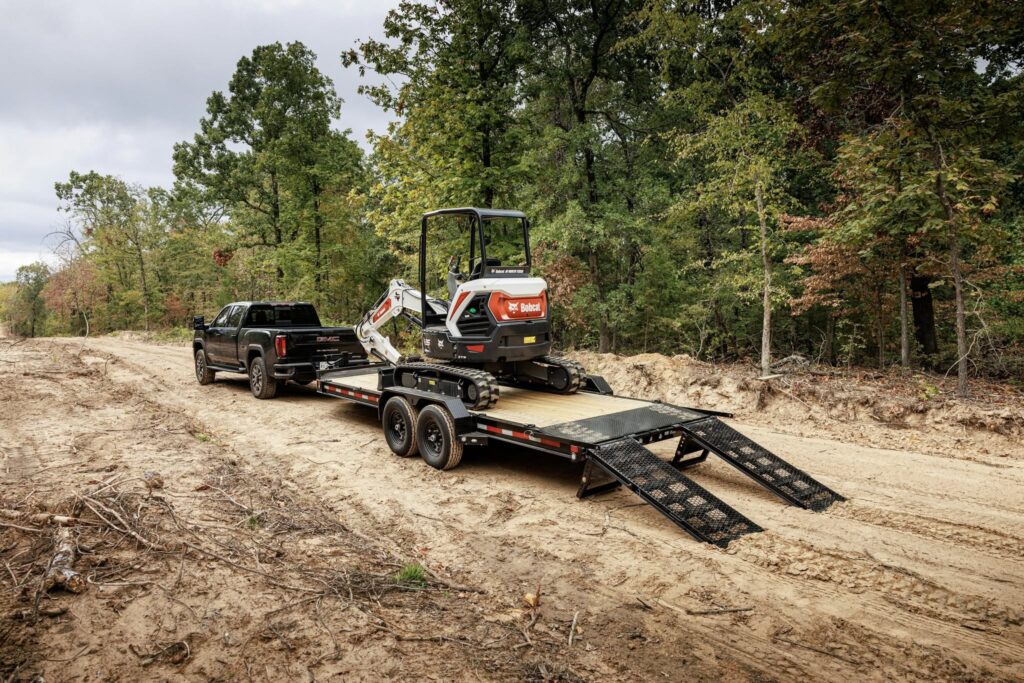
If you have shopped equipment trailers, you have run into the term dovetail trailer without a clear explanation of what it means. A dovetail is the angled section at the rear of the deck that slopes down toward the ground, so equipment does not have to climb as steep an angle to get on. It is one of the most practical features you can have if you load and unload regularly.
We sell dovetail trailers from Maxx-D, Big Tex, Nolan, and Superior, across utility, equipment, car hauler, and gooseneck builds. This guide covers how a dovetail works, the different lengths and ramp styles, and when each one is worth it.
What a Dovetail Actually Does
A flat-deck trailer makes the ramps close the entire height gap between the ground and the deck, which is a steep climb. A dovetail closes part of that gap gradually over the sloped section, so the ramps only cover what is left. The result is a shallower loading angle, which matters most for anything with low ground clearance: a car, a zero-turn mower, or a compact tractor with a low front attachment.
Dovetail Lengths and Ramp Styles
Dovetail length and ramp style change with the type of trailer. Here is the quick reference:
| Trailer type | Typical dovetail | Ramp style |
|---|---|---|
| Utility / landscape | About 2 ft | Ramp gate |
| Equipment | About 2 ft | Standup ramps |
| Car hauler | About 2 ft | Slide-in ramps |
| Fender trailer with mega ramps | Around 3 ft | Mega ramps |
| Larger gooseneck | 4, 5, or 6 ft | Standup ramps or mega ramps |
| Hydraulic dovetail gooseneck | 10 to 12 ft | No ramps (powered up and down) |
About mega ramps. Mega ramps are two ramps at the rear that together cover the full width of the deck. When they fold down, they make a flat deck extension over the dovetail. That is a big help for hauling pallets and other materials, and they make loading easier than traditional standup or slide-in ramps.
Hydraulic Dovetails: Push a Button, Load the Deck
On bigger gooseneck trailers, a hydraulic dovetail replaces manual ramps entirely. A battery powers a hydraulic pump that lowers the whole rear section from a straight-deck position down to a loading angle, then raises it flat again for the road. You load with a wireless remote instead of wrestling ramps.
The Maxx-D YDX and YHX are good examples. Their hydraulic dovetail is a full-width section about 12 feet long that drops to a low loading angle (roughly 12 to 15 degrees depending on model) and can hold up to 10,000 pounds while you load. These run 22,500 to 40,000 pounds GVWR in 32 to 40 foot lengths. If you load skid steers, tractors, or mini excavators every day, this is the setup that saves your back. See it work:
Dovetail vs. Flat-Deck vs. Beavertail vs. Tilt
- Flat-deck: no angled section. Ramps do all the work, and the loading angle is whatever the ramp length allows.
- Dovetail: the fixed angled rear section, usually 2 to 6 feet on standard trailers.
- Beavertail: the same idea as a dovetail. The two terms get used interchangeably, so do not read a difference into it.
- Tilt bed: a different approach entirely. The whole deck tilts to an angle instead of using a fixed slope. Handy, but it is not a dovetail.
When a Dovetail Helps Most
A dovetail earns its keep any time you load equipment with low ground clearance or a long wheelbase that would scrape or bottom out on a steep ramp. Riding mowers, low cars, and compact equipment with low front attachments all benefit. If you mostly haul a full-size skid steer with plenty of clearance, a dovetail still helps but matters less, since that machine can handle a steeper ramp without trouble.
One thing to check: a dovetail reduces the loading angle but does not erase the transition point between the dovetail and the ramps. Long-wheelbase or very low equipment can still catch there. Know your machine's actual departure angle, not just its ground clearance at rest, before you assume a standard dovetail will clear it.
Which Trailers We Carry With Dovetails
- Equipment and car haulers: Maxx-D, Big Tex, RawMaxx, and Horizon. We sell more Maxx-D dovetail equipment trailers than any other brand, with Big Tex right alongside. Browse equipment trailers and car haulers.
- Goosenecks: Southland, Horizon, and RawMaxx, plus the Maxx-D hydraulic dovetail. Browse gooseneck trailers.
- Also on the lot: Nolan and Superior build dovetail models too. Ask us what is in stock.
When You Need More Than a Dovetail: Ground-Level Loading
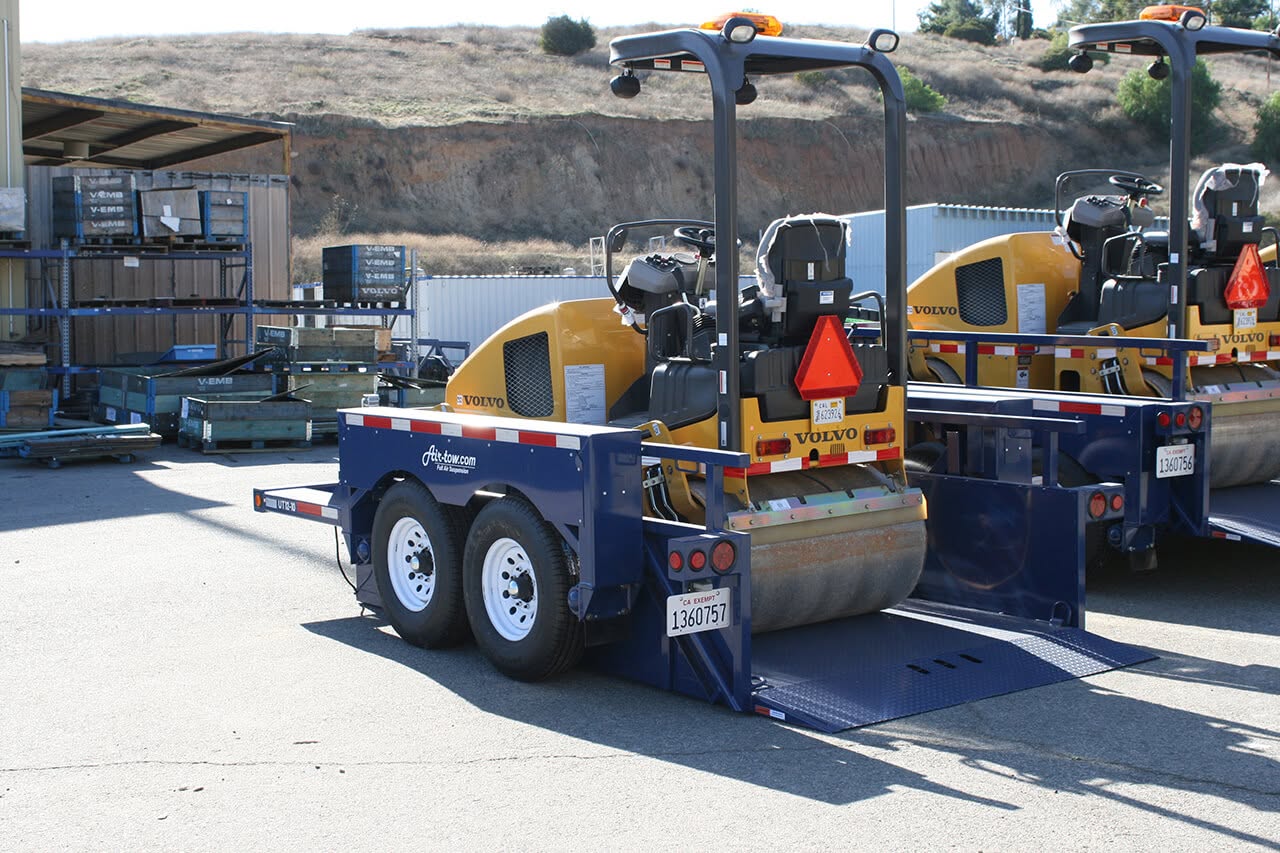
For equipment too low for even a shallow dovetail, the answer is not a steeper dovetail. It is skipping the ramp transition entirely. Air-Tow's drop deck trailers use a swing-arm axle to lower the entire deck to ground level, so you load flat with no ramps at all. It is a different tool from a dovetail, and it is worth knowing about if you regularly haul loads low enough that even a gentle dovetail angle is a problem.
Financing an Equipment Trailer at NC Trailers
NC Trailers carries dovetail equipment trailers, car haulers, goosenecks, and Air-Tow ground-level loaders at our Thomasville and Winston-Salem lots. If you are not sure which loading style fits your equipment, our guide on what to consider when buying an equipment trailer goes deeper on deck length, GVWR, and ramps, and the team can help you match a trailer to what you actually load.
Need more info?
 About the Author