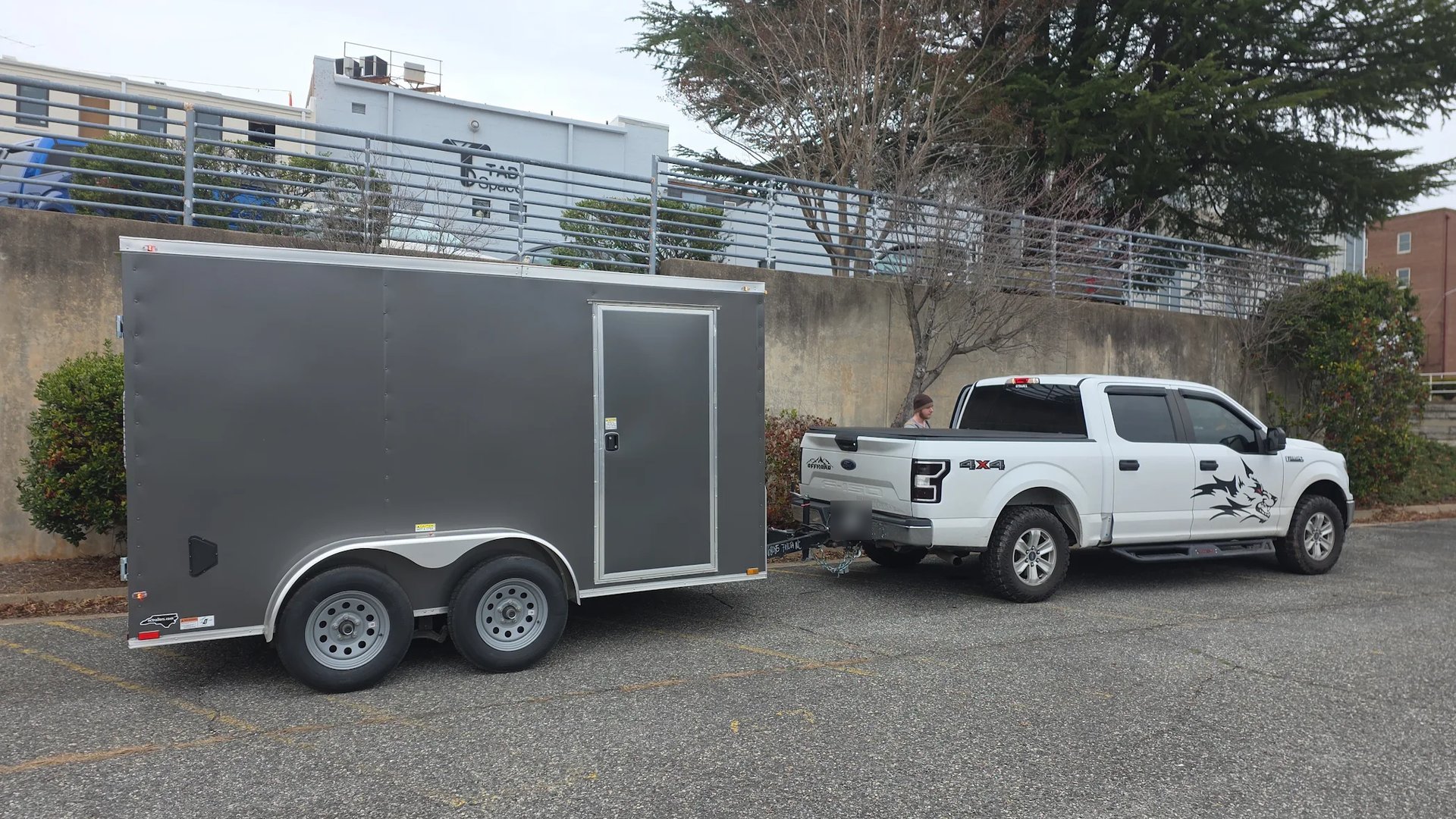

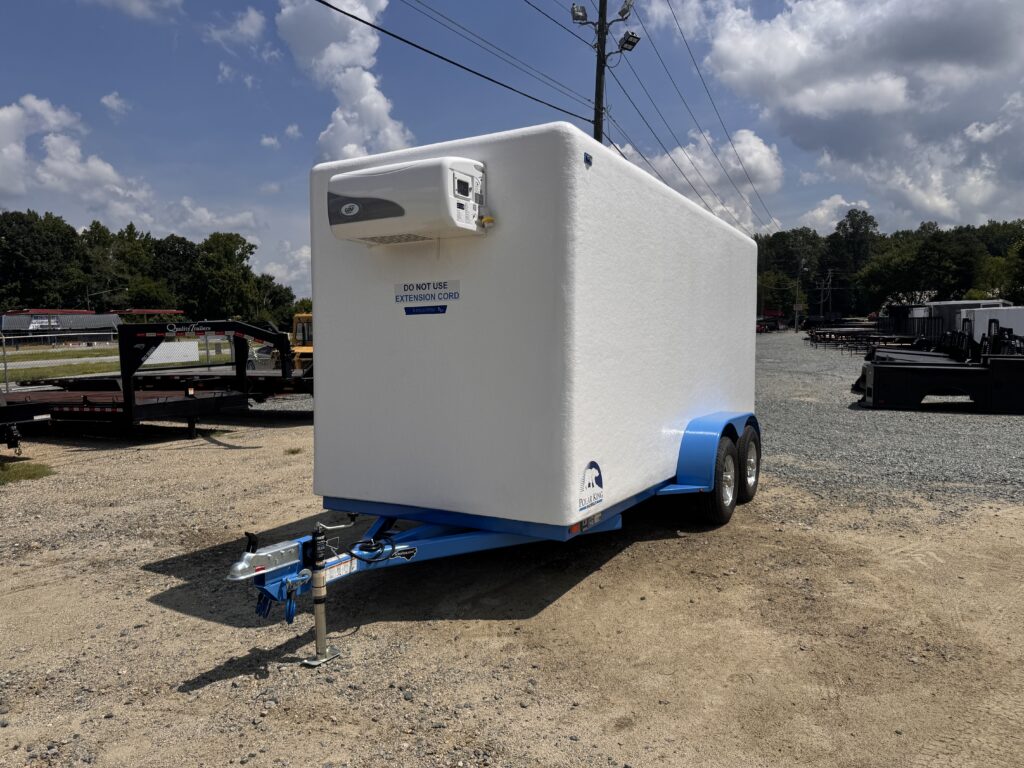
Refrigerated cargo trailers have become an essential solution for North Carolina businesses that need dependable cold‑chain transport without investing in a full refrigerated truck. Meal‑prep companies, bakeries, florists, beverage distributors, and small food service operations rely on these compact units because they are easier to operate, more cost‑effective, and fully customizable. At NC Trailers, many customers begin with an enclosed model—often found in the enclosed trailers inventory—and then modify it with cooling systems tailored to their workflow. Buyers who want a cold unit ready to go can also choose a factory-built Polar King from the refrigerated trailer inventory. Choosing the right cooling configuration determines whether the trailer can maintain stable temperatures throughout long routes or during high‑heat summer days.
The foundation of every refrigerated trailer is high‑quality insulation. Mechanical cooling systems can only perform effectively when heat transfer is minimized. Closed‑cell spray foam is the preferred choice for most custom builds because it offers superior density and moisture resistance. This reduces condensation, improves energy efficiency, and allows the cooling system to maintain consistent temperatures even when the trailer is parked on hot pavement. Many enclosed units at NC Trailers are selected specifically for their strong frame structure, smooth interior walls, and upgrade‑ready design that supports thicker insulation layers.
Once insulation is in place, businesses must select an appropriate cooling system. Compressor‑based refrigeration is the most reliable option for perishable or temperature‑sensitive goods. These systems operate similarly to commercial refrigerators but are reinforced for vibration resistance and continuous mobile use. Companies transporting meats, desserts, fresh ingredients, or packaged meals depend on this type of system to keep inventory safe. Because compressor systems add weight and require stable power, some businesses choose a tandem-axle trailer with a higher weight rating to carry the extra load.
Not every business requires deep‑cooling capabilities. Portable cooling units offer flexibility for short routes, lighter loads, or seasonal operations. These systems are easier to install and maintain, and they allow buyers to use the same trailer for multiple purposes. While they cannot maintain temperatures as low or as consistently as compressor systems, portable coolers are suitable for bakeries, florists, and beverage distributors transporting products that benefit more from mild cooling and ventilation than strict refrigeration. For these buyers, an enclosed trailer with airflow upgrades may provide the perfect balance between performance and cost.
Airflow is one of the most overlooked aspects of refrigerated trailer performance. Even the strongest mechanical cooling system cannot prevent hot and cold spots if air cannot circulate freely. Strategically placed low‑rpm fans help distribute air evenly across shelves and storage zones, preventing moisture buildup or uneven temperature zones. Businesses transporting flowers, baked goods, or fresh produce often install interior ducting or multiple circulation fans to keep air moving gently and consistently around the cargo.
Power configuration is another significant factor. Refrigerated trailers rely on one of three power sources: shore power, generators, or inverter systems. Shore power is the most stable and is ideal for overnight staging or loading. Generators provide complete mobility for events, pop‑ups, and long routes, but they require proper ventilation and secure exterior mounting. Inverter systems are suitable for short‑distance deliveries or moderate loads. Many buyers choose enclosed trailers specifically because they can be outfitted with dual electrical hookups, breaker panels, and generator mounts that support more advanced cooling systems.
Temperature monitoring is critical, especially for businesses responsible for food safety or sensitive perishables. Digital controllers allow operators to set precise temperature ranges and receive alerts if the trailer interior deviates from the target. Bluetooth‑ and Wi‑Fi‑enabled controllers give business owners the ability to track temperatures remotely—an invaluable feature for meal‑prep companies delivering across multiple stops. These systems allow operators to verify that goods remained within regulation‑compliant temperature ranges throughout the entire route.
Construction details also influence cooling performance. Insulated flooring prevents heat transfer from the ground and helps maintain stable internal temperatures during long stationary periods. Many enclosed trailers at NC Trailers can be upgraded with insulated subfloors paired with durable surfaces such as aluminum treadplate. Door construction matters as well: double‑sealed gasket systems and insulated rear doors help trap cool air, even when loading and unloading frequently. Some businesses add insulated side‑access doors to speed up deliveries without opening the full rear entry.
Weight distribution affects both cooling efficiency and towing safety. Adding insulation, refrigeration equipment, shelving, and cargo contributes significant weight. Placing heavier components—such as compressor units or insulated storage boxes—over or just forward of the axles improves stability and towing performance. Buyers who travel long distances or operate on rural roads often choose a tandem-axle trailer for added safety and reliability. Proper distribution also prevents air pathways from being blocked by shifting cargo, which helps maintain consistent airflow throughout the interior.
Interior organization plays a surprisingly important role in temperature stability. Shelving that promotes airflow around stored products helps maintain uniform cooling. Securing items with tie‑downs or cargo rails prevents boxes from collapsing against vents or blocking fans during sudden stops. Many buyers add custom shelving and securement systems to their enclosed trailers to create a more predictable, organized cooling environment that also reduces loading and unloading time.
Regular maintenance ensures long‑term cooling performance. Refrigeration units should be inspected for refrigerant leaks, worn electrical components, or obstructed airflow paths. Door seals need periodic replacement, especially for trailers operated in high‑heat conditions. Electrical systems—including generator mounts, breakers, and wiring—should be inspected to ensure consistent power delivery. A well‑maintained refrigerated cargo trailer can support a business for years, providing a cost‑effective alternative to purchasing a full commercial reefer truck.
Ultimately, refrigerated cargo trailers give small businesses across North Carolina a competitive advantage. They allow meal‑prep services to expand delivery areas, help bakeries maintain freshness during long routes, support florists with stable humidity and temperature, and provide beverage companies with consistent cooling throughout the day. By choosing the right base trailer—often beginning with enclosed units from the enclosed trailer inventory—and pairing it with the appropriate insulation, cooling system, airflow tools, and power configuration, operators can build a reliable mobile cold‑storage solution tailored to their needs. NC Trailers supports these businesses with durable, upgrade‑ready platforms built to withstand daily commercial use.
Looking for a refrigerated trailer?
Call us, stop by either lot, or fill out the financing request just below and we will get right back to you.
 About the Author