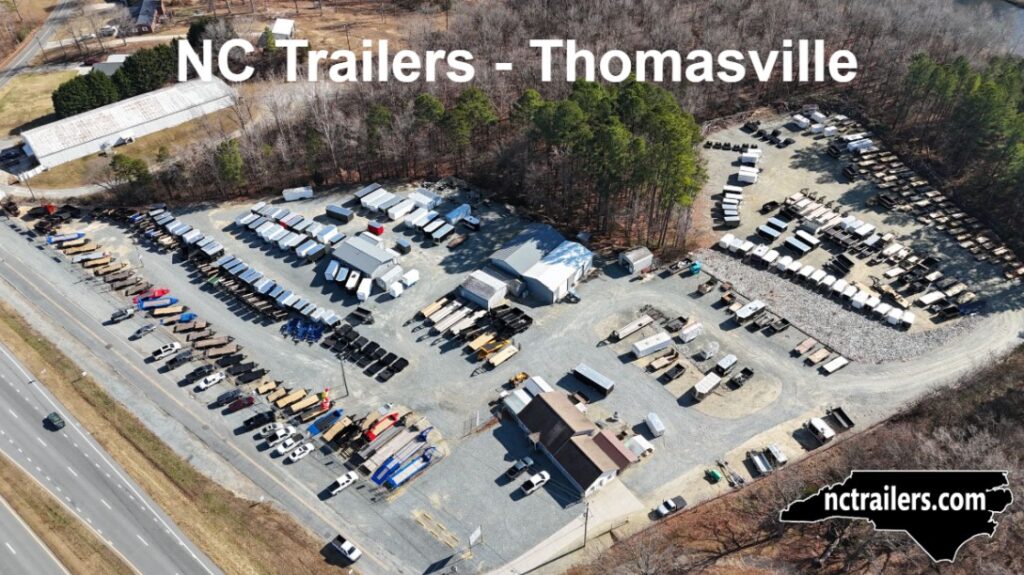
Knowing how to qualify for trailer financing before you walk onto the lot puts you in a stronger spot and makes the whole thing move faster. Most applications that stall or come back with rough terms do it for reasons you could have handled ahead of time, like a fixable error on your credit report, missing income paperwork, or a loan amount that does not line up with your stated income.
Our financing team at Thomasville and Winston-Salem handles applications for buyers across the full credit spectrum. This guide walks through the five steps that give your application the best shot at a clean approval at a rate that fits your budget.
The Five Steps at a Glance
| Step | What to Do | Why It Matters |
|---|---|---|
| 1 | Check your credit report for errors | Errors can drag your score down, and disputing them costs nothing and can lift your rate |
| 2 | Gather income documentation | Lenders verify income before approving, so having docs ready speeds things up |
| 3 | Know your down payment options | More money down lowers your monthly payment and helps approval odds on borderline applications |
| 4 | Understand loan term options | Longer terms lower the payment but cost more interest overall, so choose based on cash flow |
| 5 | Submit your application | NC Trailers works with multiple lenders across credit tiers to find available programs |
Step 1: Check Your Credit Report Before You Apply
Your credit report is what lenders pull to size up your payment history, your balances, and how you handle credit. Errors show up more often than people expect, like an account marked delinquent that you actually paid on time, a balance you paid off that still reads as open, or an account that is not even yours. Any of those can hold your score down and cost you on the rate.
Pull your report from annualcreditreport.com before you apply and check every account. If you spot an error, file a dispute straight with the bureau reporting it, whether that is Equifax, Experian, or TransUnion. Most disputes get worked within 30 days, and clearing a real error can bump your score before your application ever goes in.
Knowing your actual score also keeps your expectations realistic. Buyers who walk in knowing their number have a more productive conversation with the financing team about which programs they are likely to land and what terms to expect.
Step 2: Gather Your Income Documentation
Income documentation is the second piece of the application. Lenders need to see steady income that covers the new payment, and what they ask for depends on how you are employed.
| Applicant Type | Required Documents | Optional but Helpful |
|---|---|---|
| W-2 employee | 2 recent pay stubs, government-issued ID | 3 months bank statements, most recent tax return |
| Self-employed | Schedule C, 3 months business bank statements, ID | Year-to-date P&L, most recent personal tax return |
| Business entity (LLC/Corp) | EIN, business bank statements, operating docs | Business credit report, articles of incorporation |
Having these ready before you apply saves time and tells the lender you are a prepared borrower. Applications that come in complete move through underwriting faster than the ones that need follow-up requests. If you are self-employed or your income swings with the season, two years of tax returns instead of one gives the lender a fuller picture and cuts the odds of a paperwork delay.
Step 3: Know Your Down Payment Options
Down payment requirements move around based on the lender, the loan amount, and your credit profile. Buyers with strong credit, generally 680 and up, often qualify for zero-down programs on a standard trailer purchase. If your score is lower or your credit history is thin, plan on putting 10 to 20 percent down. That money works as a compensating factor that helps both your approval odds and the rate you are offered.
Even when zero-down is on the table, a down payment is worth considering. Putting 15 percent down on a $12,000 trailer drops the financed amount to $10,200, which lowers the monthly payment, cuts the total interest you pay over the term, and builds equity in the trailer from day one. If you plan to trade or sell the trailer within a few years, starting with equity instead of being upside down on the loan matters.
Step 4: Understand How Loan Terms Affect Your Payment
Trailer financing terms usually run from 24 to 84 months. The term you pick drives both your monthly payment and the total you pay over the life of the loan. A shorter term means a higher payment but a lot less interest. A longer term lowers the payment but raises the overall cost.
The right term comes down to your cash flow. If the trailer is going into a business that earns from day one, a shorter term at a higher payment often makes sense, since you pay less overall and own it free and clear sooner. If cash flow is tighter or the purchase is personal, a longer term at a lower payment can be the more manageable setup even though it costs more in the end.
Ask the financing team at NC Trailers to run the numbers on two or three term options before you decide. Seeing the actual monthly payment next to the total interest for each one makes the tradeoff clear.
Step 5: Submit Your Application Through NC Trailers
NC Trailers works with multiple lenders across different credit tiers, so your application is not stuck with one program's approval criteria. The financing team reviews your application, figures out which lender programs fit your profile, and lays out the options before anything is finalized. You are not committed to a loan until you review and accept the specific terms.
You can start through the trailer financing page online or in person at either the Thomasville or Winston-Salem location. Most decisions on straightforward applications come back within one business day. If your application needs more documentation or a different program, the team tells you what is needed instead of just handing back a denial.
What Lenders Actually Look at Beyond the FICO Score
Your credit score is one input, not the whole picture. Lenders weigh several things at once: how stable your income is, how long you have been at your job or in business, the loan amount against the trailer's value, and your debt-to-income ratio, which is the share of your gross monthly income already going to debt payments.
A buyer with a 610 score, two years of steady work, little existing debt, and 15 percent down is a very different risk than a buyer with the same score, choppy income, and maxed-out credit. Lenders see that difference even when the FICO numbers match. A complete, well-documented application gives underwriters the full picture instead of forcing them to lean on the score alone.
For more on how credit scores specifically affect trailer loan terms, the Understanding Credit Requirements for Trailer Loans post covers the underwriting criteria in depth. If you are a first-time buyer still learning the process, Financing Options for First-Time Trailer Buyers is a good starting point before you apply.
Ready to Apply
The five steps above take most buyers an hour or less to work through before applying: check the credit report, gather documents, decide on a down payment, understand the term options, and submit. Buyers who knock those out before visiting NC Trailers walk into a faster, more productive financing conversation and come out with terms they understood before they signed.
Start your application at the trailer financing page or stop by the Thomasville or Winston-Salem location to work through it with the team in person. Either way, bring your income documentation and know your approximate score. Those two things alone make the process a lot smoother.
 About the Author