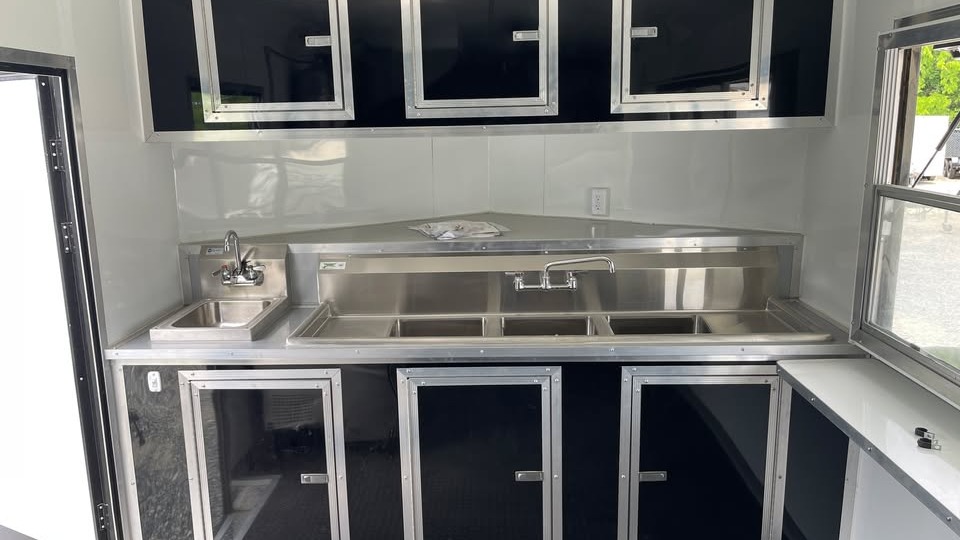
A food trailer in North Carolina has to carry enough hot and cold water, under pressure, to get through a full day of cooking, hand washing, and cleanup. The waste tank has to be at least 15 percent bigger than the fresh water tank. You also need a hand sink and a separate utensil sink with drainboards. Those few rules decide most of the plumbing in every concession trailer we build or sell, so it pays to understand them before you pick a floor plan.
Key takeaways: Size the fresh water tank for your busiest day, not an average one. Make the waste tank at least 15 percent larger than the fresh tank. Plan room for a hand sink and a utensil sink with drainboards built into it. Your county environmental health office reviews the plan before the trailer is built and has the final word, so take your layout to them first.
Where North Carolina's Water Rules Come From
North Carolina regulates mobile food units under 15A NCAC 18A Section .2600, the state's food establishment rules, together with the North Carolina Food Code. Your county environmental health department applies those rules and issues the permit. Several county guides lay the requirements out in plain language. The Catawba County Environmental Health guide to mobile food units and the Johnston County mobile food unit page are two good ones, and the water and sink rules below come from them.
A Concession Trailer Counts as a Mobile Food Unit
Section .2651 defines a mobile food unit as a food establishment or pushcart designed to be readily moved and vend food. A concession trailer fits that definition, so the water and sink rules apply to it the same way they apply to a food truck. Our overview of North Carolina food trailer health code requirements covers the rest of the rules.
Plan Review Comes First
North Carolina requires plan review before a mobile food unit is built, then an inspection before the permit is issued. Bring your water and sink layout to the health department early. Moving a sink on paper is free. Moving it after the walls and cabinets are finished is not.
NC Food Trailer Water and Sink Requirements at a Glance
| Requirement | What It Means for Your Build | Where It Comes From |
|---|---|---|
| Potable water under pressure, with water heating | A pump and a water heater, with hot and cold water to every sink | Catawba County guide; Johnston County |
| Enough water for a full day of operation | No fixed gallon number; size the tank to your own busiest day | Catawba County guide |
| Waste tank at least 15% larger than the fresh tank | A 30-gallon fresh tank needs at least a 34.5-gallon waste tank | Catawba County guide; Johnston County |
| Waste tank permanently installed, outlet lower than the water inlet | No portable waste jugs; plan the drain side of the trailer | Catawba County guide |
| Water inlet a different size from the waste outlet | Nobody can hook a fresh water hose to the waste connection by mistake | Catawba County guide |
| Hand wash sink with hot and cold water, soap, and towels | Its own sink, separate from the utensil sink | Catawba County guide; Johnston County |
| At least a one-compartment utensil sink | Big enough to submerge, wash, rinse, and sanitize your utensils, with splash protection and drainboards built in | 15A NCAC 18A .2672(e), quoted in the Catawba County guide |
| Possible prep sink | Some menus need a separate sink for washing vegetables or meat | Johnston County |
Food Trailer Water Tank Requirements
The fresh water system must be a potable water system under pressure, and water heating has to be provided. According to the Catawba County guide, it has to supply enough hot and cold water for all food prep, hand washing, and cleaning for a full day of operation.
Sizing the Fresh Water Tank
The rule sets a standard, a full day of operation, instead of a gallon number. So tank size comes down to your menu and how many people you feed. Walk through your busiest day and write down everything that uses water: hand washing between tasks, rinsing produce, cooking, and washing utensils. Estimate each one, add it up, and leave a cushion, because running dry in the middle of an event shuts the kitchen down. Some counties set their own minimums on top of this, which is one more reason to talk to yours early.
Weight is the other half of the decision. Water weighs about 8.3 pounds a gallon, so a full 40-gallon tank adds over 330 pounds before you load a single box of food. Mount tanks over or close to the axles, and check that the loaded trailer stays under its GVWR and inside your tow vehicle's rating.
Protecting the Water Supply
The water inlet has to be protected from contamination and has to be a different size from the sewage outlet. That keeps anyone from connecting a fresh water hose to the waste side by accident. Fill with a food-grade hose and store it somewhere it stays clean.
Wastewater and Grey Water Tank Requirements
The waste tank, which most people call the grey water tank, holds everything that drains from your sinks. North Carolina requires it to be permanently installed and at least 15 percent larger than the fresh water tank. The outlet also has to sit lower than the fresh water inlet connection, which helps keep the two systems apart.
Why the Waste Tank Has to Be Bigger
What goes down the drain is rarely just the water that came out of the tap. Soap, food scraps, and cleaning water all add to it. A bigger waste tank means it fills after the fresh tank runs dry, not before.
Emptying at the Commissary
All sewage has to be discharged to an approved sewage disposal system, and the servicing area has to be at your restaurant or commissary. North Carolina also requires a mobile food unit to report to its commissary at least once a day for supplies, cleaning, and servicing. Plan your route around that stop. A commissary close to your usual events saves fuel and time, and you can refill fresh water and dump the waste tank on the same visit.
Hand Sink and Utensil Sink Requirements
Sinks take up more room in a small trailer than most first-time owners expect. The rules call for two separate setups, and each has its own job.
The Hand Wash Sink
You need a hand wash sink with hot and cold water, a combination faucet, soap, and towels. The North Carolina Department of Health and Human Services has also stated that mobile food units handling raw ingredients must have a hand washing sink. Put it where your cooks and prep staff can reach it without crossing the service window, because they will use it all day.
The Utensil Sink
Rule .2672(e) requires at least a one-compartment sink big enough to submerge, wash, rinse, and sanitize your utensils, with splash back protection. Drainboards have to be built into the sink and be big enough to dry what you wash. Johnston County spells it out as drainboards on each side. Many owners go with a three-compartment sink anyway, since it makes wash, rinse, and sanitize a lot easier during a rush. Keep it away from the cook line so dirty work stays away from finished food.
Plan Your Food Trailer Plumbing With NC Trailers
A compliant food trailer carries enough hot and cold water for your busiest day, has a waste tank at least 15 percent bigger, and gives the hand sink and utensil sink each their own spot. Your county environmental health office has the final say, so confirm the plan with them before anything gets built. Our shop installs plumbing, water heaters, and sinks in-house, and you can also order a trailer built with those options from the factory, which is sometimes the better deal than adding them later. Ask us before you decide. Browse concession trailers in stock, then read our guide to concession trailer financing and apply for financing.
Planning the plumbing for a food trailer?
Call us, stop by either lot, or fill out the financing request just below and we will get right back to you.
 About the Author