

Trailer sway: what causes it, and what a sway control can and can't do
When a trailer starts swinging side to side behind your truck, the load is the first place to look. A sway control can help a trailer that already tows well, but CURT's own kit instructions say too little tongue weight or a tail-heavy trailer can cause sway. This page covers what to do if it happens, how to load so it doesn't, and where a sway control fits in.
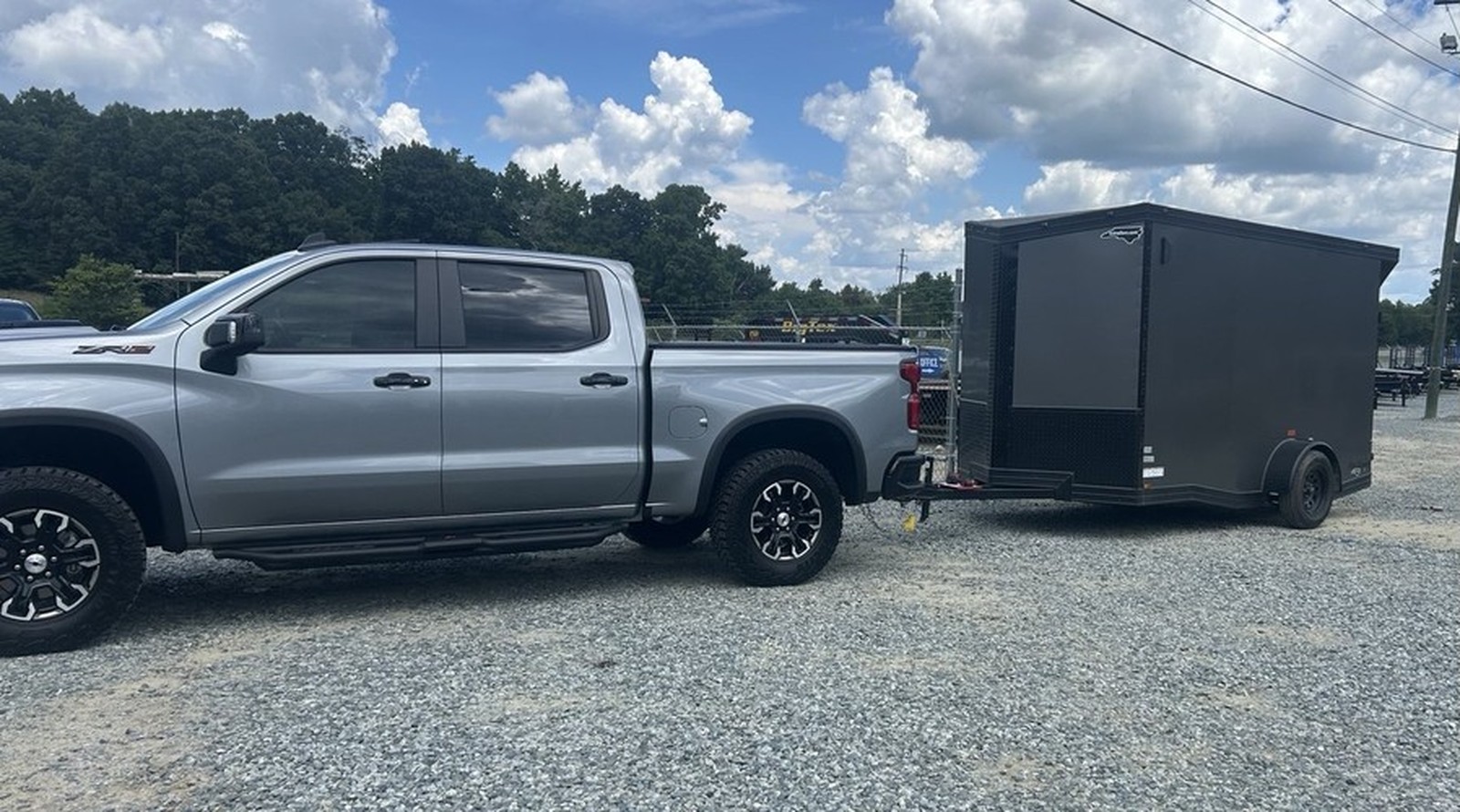
If your trailer starts to sway
Do not speed up. The warning in CURT's sway control instructions is direct: sway increases with speed. If the sway continues, CURT says to stop the vehicle and inspect all of your towing equipment until the cause has been found and corrected.
What causes sway
CURT says road and weather conditions, the load, the design of the trailer and the tow vehicle's wheel alignment all affect how a truck and trailer tow. It also warns that short wheelbase vehicles may induce sway. The cause most owners can do something about today is the load.
- Too little tongue weight. CURT says tongue weight should be 10-15% of gross trailer weight for most trailers.
- A tail-heavy trailer. CURT names this as a cause of sway, right alongside low tongue weight.
How to load so it tows straight
CURT's instruction is to load heavy items on the floor, in front of the axle, and balanced side to side. Our guide on how to load and secure heavy equipment walks through it.
And stay inside the ratings. Moving the load around does not make up for too much of it, so check your trailer's GVWR and payload and your truck's towing capacity before you strap anything down.
What we saw in our own shop
Our service team tested a customer's equipment trailer that was reported to be fishtailing. Behind our truck, with a tractor on it carrying plenty of weight up front, it towed straight at highway speed. Then we hitched it to the customer's truck with the customer's actual load, two four-wheelers with a dirt bike along the back edge. Just before 60 mph it began swinging from one side of the lane to the other.
Our team put it down to where the weight sat. With that load, not enough of it could be placed ahead of the axles.
What a sway control does
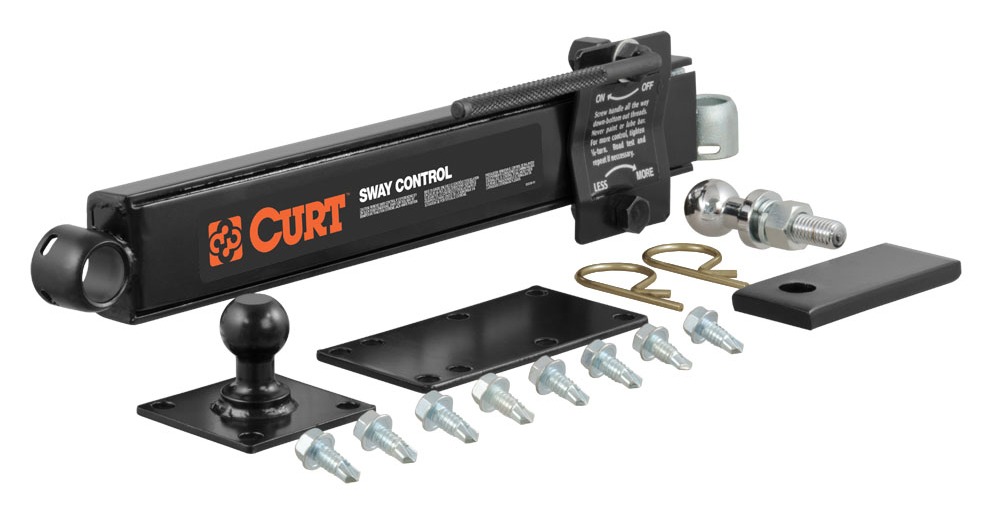
A friction sway control is a slide bar that connects the ball mount to the trailer frame. You road test it at the factory tension and adjust from there. Our service team's way of putting it: it is there for a trailer that tows well until a crosswind hits or the trailer starts pushing you downhill. When the load itself is causing heavy sway, fix the load.
CURT's instructions for its 17200 kit also list some limits worth knowing before you buy. Other brands and styles have their own rules, so read the sheet for yours.
- Surge brakes: it cannot be used on trailers with surge brakes.
- Slippery roads: it must be removed on wet, icy, gravel or snow covered roads.
- Backing up: back slowly into a jackknife with a second person watching. If the unit hits the bumper or frame, fully compresses or comes apart, it has to come off before you back up.
- Big trailers: larger, heavier or broad-sided trailers may need two units.
- Towing capacity: CURT's warning is never to exceed your vehicle manufacturer's recommended towing capacity.
Trailer not towing straight? Call us and tell us what you haul. We will help you figure out what to check.
Thomasville: (336) 276-0329
Winston-Salem: (336) 499-9888
Rather type than talk? Send us a message. Or see what our service department and parts counter handle.
Related guides
Sources
- CURT, Sway Control Kit installation instructions, part 17200, for the sway warnings, tongue weight, loading and the limits of the kit.