

Car hauler or equipment trailer? How to tell which one you need
Two trailers can be the same length, the same width, the same deck and the same hitch, and still be built to carry completely different loads. Length tells you nothing about capacity. The rating does, and it is stamped on a label on the front of every trailer we sell.
This page puts a 20-foot car hauler next to a 20-foot equipment trailer from the same manufacturer and shows exactly what separates them. If you have not worked out your weight target yet, read GVWR and payload first, then come back.
The same twenty feet, built two ways
Nolan Manufacturing builds both of these. Same brand, same 20-foot wood deck, same 2-5/16 inch ball coupler. Park them side by side and the length matches. Almost nothing else does.
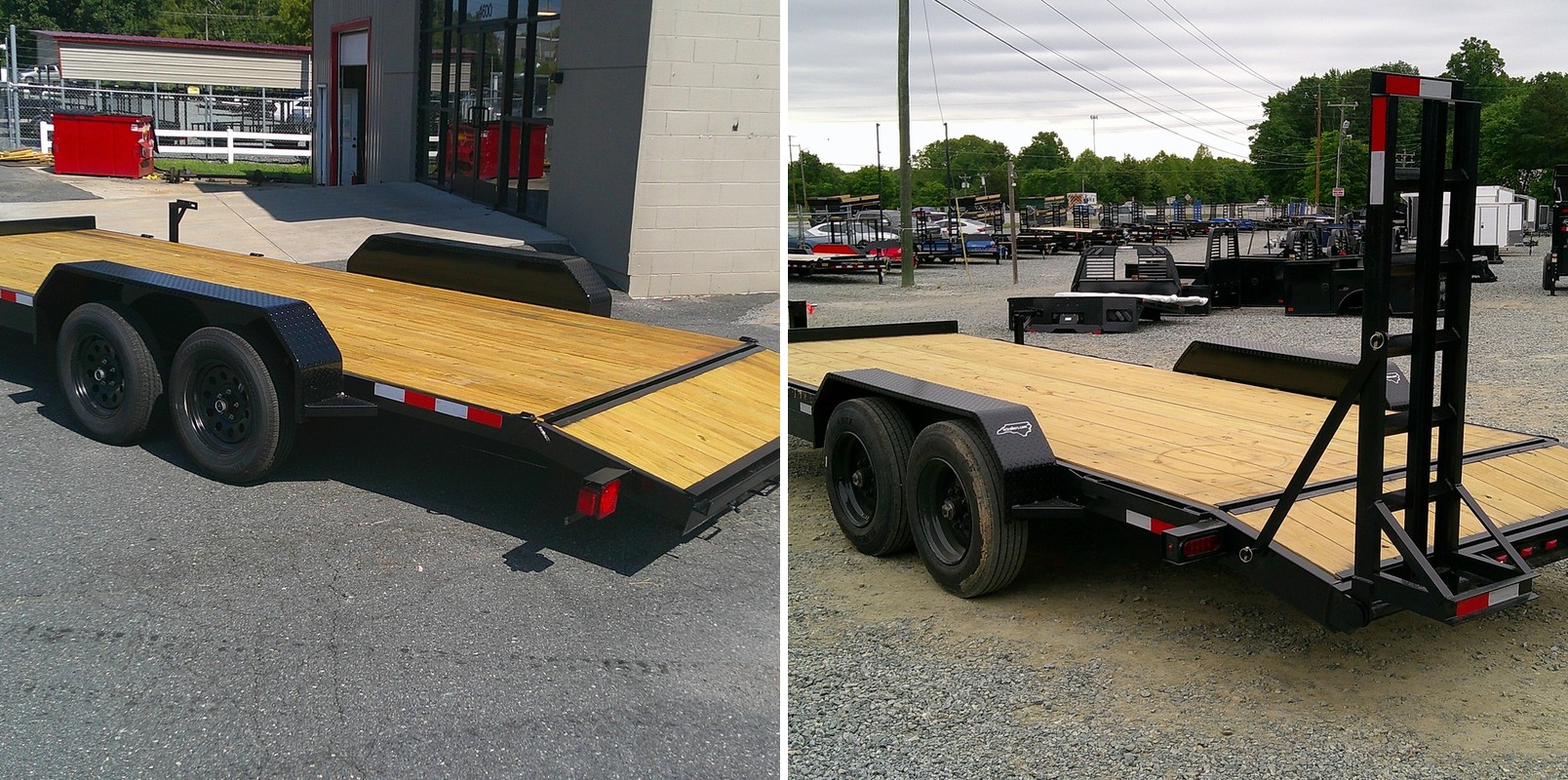
| Nolan 7x20 | Car hauler | Equipment |
|---|---|---|
| GVWR | 7,000 lb | 17,000 lb |
| Axles | (2) 3,500 lb | (2) 8,000 lb |
| Empty weight | 2,300 lb | 3,300 lb |
| Payload | 4,700 lb | 13,700 lb |
| Wheels | 15 in | 17.5 in |
| Ramps | Slide-out | Stand-up ladder |
Nearly three times the payload, in the same parking space.
GVWR is not what the trailer can carry
This is the number people get wrong most often, and it is worth slowing down on.
GVWR is the most the whole loaded trailer is allowed to weigh, steel included. It is not what you get to put on the deck. What you can load is payload, and payload is GVWR minus the trailer's empty weight.
So a 17,000 lb rating does not mean 17,000 lb of machine. The trailer itself takes 3,300 of it, leaving 13,700. On the car hauler, the 7,000 lb rating leaves 4,700 once the trailer's own 2,300 lb is accounted for. Quote yourself the payload, never the GVWR, when you are working out whether something fits.
One more thing the labels show. The equipment trailer is rated 17,000 lb gross but carries two 8,000 lb axles, which add up to 16,000. The axles do not have to carry the whole trailer, because the tongue rests on the tow vehicle and that share rides on the truck.
What actually changes between them
- Axles and brakes. 3,500 lb axles under the car hauler, 8,000 lb axles under the equipment trailer. That is where most of the capacity comes from.
- Wheels and tires. 15 inch wheels on the car hauler, 17.5 inch on the equipment trailer, running a much higher cold pressure. Tire pressure is set by the load range printed on the sidewall, not by the wheel size.
- Frame depth. Look at the side rail in the photo. The equipment trailer's is noticeably deeper, which is what lets it carry a concentrated load like a machine track without the deck flexing.
- Ramps. The car hauler has ramps that slide out from under the deck, sized for a car. The equipment trailer has stand-up ladder ramps built for the weight and the width of a machine.
Which one should you buy
Buy for the heaviest thing you intend to haul, not the thing you haul most weeks. In our experience most people end up with a trailer rated for too little rather than too much, and a rating is not something you get to exceed occasionally. If the heaviest load you have in mind is over the payload, you need the bigger trailer.
| What you are hauling | What to look at |
|---|---|
| A car, a truck, a side-by-side | Car hauler |
| Mowers and a small tractor | Car hauler, check the payload first |
| A skid steer or a mini excavator | Equipment trailer |
| A tractor with a loader and an implement | Equipment trailer |
| You are not sure yet | Weigh the heaviest load, then pick |
Deck length is a separate question from rating, and the two get tangled together constantly. A longer trailer is not a stronger one. Trailer length and measurements covers how to read the numbers in a model name.
How to check this on any trailer
- Find the federal compliance label on the front left of the trailer. It carries the GVWR and the rating of each axle.
- Look for the cargo label next to it. On most trailers it states the maximum cargo weight outright, so you do not have to do the subtraction yourself.
- If there is no cargo figure, subtract. GVWR minus the empty weight of that exact unit is your payload. Ask for the weight of the trailer in front of you, not the model line, because options move it.
- Weigh your heaviest load and compare. Guessing at machine weights is how people end up over.
While you are at the label, check what it says about the tires. Our tire pressure and lug nut torque guide covers both, and our deck and side options page covers what the deck itself costs you in payload.
Come look at both
Stand between a car hauler and an equipment trailer and the choice gets a lot easier. We keep both on both lots, and we will pull the weight sheet on any trailer on the yard so you can do the math before you buy.
Thomasville: (336) 276-0329
Winston-Salem: (336) 499-9888
Rather type than talk? Tell us your heaviest load and we will tell you which trailer covers it.
Related guides
- Understanding trailer GVWR and payload, the numbers this whole page rests on.
- Car hauler weights and ratings, a closer look at the lighter end.
- What to consider when buying an equipment trailer.
- Trailer deck and side options, wood, steel, mesh and rail.
- Trailer length and measurements, how a model number is read.
- Car haulers on the lot and equipment trailers on the lot.
Sources
- GVWR, axle rating, wheel size and cold tire pressure for both trailers are read off each unit's own federal compliance label, and the 13,700 lb cargo figure off the equipment trailer's tire and loading label.
- Empty weights are the individual unit records for the trailers pictured, each confirmed against the second identical unit of the same model on our lots.
- Nolan Manufacturing, 7x20 14K Equipment published specification, for the equipment line's dovetail, ramp and coupler configuration.