
Fenders are easy to skip over when you are looking at a trailer. They are also the first thing in your way when the load turns out to be wider than you planned.
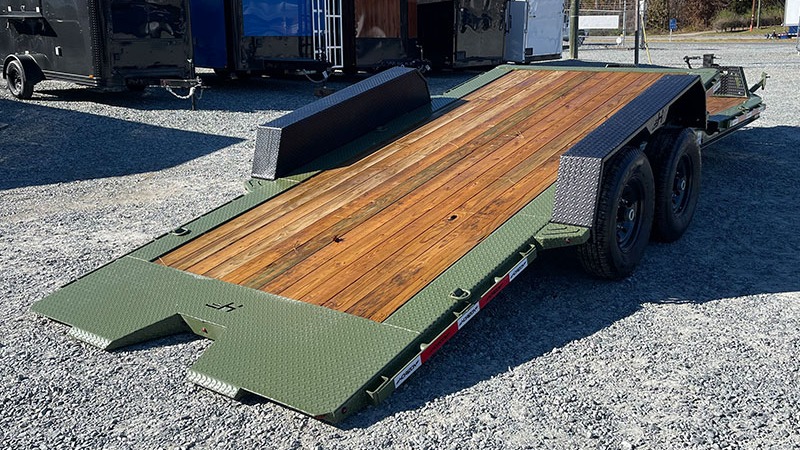
On some trailers the fenders bolt on. Pull the hardware and the fender lifts off, which changes what fits on the deck and how you get to it once it is up there. Removable fenders are standard on some of the open trailers we carry and an option on others, so it is worth knowing what they do before you pick a model.
Start With the Width Between the Fenders
A 7x20 or an 8.5x22 tells you the outside dimensions. The number that decides whether your load fits is the width between the fenders, and it is always smaller.
On the fender-style equipment trailers we sell, that number lands in the high 70s to mid 80s in inches. The Horizon ETZ tilt, for example, has 83 inches between the fenders. Overall width stops at 102 inches, which is 8.5 feet, because that is the legal width limit before you need a permit.
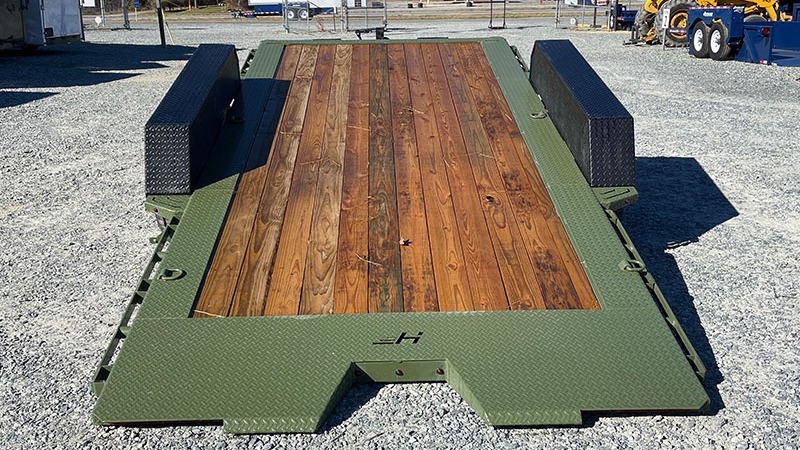
So if the widest point on what you haul is anywhere near 80 inches, the fender is the part you are fighting. Measure your load at its widest point and compare it to the between-the-fenders number on the trailer. Do that before you buy it, not in the parking lot.
Where a Removable Fender Earns Its Keep
Loading a car. You get it centered on the deck, put it in park, and then find the door stops against the fender before you can get out. Now you are climbing over the console and going out the passenger side. Take the fender off and the door opens like it does in your driveway.
Loads that hang wide. A bucket, a mower deck or a cab can be wider than the tires it rides on. With the fender off, that part has room to hang out past the deck edge instead of hitting a fender.
Getting to your straps. The fender sits right where you want to reach a D-ring or run a strap over a tire. With it off, tying down a low car is a lot less of a wrestling match.
You will not take the fenders off for most loads, and that is fine. It is a feature that does nothing until the day you need it, and on that day it saves you an hour of aggravation.
A Bolted Fender Is Also Easier to Fix
Fenders take abuse. Somebody backs into a post on a jobsite, or a ramp gets dropped on one. If the fender is welded to the frame, straightening it means cutting and welding. If it bolts on, it is a part: take the bent one off, put a good one on and go back to work.
Either way, our shop repairs and replaces damaged fenders. Bring it to our service department in Thomasville or Winston-Salem and we will tell you whether yours can be straightened or needs replacing.
Drive-Over Fenders Solve the Same Problem Another Way
Some of the heavier equipment trailers we carry skip the question altogether with drive-over fenders. The fender is built low and rated to be driven on, so a wide machine runs right over the top of it instead of squeezing between. That makes the usable deck the full 102 inches.
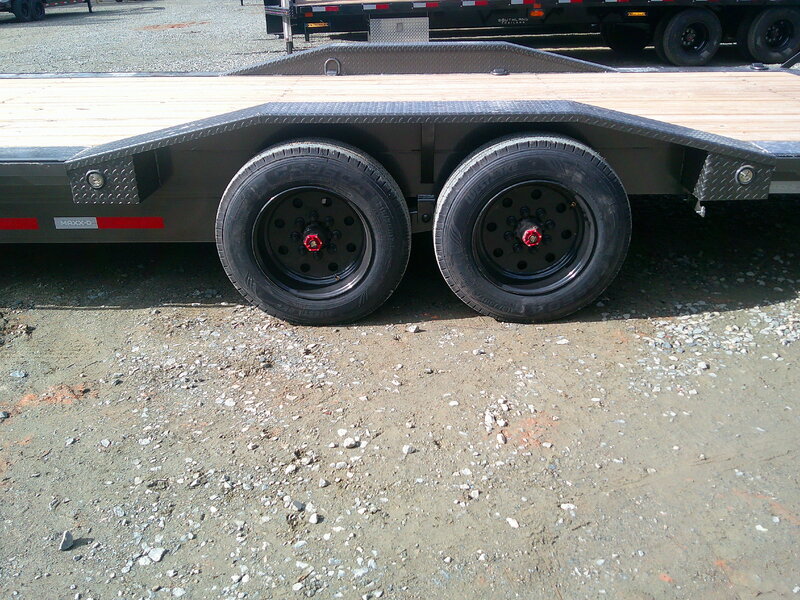
You will see this on Maxx-D's H8X, which runs a 102-inch deck with drive-over fenders, and on Horizon's HEH, whose drive-over fenders are rated at 2,500 lb. It is the setup to look at for dually trucks, buggies and wide-track machines.
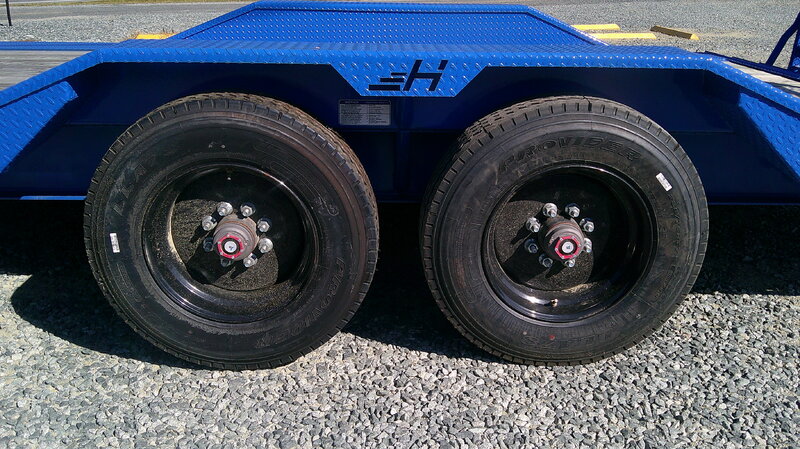
Which one you want comes down to what you haul. If it is cars and the problem is door clearance, you want fenders that come off. If it is a wide machine you are driving on, a drive-over fender will usually do more for you than a removable one.
What to Check Before You Buy
Look at how the fender is attached. Get down and look underneath. Bolts through a bracket means it comes off. A continuous weld bead means it does not. Listings do not always say, so ask.
Ask how many fasteners there are and whether you can reach them with a normal socket. A fender that technically comes off but takes an hour and a cutting wheel is not really a feature.
Check whether lights or wiring run through it. If the side markers are mounted in the fender, taking it off means dealing with the wiring too. Better to know that now than when you have a car sitting on the deck.
Put it back on before the trailer moves. Every bolt in and snug, then check them again after the first trip. The fender comes off to load and goes back on to travel. Do not tow without it.
Ask about the option. If the model you want does not come with removable fenders, ask us. On some makes it is an option we can order.
Come Look at How Yours Is Built
Fender construction is hard to judge from a photo and obvious in about ten seconds in person. Walk up to the trailer, look where the fender meets the frame, and you will know.
Bring the measurements of what you actually haul, the width at its widest point and the height if it is tall. We will pull a tape and tell you honestly whether it fits. Browse car haulers and equipment trailers, or see everything we have in stock. Ready to buy? Apply for financing and get an answer fast.
Not sure your load clears the fenders?
Call us, stop by either lot, or fill out the financing request just below and we will get right back to you.
 About the Author