
Sizing a refrigerated cargo trailer correctly is one of the more consequential decisions a small business makes when entering this equipment category. Buy too small and the trailer becomes a constraint within the first season, limiting how much product you can move and forcing workarounds that undercut the reason you bought it in the first place. Buy too large and you are paying for interior volume, refrigeration capacity, and towing weight you do not need, with a monthly payment and fuel cost to match.
This guide walks through the factors that determine the right refrigerated trailer size for a small business, how to assess your actual volume and operational requirements, what the size tiers look like in practical terms, and how to avoid the most common sizing mistakes buyers make.
Start With Your Actual Volume Requirements
The most reliable starting point for sizing a refrigerated trailer is a clear picture of the volume you need to move or store on a typical operating day. This means thinking in concrete, physical terms rather than abstract capacity numbers.
If you are a caterer, how many hotel pans, sheet pans, and storage containers do you need to hold at peak capacity for your largest regular event? If you are a food distributor making deliveries, how many cases of product need to fit in the trailer at the start of a route? If you are a farmers market vendor, how much product do you bring to a typical market and how much does that volume expand during your busiest season?
Answering these questions in physical terms, rather than guessing at square footage, gives you a realistic baseline for the interior volume you actually need. From there, adding a reasonable growth buffer ensures the trailer can accommodate your operation for several seasons rather than just the current one.
One useful exercise is to physically measure out the floor space of your current storage setup, whether that is a section of a walk-in cooler, a stack of coolers, or a dedicated refrigerator, and calculate the cubic footage. That gives you a tangible reference point to compare against trailer interior dimensions rather than working from an abstraction.
Refrigerated Cargo Trailer Size Tiers and What They Mean in Practice
Refrigerated cargo trailers for small-business use generally fall into three practical size tiers. Understanding what each tier looks like in real-world operational terms helps you place yourself in the right range before narrowing down to a specific unit.
Small: 6x10 to 6x12
Small refrigerated cargo trailers in the 6x10 to 6x12 range are suited for solo operators and small-volume applications where the priority is portability and low purchase cost over capacity. A farmers market vendor transporting product from a farm to weekly markets, a small specialty food producer making local deliveries, or a caterer handling intimate events with modest food volume are the natural fit for this tier. The smaller footprint also means a lighter trailer and a smaller tow vehicle requirement, which is a practical advantage for operations that do not already have a truck sized for heavier towing. The limitation is clear: this tier fills up quickly when volume grows, and operators who expand their business rapidly can outgrow a small trailer within a season or two.
Mid-Size: 7x14 to 7x16
Mid-size refrigerated cargo trailers are the most common purchase tier for small food businesses with regular commercial use requirements. A 7x14 or 7x16 unit provides enough interior volume for a catering operation serving events of 100 to 200 guests, a food distributor running a moderate delivery route, or a specialty food producer with consistent weekly volume. The additional width compared to the small tier also allows for easier interior organization with shelving systems, which significantly increases the usable storage capacity relative to floor space alone. For most small businesses entering the refrigerated trailer category for the first time with a clear operational need, the mid-size tier is the right starting point.
Larger Configurations: 8x18 and Above
Larger refrigerated cargo trailers in the 8x18 and above range serve businesses with high-volume requirements or those that operate the trailer as a primary cold storage hub rather than a delivery vehicle. A catering company regularly serving events of 300 or more guests, a small food distributor with a substantial delivery route, or a specialty food producer with significant seasonal volume may find the larger tier necessary to accommodate the operation without constant capacity constraints. The tradeoff is a larger, heavier trailer that requires a more capable tow vehicle and a higher purchase and operating cost.
How Trailer Size Affects Refrigeration Unit Requirements
Trailer size and refrigeration unit capacity are directly linked. A larger interior volume requires a more capable refrigeration unit to maintain the set temperature, particularly during door openings, product loading, and high ambient temperature conditions.
A refrigeration unit that is undersized for the trailer it serves will run continuously without reaching the target temperature in warm conditions, which shortens the unit's service life and creates food safety compliance problems. A unit that is properly sized for the trailer volume maintains the set temperature reliably even with the door opened and closed repeatedly during a busy service or delivery window.
When evaluating a refrigerated trailer, verify that the refrigeration unit's BTU rating is appropriate for the trailer's interior cubic footage and the temperature range required by the application. For North Carolina summer conditions, where ambient temperatures can exceed 90 degrees Fahrenheit regularly, this specification matters more than it does in cooler climates. A unit that performs adequately in spring or fall may struggle in July and August without adequate capacity.
Tow Vehicle Requirements by Trailer Size
Refrigerated cargo trailers are heavier than standard enclosed trailers of the same exterior dimensions because of the insulation, refrigeration unit, and associated hardware they carry. That additional weight affects the tow vehicle requirements.
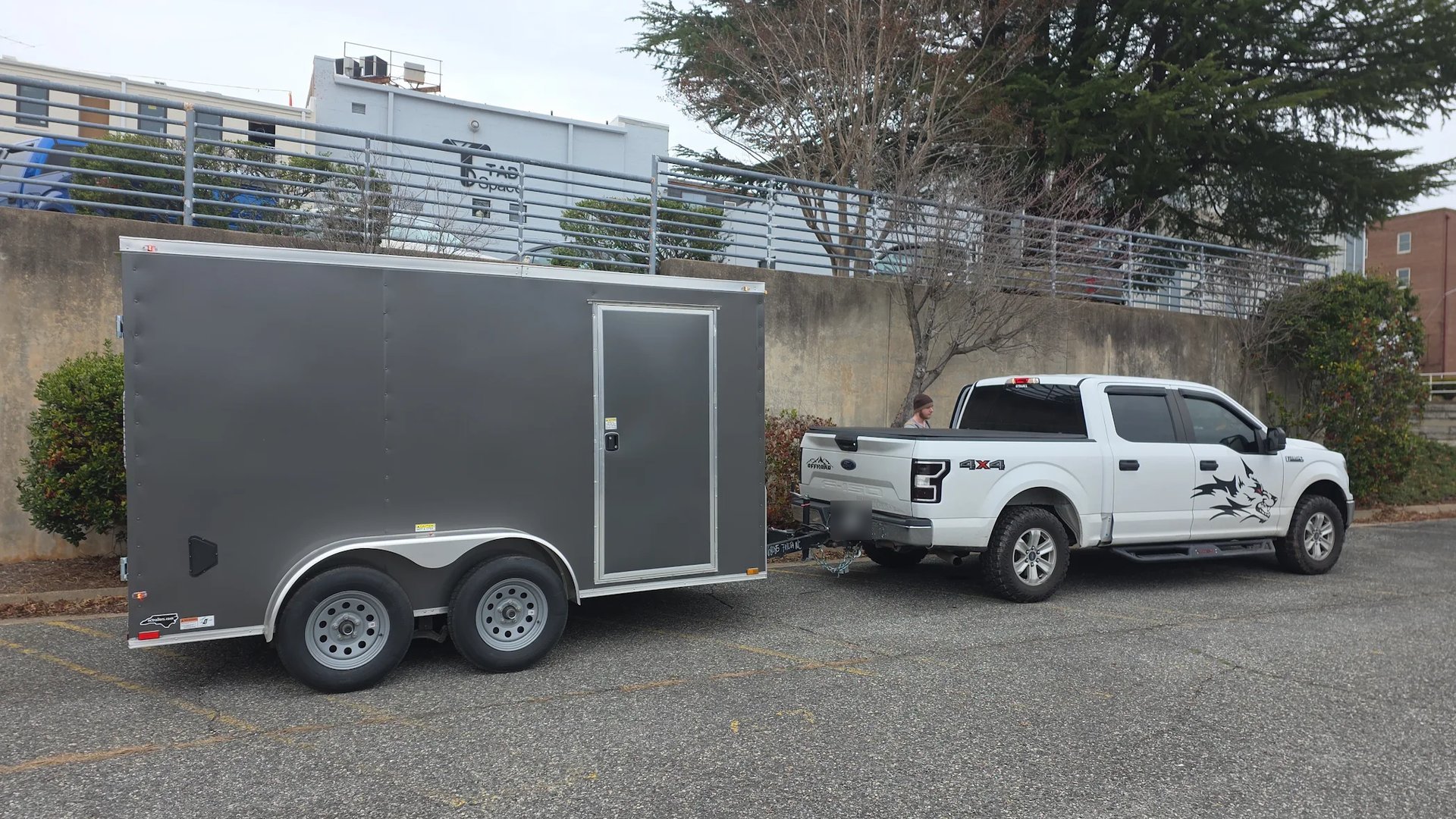
Small refrigerated trailers in the 6x10 to 6x12 range can typically be towed by a properly equipped half-ton pickup or larger SUV, provided the tow vehicle's rated capacity covers the loaded trailer weight. Mid-size units in the 7x14 to 7x16 range generally require a half-ton or three-quarter-ton truck with adequate tongue weight and tow ratings. Larger configurations require a three-quarter-ton or one-ton truck rated for the loaded trailer weight.
Always verify the tow vehicle's manufacturer-rated towing capacity, tongue weight rating, and rear axle rating against the loaded trailer specifications before purchasing. The trailer's GVWR and the refrigeration unit's weight both contribute to the total loaded weight. Choosing a trailer size that exceeds the tow vehicle's rated capacity creates a safety and legal problem that cannot be solved by driving carefully.
Common Sizing Mistakes to Avoid
Two sizing mistakes account for most of the buyer regret in the refrigerated trailer category. Knowing them ahead of time is the straightforward way to avoid them.
Buying based on current volume without accounting for growth is the most common mistake. A trailer that fits your operation perfectly today may be at capacity within one or two seasons if the business grows as intended. Adding a reasonable buffer of 20 to 30 percent above current needs is a practical approach that extends the useful life of the purchase without significantly increasing the cost.
Buying larger than necessary to avoid ever outgrowing the trailer is the opposite mistake. A trailer that is significantly over-spec'd for the current operation carries higher purchase costs, higher towing costs, and a higher monthly payment for a business that may not generate the revenue to justify the investment in the short term. Right-sizing the trailer to actual and near-term projected needs produces a better financial outcome than buying the largest option available.
A third mistake worth naming is selecting a trailer size without verifying the tow vehicle can handle it. Discovering after purchase that your truck is not rated for the loaded trailer weight is an expensive problem that requires either selling the trailer or replacing the truck.
Evaluating Options at NC Trailers
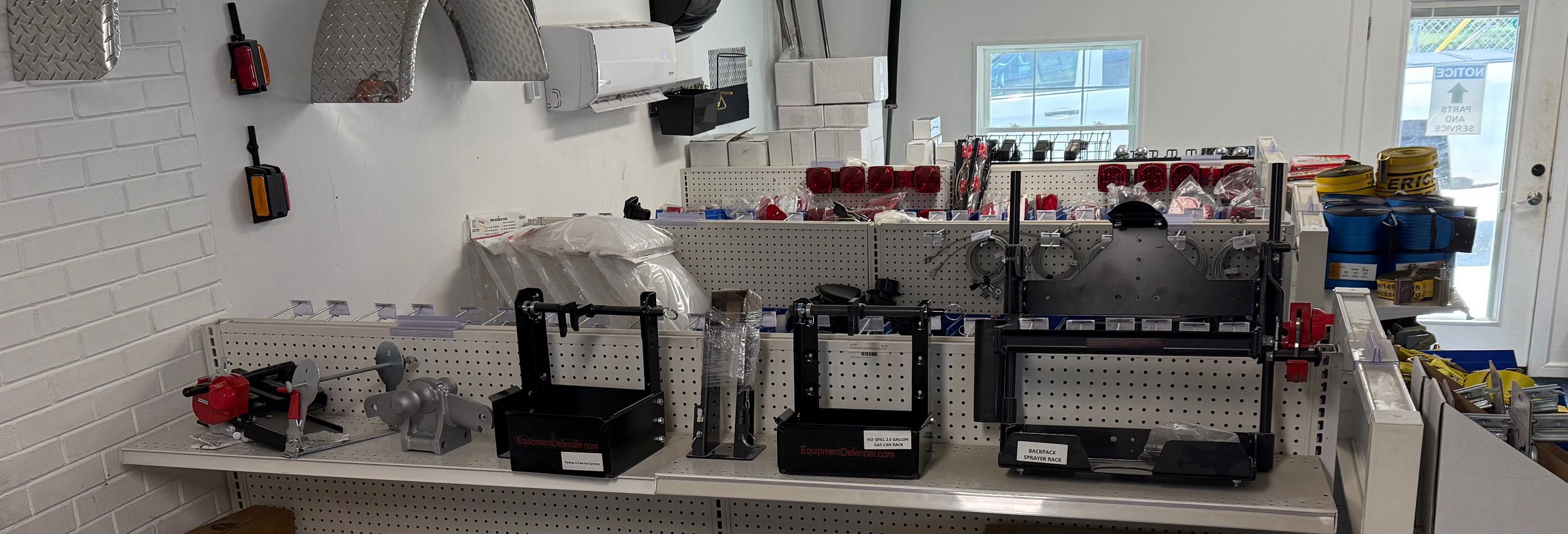
NC Trailers carries refrigerated cargo trailers at both the Thomasville and Winston-Salem locations in configurations suited for small-business use. The refrigerated trailers inventory page shows current available units with interior dimensions, refrigeration unit specifications, and pricing. For buyers who want to see the interior configuration and assess the fit for their specific operation in person, stopping in at either location is worth the trip.
The team at both locations has experience working with food businesses, caterers, farmers market vendors, and distributors evaluating refrigerated trailer options. If you arrive with a clear picture of your volume requirements and tow vehicle specifications, the conversation about which unit fits your operation is straightforward.
Financing is available for qualified buyers through NC Trailers' lender network, which makes a refrigerated trailer purchase more accessible without requiring the full cost upfront. More information on available options is on the trailer financing page. Buyers from across North Carolina, including food businesses from the Charlotte, Greensboro, and Raleigh areas, visit both NC Trailers locations to evaluate refrigerated trailer options before purchasing.
Getting the size right from the start is the decision that determines how well the trailer serves the business over its full service life. Take the time to assess actual volume requirements, account for reasonable growth, verify tow vehicle compatibility, and match the refrigeration unit capacity to the trailer size and operating conditions. The result is a trailer that fits the operation rather than one that constrains it.
 About the Author