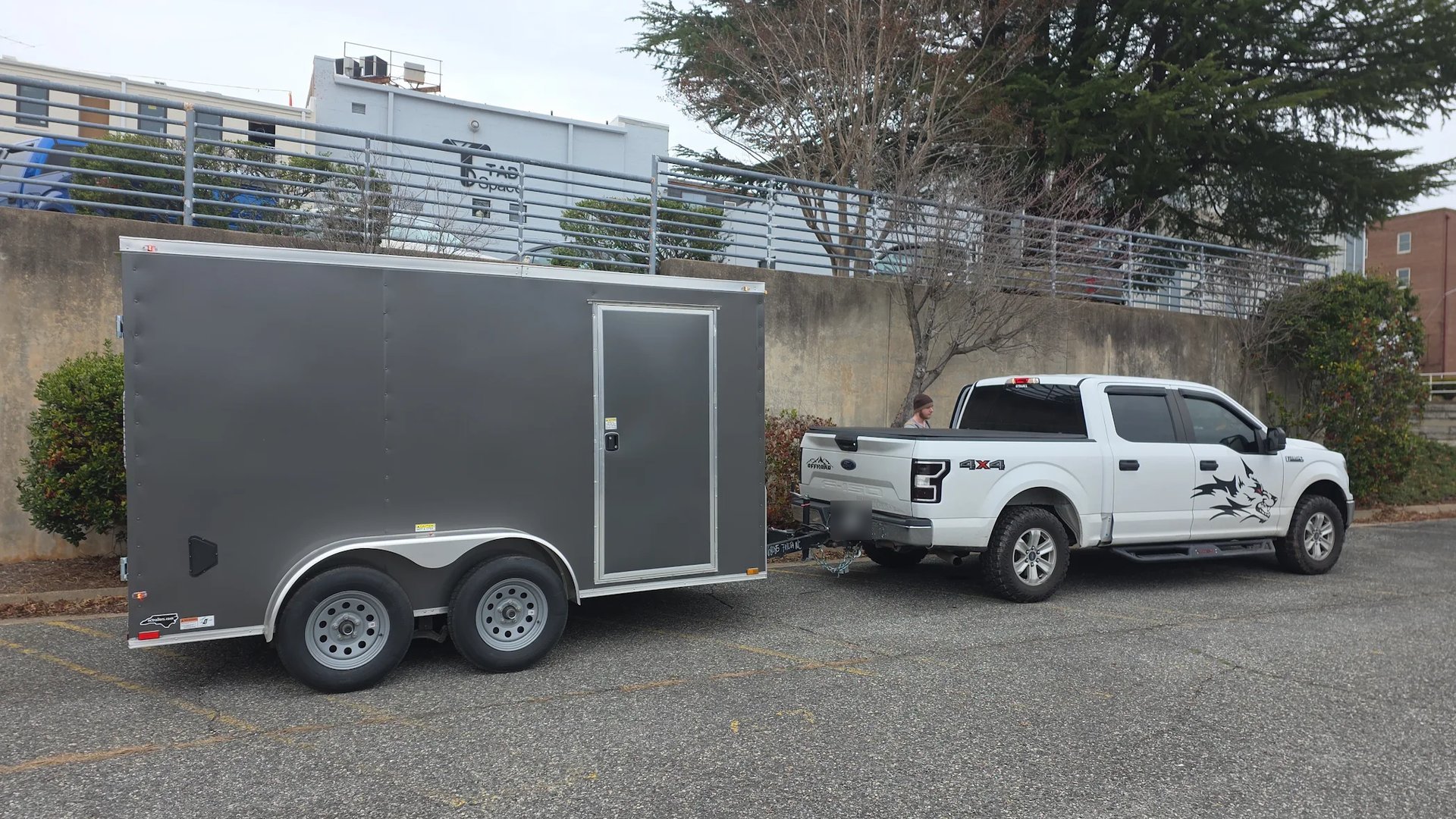

Catering an outdoor event presents a food safety challenge that kitchen refrigerators and coolers cannot fully solve. When a wedding reception, corporate event, or large outdoor gathering requires holding hundreds of pounds of prepared food at safe temperatures for several hours before service, the equipment needs to match the scale of the task. Passive cooling falls short. A purpose-built refrigerated cargo trailer does not.
This guide covers how catering companies and event organizers use refrigerated cargo trailers to solve on-site cold storage challenges, what types of events create the greatest need, the features that matter most in a catering application, and how to acquire the right trailer through NC Trailers.
The Cold Storage Problem That Catering Businesses Face at Events
A catering operation serving 200 or 300 guests at an outdoor venue faces a logistics challenge that has no clean solution without dedicated cold storage on-site. The food has to be prepared in advance, transported to the venue, held at safe temperatures until service time, and then maintained through the service window. Each of those stages requires temperature control that coolers and ice cannot reliably provide at scale.
Coolers work for small-volume applications over short time windows, but they require constant ice management, lose effectiveness as ice melts, and cannot hold large volumes at consistent temperatures through a full event day. A refrigerated cargo trailer maintains a consistent set temperature regardless of ambient conditions, how often the door is opened, or how long the event runs.
For catering businesses that work outdoor weddings, corporate events, festivals, and large private gatherings, a refrigerated trailer is not an upgrade. It is a fundamental piece of operational infrastructure that enables them to take on larger events with more food volume, more complex menus, and higher service standards than cooler-dependent operations can manage.
Types of Events That Benefit Most From Refrigerated Trailer Storage
Not every catering job requires a refrigerated trailer, but certain event types and service scenarios create a clear need for dedicated on-site cold storage.
Outdoor Weddings and Receptions
Outdoor weddings in North Carolina run from spring through fall, with many events falling in the warmer months when ambient temperatures make food safety management more demanding. A wedding reception with a full dinner service for 150 to 300 guests involves significant food volume that needs to be held at safe temperatures from the time it leaves the kitchen until it reaches the table. A refrigerated trailer parked at the venue gives the catering team dedicated cold storage on-site, allows them to transport food in temperature-controlled conditions, and eliminates the ice management problem that cooler-dependent operations face on a hot June afternoon.
Corporate Events and Outdoor Festivals
Corporate events and outdoor festivals typically involve larger guest counts, longer service windows, and more complex logistics than private gatherings. A multi-hour festival with food service running from noon through evening requires cold storage that can maintain safe temperatures across that full window regardless of how warm the day becomes. Catering companies that serve these events regularly find that a refrigerated trailer pays for itself quickly in the operational capability it provides and the larger, higher-revenue events it makes accessible.
Remote Locations and Venues Without Kitchen Facilities
Some of the most challenging catering jobs are at venues with no kitchen access at all: barn weddings, farm properties, parks, and remote outdoor locations where the caterer is entirely self-sufficient. In these settings, the refrigerated trailer functions as the cold storage infrastructure that the venue does not provide. It handles everything from raw ingredient holding through finished food storage, becoming the refrigeration backbone of the entire event operation.
Features That Matter Most in a Catering Refrigerated Trailer
Not all refrigerated cargo trailers are equally suited for catering applications. Several specific features affect how well a trailer performs in a high-use event setting.
Refrigeration unit capacity needs to match the trailer size and the ambient conditions it will operate in. A unit that is undersized for the trailer volume will struggle to maintain temperature when the door is opened and closed repeatedly during a busy service window. For catering use in North Carolina's warmer months, a properly sized unit with adequate BTU capacity for the trailer volume is not a place to economize.
Interior configuration affects how efficiently the trailer can be loaded and unloaded at events. E-track or interior anchor points allow shelving systems to be secured, which dramatically increases the usable storage capacity relative to floor storage alone. Smooth, washable interior wall surfaces make post-event cleaning faster and more thorough, which matters for food safety compliance between events.
Door configuration is worth considering for catering use specifically. Rear barn doors that open fully provide the widest access for loading and unloading full sheet pans, hotel pans, and large food containers. Some caterers prefer a side door in addition to the rear door for faster access during service without opening the full rear entry.
Shore power capability, which allows the trailer's refrigeration unit to run off a standard electrical connection at the venue rather than its own power source, is useful for events where power is available. This eliminates the fuel cost of running a self-powered unit during multi-hour events and reduces noise. Verify the venue has adequate electrical access before depending on shore power as the only option.
Logistics and Setup for Event Catering With a Refrigerated Trailer
Using a refrigerated trailer effectively in an event catering context requires planning around several logistical factors that differ from stationary restaurant or commercial kitchen cold storage.
Pre-cooling the trailer before loading is essential. Running the refrigeration unit for at least 30 to 60 minutes before loading brings the interior to the target temperature so food is not loaded into a warm environment. Loading warm food into a warm trailer and expecting the unit to compensate creates temperature compliance problems and puts unnecessary stress on the refrigeration unit.
Positioning the trailer at the event site should account for power access if running on shore power, traffic flow to and from the service area, and the stability of the surface the trailer will sit on. A trailer parked on soft ground at a remote venue may need leveling blocks to maintain a level surface, which affects both refrigeration unit efficiency and door operation.
Maintenance between events is straightforward but important. Clean the interior thoroughly after each use, inspect the door seals for any food residue that could cause seal degradation, and verify the refrigeration unit is functioning correctly before the next event. A unit that develops a problem between events is harder to address than one caught during a routine check.
NC Trailers Refrigerated Cargo Trailer Inventory and Financing
NC Trailers carries refrigerated cargo trailers suited for small-business and event catering use at both the Thomasville and Winston-Salem locations. These are purpose-built cargo trailers with integrated refrigeration, not converted enclosed trailers or improvised cooling setups. Current available configurations and pricing are listed on the refrigerated trailers inventory page.
Catering businesses and event organizers from across North Carolina, including those operating in the Charlotte, Greensboro, and Raleigh markets, visit both locations to evaluate refrigerated trailer options in person. Seeing the interior configuration, door operation, and refrigeration unit firsthand before purchasing is a practical step that the inventory page supports but does not replace.
Financing is available for qualified buyers, which makes a refrigerated trailer purchase more accessible without requiring a large upfront cash outlay. Spreading the cost over monthly payments allows a catering business to put the trailer to work immediately while managing cash flow. More information on available financing options is on the trailer financing page.
A refrigerated cargo trailer changes what a catering business can take on. It makes larger events viable, simplifies food safety compliance in the field, and eliminates the ice management problem that limits cooler-dependent operations. For catering companies in North Carolina that are ready to add this capability, NC Trailers is a practical starting point for evaluating the options.
 About the Author