
Concession trailer size is one of the most consequential decisions a food business owner makes before purchasing, and it is one of the most commonly misjudged. A trailer that is too small limits the menu, creates workflow bottlenecks during a busy service window, and can make health department compliance harder to achieve. A trailer that is too large costs more to purchase, more to tow, and more to outfit with equipment than the business actually needs.
This guide walks prospective food business owners through the sizing decision step by step, covering how menu type drives space requirements, what different trailer sizes can realistically accommodate, how window configuration affects workflow, and what ventilation and power systems need to match the trailer size and equipment load.
Start With the Menu, Not the Trailer
The most reliable way to approach concession trailer sizing is to work backward from the menu. What you plan to sell determines what equipment you need, and what equipment you need determines how much interior space is required to operate safely and efficiently.
A simple menu with two or three items that share common cooking equipment, a burger and fries operation for example, requires less floor space than a multi-cuisine menu with separate fryers, griddles, steam tables, and cold holding equipment all operating simultaneously. A coffee and beverage trailer can be highly functional in a compact footprint because its equipment list is focused. A BBQ trailer that needs a warming cabinet, a prep table, a fryer, and a point-of-sale station needs meaningfully more space to operate without crew members working around each other constantly.
Before evaluating a single trailer dimension, write out every piece of equipment the menu requires. Include cooking equipment, cold holding, hot holding, a hand-washing sink, a three-compartment sink if required by your local health department, prep space, and the point-of-sale station. Then look up the footprint dimensions of each piece. That total footprint, plus clearances and walkway space, is the floor space the trailer needs to provide.
Common Concession Trailer Sizes and What Each One Fits
Concession trailers are typically described by interior floor dimensions. The most common sizes for small food businesses run from 8 feet to 24 feet in length, with widths between 7 and 8.5 feet on the interior. Here is a practical breakdown of what each size range can realistically accommodate.
8 to 12 Feet: Focused, Single-Operator Menus
A trailer in the 8 to 12-foot range is well suited for a highly focused menu operated by one person. Coffee and espresso trailers, shaved ice and beverage trailers, and single-item specialty food operations are the natural fit. The equipment list needs to be tight, the workflow needs to be linear, and the operator needs to be comfortable working efficiently in a compact space. These trailers are lighter, easier to tow with a standard pickup, and less expensive to purchase and outfit. They are not the right choice for any operation that requires a three-compartment sink alongside cooking equipment and cold holding, as those regulatory requirements consume floor space quickly.
14 to 18 Feet: The Most Versatile Range for Small Food Businesses
The 14 to 18-foot range is where most small food businesses land, and for good reason. A 16-foot trailer provides enough floor space to accommodate a focused two to three item menu with a griddle, fryer, prep table, hand-washing sink, three-compartment sink, and cold holding, with room for one to two crew members to work without constantly crossing paths. This size range handles the bulk of North Carolina health department compliance requirements without requiring a large outfitting investment to fill the space. It is also the most common size at festivals, farmers markets, and private events, which makes logistics simpler.
20 to 24 Feet: High-Volume and Multi-Station Operations
Trailers in the 20 to 24-foot range serve operations with larger crews, more complex menus, or high-volume service requirements at large events. A BBQ operation running multiple proteins, a full-service food trailer doing catered events for several hundred guests, or a multi-concept trailer with distinct cooking stations needs the additional floor space that this size range provides. These trailers are heavier, require a more capable tow vehicle, and carry a higher purchase and outfitting cost. They are the right choice when the business model and revenue justify the investment.
Single-Window vs. Multi-Window Setups
Window configuration affects both service speed and customer flow at events, and it is a decision that needs to be made at the trailer purchase stage because windows are built into the structure.
A single-window trailer serves customers from one point, which works well for focused menus with short service times. A customer orders, pays, waits, and receives food at the same window. For a simple operation where the prep-to-plate time is under two minutes, a single window rarely creates a bottleneck even at a busy event.
A multi-window setup allows order, payment, and pickup to happen at separate points, which improves throughput significantly when service times are longer. It also allows the crew to work without constantly reaching past each other at a single opening. For operations serving hot food that requires two to four minutes of prep time per order, a multi-window configuration can meaningfully increase the number of customers served per hour at a high-volume event.
Ventilation and Power System Sizing Considerations
Ventilation and electrical capacity are two specifications that must be sized to match the equipment load, not just the trailer size. Getting these wrong creates compliance problems and operational failures that are expensive to correct after the trailer is built.
Ventilation requirements in North Carolina food trailers are governed by local health department regulations, which typically specify hood and exhaust requirements based on the type and number of cooking appliances. A trailer with a commercial fryer and a griddle requires a significantly more capable exhaust system than one with only a steam table and a coffee machine. Any open-flame cooking equipment requires a fire suppression system integrated with the hood. Verify the specific ventilation and suppression requirements for the cooking equipment you plan to use with your local health authority before purchasing a trailer.
Electrical capacity needs to cover all equipment running simultaneously at peak service, not just the average load. A trailer outfitted with a commercial refrigerator, a griddle, a fryer, an exhaust fan, lighting, and a point-of-sale system has a peak electrical draw that must be matched by the generator or shore power connection. Undersizing the electrical system means tripped breakers during service, which is not a recoverable situation at a busy event.
NC Trailers Concession Trailer Inventory and Financing Options
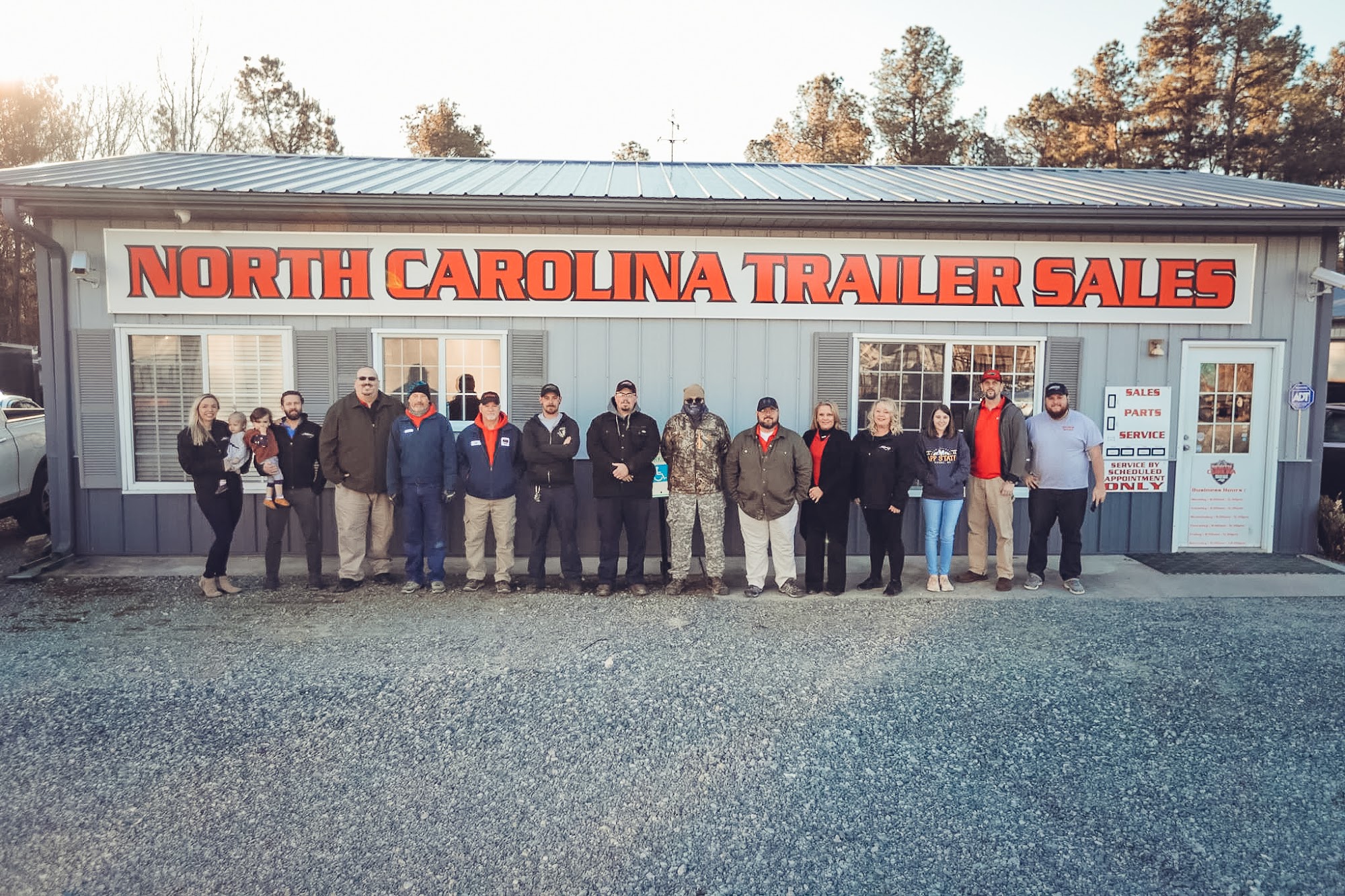
NC Trailers carries concession trailers suited for small food businesses at both the Thomasville and Winston-Salem locations. Available configurations vary based on current inventory, and seeing the interior dimensions and layout in person is the most reliable way to assess whether a specific trailer fits the equipment list and workflow you have planned.
Current available units are listed on the concession trailer inventory page. For food business owners in the planning stage who have specific equipment lists but have not finalized their trailer size, stopping in to walk through available configurations with the team at either location can help clarify what size range matches the planned operation.
Financing is available for qualified buyers through NC Trailers’ lender network, which makes a concession trailer purchase more accessible without requiring the full cost upfront. More information on financing options is on the trailer financing page. Food business owners from across North Carolina, including those starting operations in the Charlotte, Greensboro, and Raleigh markets, visit both NC Trailers locations to evaluate concession trailer options before launching.
Getting the size right before purchasing is significantly easier than correcting a size mistake after the fact. Start with the menu and the equipment list, work through the sizing considerations in this guide, and talk to the team at NC Trailers before committing to a specific trailer.
 About the Author