
Most people who walk onto our lot know what they need to haul. What they usually don't know is which trailer is built to haul it. That's the whole game. Pick the right type up front and the trailer does its job for fifteen years. Pick the wrong one and you fight it every weekend.
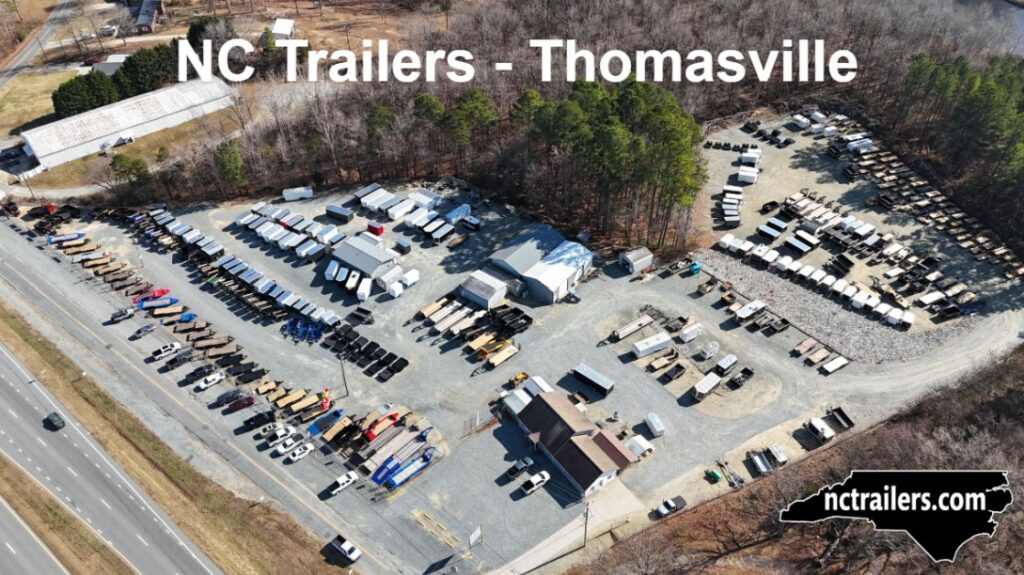
We stock twelve different trailer types across our Thomasville and Winston-Salem lots. Here's what each one is actually for, who buys it, and the brands we carry.
Enclosed cargo trailers
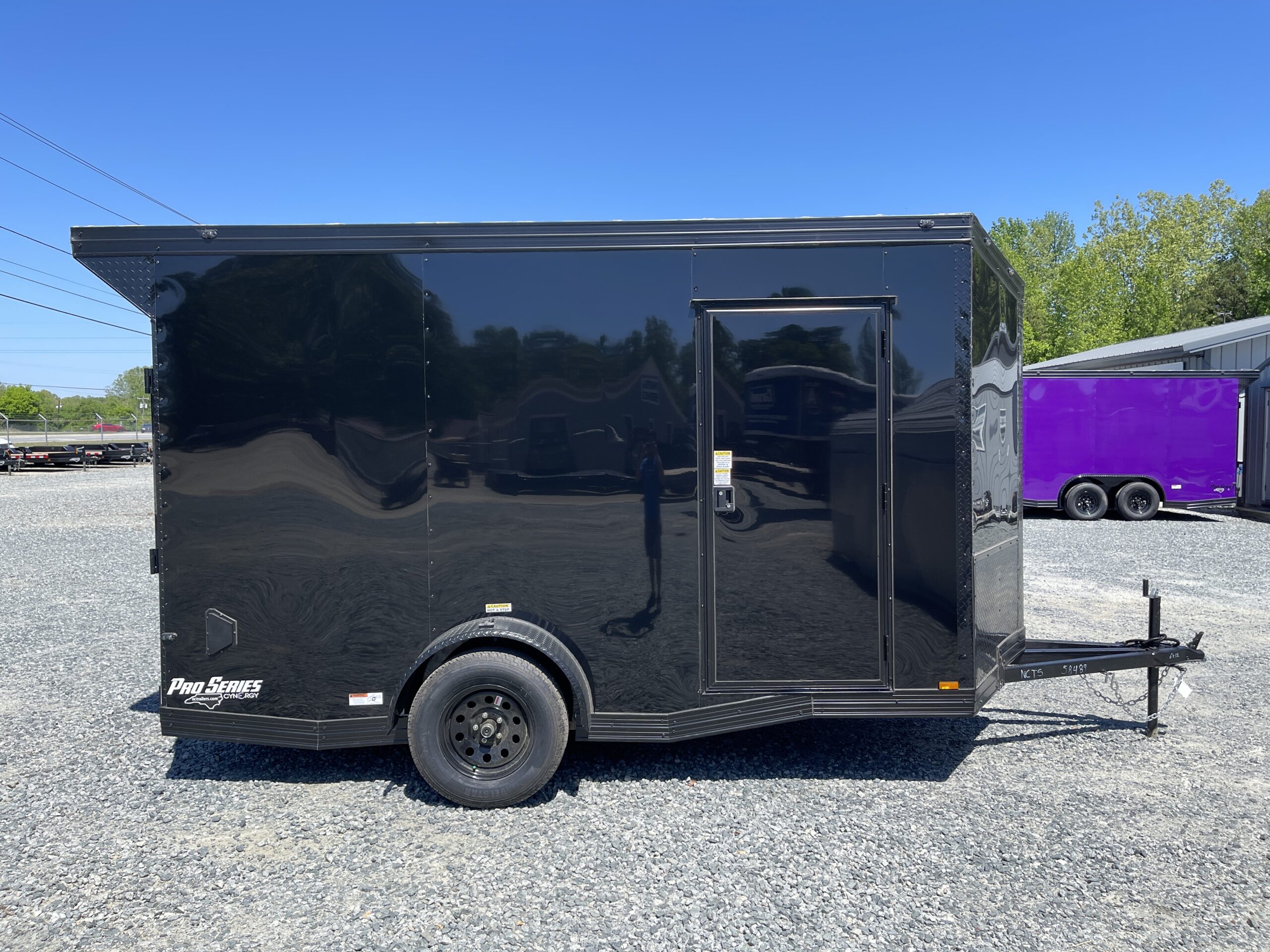
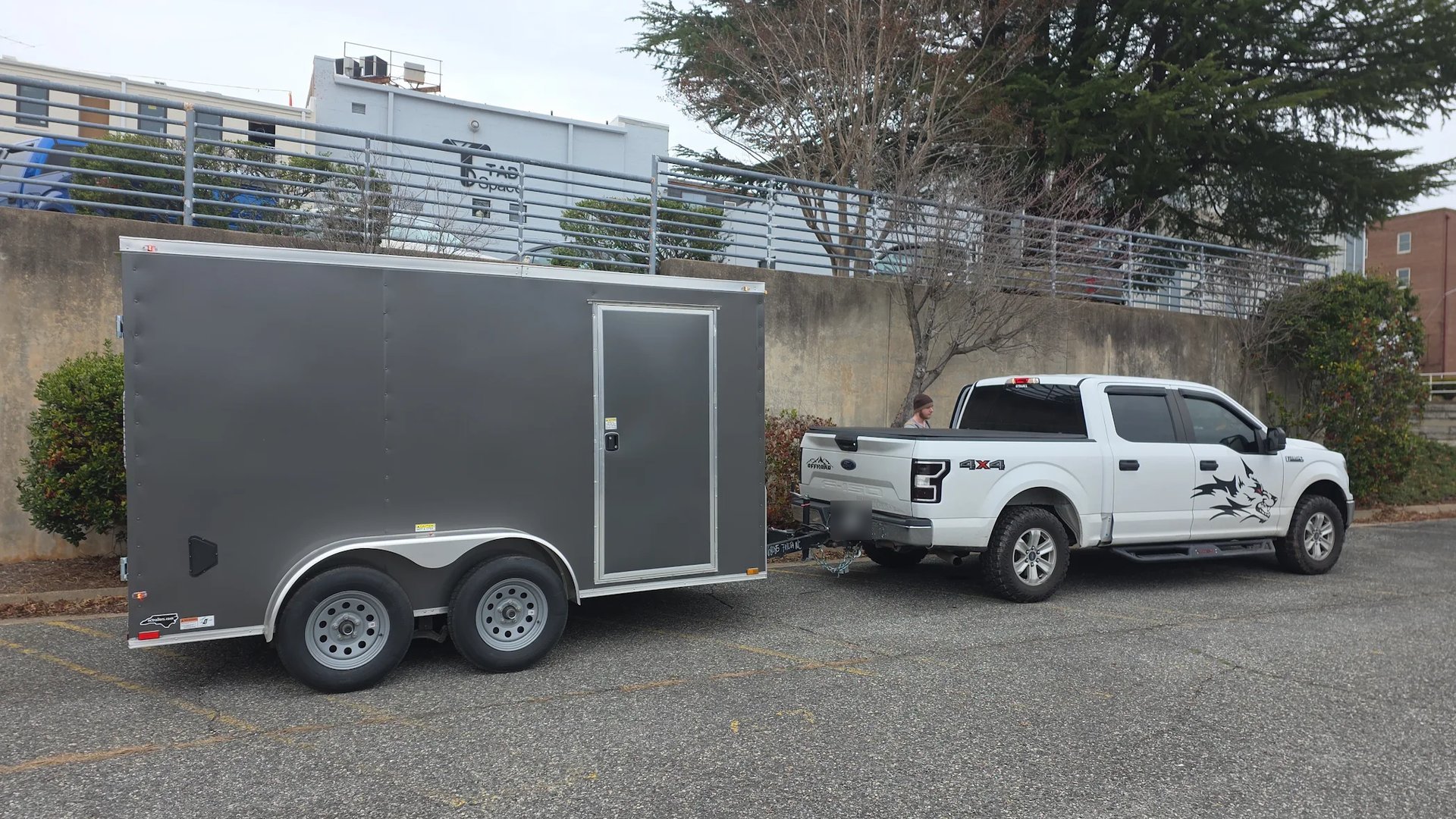
Our highest volume category. An enclosed trailer locks up, keeps weather off your load, and doubles as rolling storage so you're not unloading tools every night. Contractors, mobile detailers, motorcycle guys, and anybody moving a household buy these.
One number that catches people out: the rear door opening is about six inches shorter than the interior height. If a spec sheet says 7 feet inside, plan on roughly 6'6" through the door. Measure the tallest thing you're loading before you pick a size.
Rough interior heights by size: a 5x8 runs 5 to 6 feet, a 6x12 runs 6 to 7 feet, a 7x16 runs 6'3" to 7 feet, and an 8.5x24 is usually 6.5 feet or better.
We carry Cynergy Cargo and the Cynergy Cargo Pro Series, Quality Cargo, and Cargo Pro from Alcom, including the all aluminum Stealth line. Worth knowing: the outer skin on nearly every enclosed trailer built today is aluminum no matter the brand. When somebody says "steel versus aluminum," what they're really comparing is a steel frame with aluminum skin against an all aluminum frame and skin. The all aluminum build runs 300 to 500 pounds lighter on a 6x12 and holds up better against salt, which matters if you run the coast or head north in winter.
See enclosed cargo trailers in stock
Landscape and utility trailers

This is the open deck workhorse, and it's the trailer most people picture when they say "trailer." Mowers, mulch, furniture, ATVs, dump runs to the county landfill. Landscape crews live on these.
The mesh ramp gate is the part that sells them. It folds up for travel and drops flat so you can walk a mower straight on. If you're loading anything with wheels, get the gate.
Single axle handles light homeowner duty. Go tandem axle once you're carrying a zero turn plus a walk behind plus fuel, because you want the brakes and the reserve capacity, not just the deck space.
See landscape and utility trailers in stock
Dump trailers
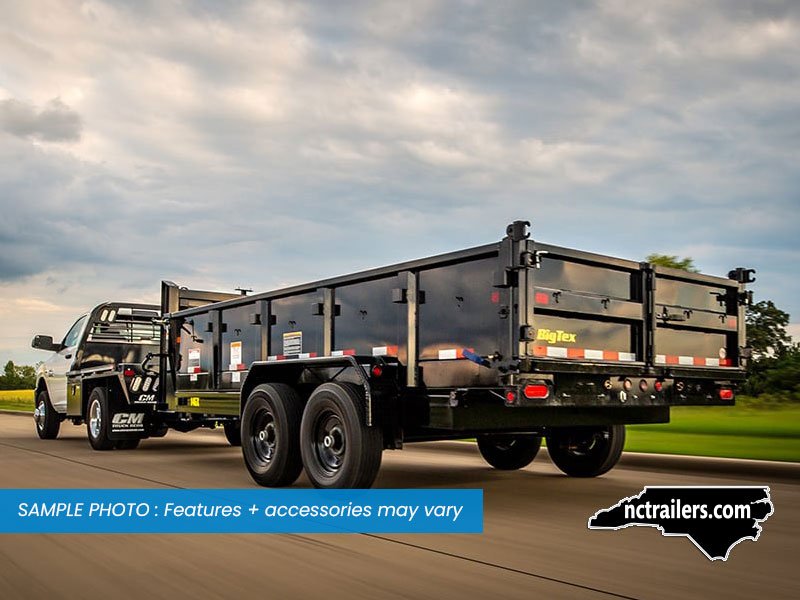
A dump trailer pays for itself in saved labor. Gravel, topsoil, mulch, demo debris, roofing tear off. You dump it instead of shoveling it.
Size it by weight, not by volume, because that's where people get burned. A cubic yard of topsoil runs 1,400 to 2,000 pounds. Gravel runs 2,800 to 3,400. Mulch is light at 400 to 800. That means a 7x14 that swallows mulch all day will hit its GVWR on gravel long before the box looks full. Do the math on the heaviest material you'll actually haul.
We carry dump trailers from Big Tex, Maxx-D, Horizon, Southland, NexHaul, and Nolan.
Equipment and tilt trailers

Built for skid steers, mini excavators, tractors, and anything else on tracks or with low ground clearance. Heavier frame, heavier axles, and a deck height and ramp setup made for driving equipment on rather than winching it.
The tilt versions are the ones to look at if you load alone. The deck tilts under the weight of the machine so you drive on at a shallow angle with no ramps to wrestle. One thing to understand about a gravity tilt: it tilts as the load crosses the pivot, so it's a one machine at a time trailer. If you need to haul two pieces, you want a partial tilt or a stationary deck with ramps.
See equipment and tilt trailers in stock
Gooseneck trailers

The thing to understand about goosenecks is that the advantage is handling, not capacity. Plenty of bumper pull trailers are rated to carry as much as a gooseneck. What a gooseneck does is move the hitch point over your truck's rear axle instead of hanging off the bumper. That puts the weight on the drive axle, which means less sway, better braking, and far easier backing.
If you've ever had a long bumper pull start walking on you at highway speed with a heavy load, that's the problem a gooseneck solves.
Four configurations to know: straight deck for lumber, pipe, and materials, dovetail for driving low clearance equipment on, tilt for drive on loading with no ramp work, and hydraulic dovetail when you want to haul materials and equipment equally well without touching a manual ramp. Most run 14,000 to 40,000 pounds GVWR.
You'll need a gooseneck hitch in the bed, and realistically a three quarter ton or one ton truck. We carry Big Tex, Maxx-D, RawMaxx, Southland, Horizon, and Nolan goosenecks, among others.
See gooseneck trailers in stock
Car haulers

Purpose built for vehicles: low deck height, a shallow approach angle so you don't scrape a front bumper, and tie down points where you actually need them. Racers, dealers, restoration shops, and anybody moving a project car buy these.
Every common car hauler is tandem axle. A car weighs too much for a single axle to be honest about, so if you see a single axle "car hauler" advertised somewhere, look closer at the GVWR.
Decide between a wood deck and a steel deck up front. Wood is cheaper and easier to replace a board on. Steel lasts longer and cleans up better.
Roll-off trailers

A roll-off is a dump trailer with a hoist that loads and unloads whole bins. Instead of one fixed body, you drop a bin at the job, leave it, and pick it up full. One trailer can service several sites in a week.
Junk removal, demo, roofing, and small container operations are the buyers here. If you're running a dumpster rental business, this is the equipment that makes it work. If you just need to haul your own material, a standard dump trailer costs less and does the job.
See roll-off trailers in stock
Drop deck trailers
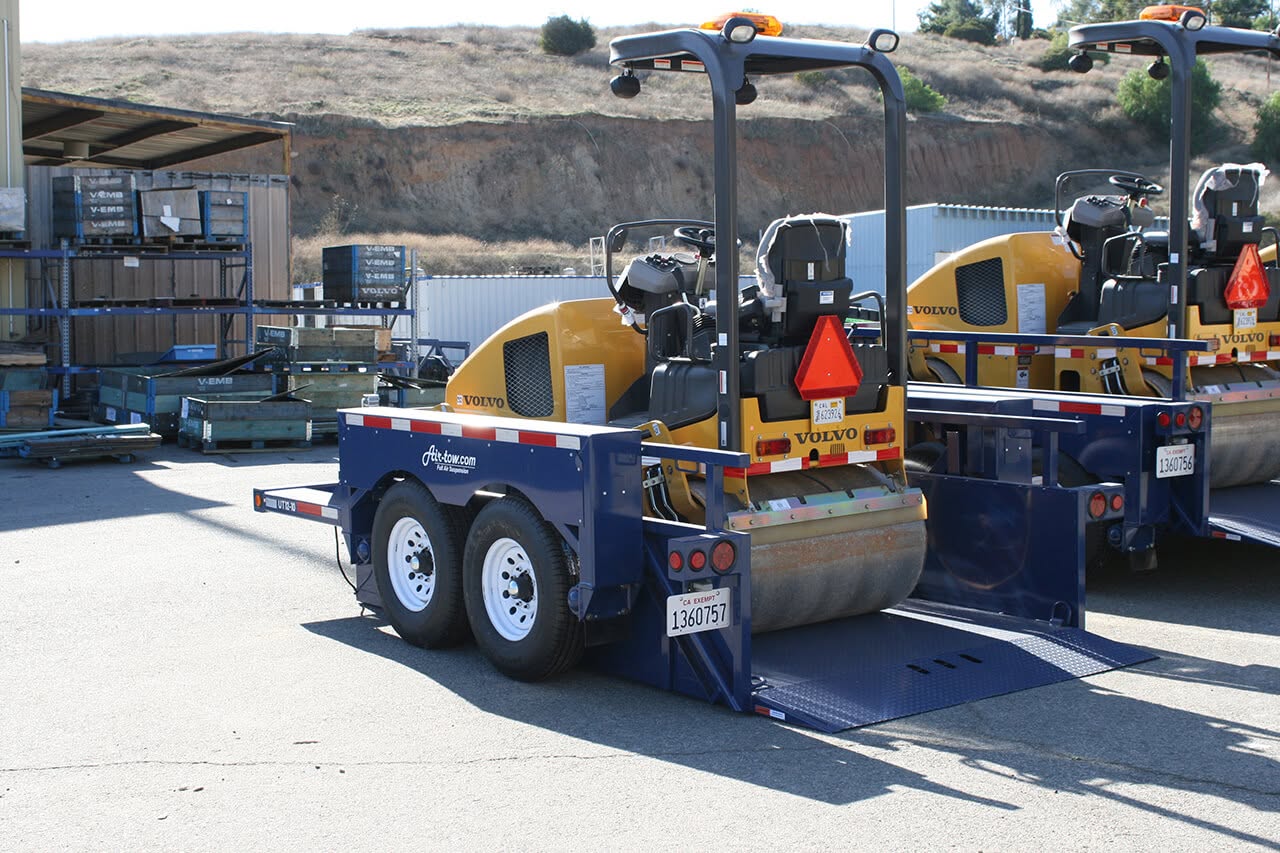
The Air-Tow drop deck is the answer for loading by yourself with no ramps at all. A swing arm axle lowers the whole deck to about eight inches off the ground, you roll or drive the load straight on, then the deck lifts back to travel height.
These are single axle, sized for compact equipment, and light enough that a half ton truck can pull one. Rental yards, equipment dealers, and anybody loading a walk behind or a compactor solo get a lot out of them. Per model GVWR isn't published online, so check the spec sticker on the actual unit rather than trusting a number off a website.
See drop deck trailers in stock
Concession trailers
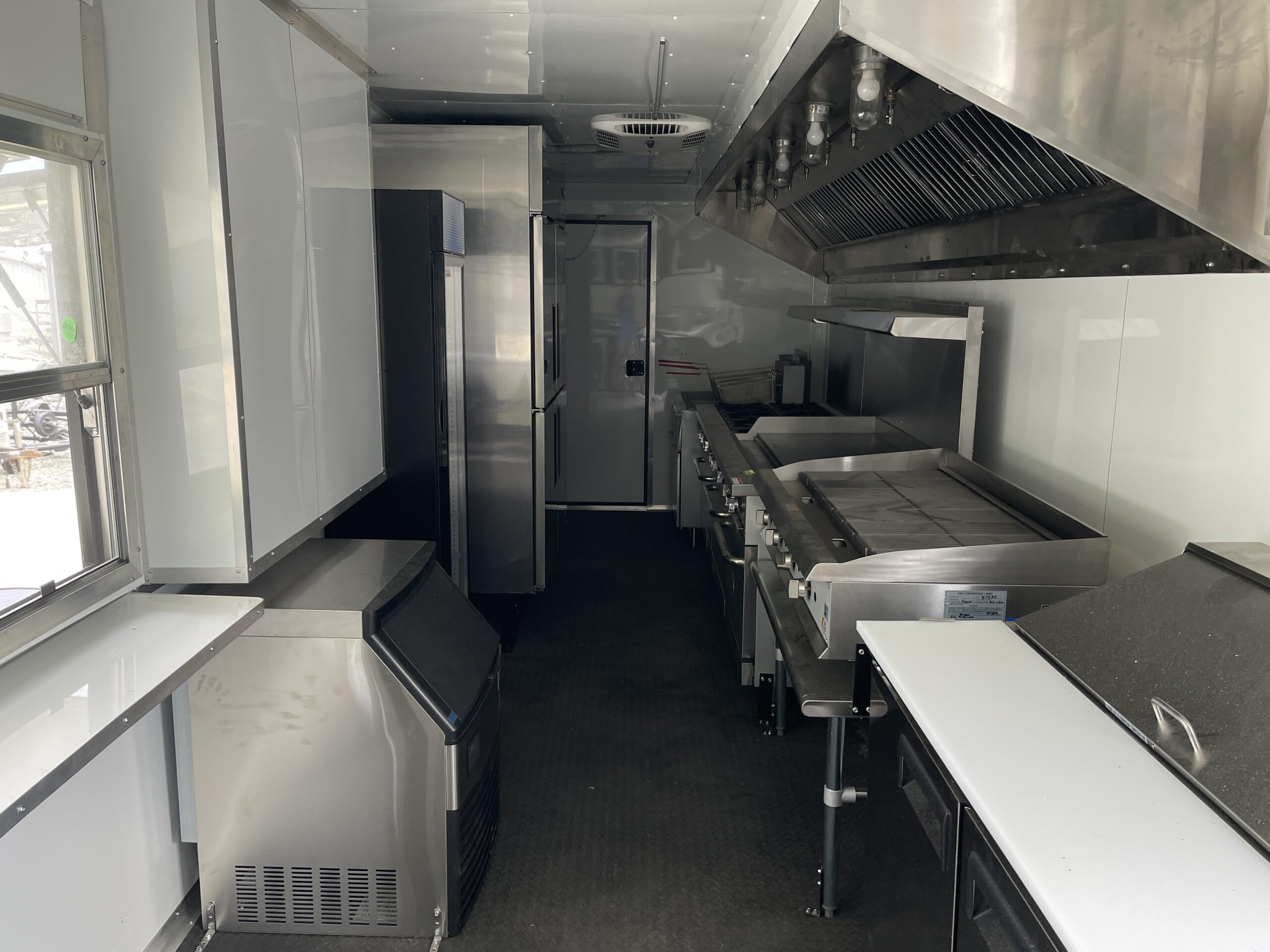
A concession trailer is a commercial kitchen on axles, and it's the category with the most rules attached. In North Carolina you'll need a county food service permit, which typically runs $100 to $500, and you'll need a commissary kitchen. That last one surprises people. NC requires it. Surfaces have to be NSF certified, and anything with an open flame needs an exhaust hood and fire suppression.
On budget, a basic 10 foot unit with a finished interior and a few appliances starts around $15,000 to $25,000. A fully equipped 24 footer with commercial cooking equipment, hood, fire suppression, a generator, and a finished interior runs $55,000 to $75,000 and up. The cooking equipment package drives most of that high end, not the trailer.
Plan on $500 to $2,500 a year in maintenance depending on size, options, mileage, and how many generators you're running.
See concession trailers in stock
Refrigerated trailers

A Polar King refrigerated trailer is a real cold box, not an insulated cargo trailer with a window unit strapped to it. Seamless fiberglass shell, no seams to leak or rot, and a refrigeration system built to hold temperature in a Carolina August.
Caterers, event companies, florists, farms, and restaurants running overflow storage use these. If you're hauling anything temperature controlled, this is the category. A dry cargo trailer will not do this job no matter how much insulation somebody promises you.
Learn more about Polar King refrigerated trailers
Truck beds

Not a trailer, but it belongs in the conversation. A flatbed replaces your factory pickup bed with a flat work deck, usually with a gooseneck ball already in the floor, headache rack, and better tie down points.
If you're pulling goosenecks regularly or hauling awkward material that a factory bed's walls get in the way of, a flatbed changes how the truck works. We carry Bedrock beds and can handle the install.
Tow dollies

The smallest thing we sell and sometimes exactly the right answer. A tow dolly lifts the front wheels of a car off the road while the rear wheels roll. Cheaper than a car hauler, lighter, and it stores in a corner of the garage.
The catch is drivetrain. A dolly works for front wheel drive vehicles. Rear wheel drive and all wheel drive need the drive wheels off the ground too, which means a full car hauler or a driveshaft disconnect. Check your owner's manual before you commit, because this is the mistake that costs a transmission.
How to narrow it down
Three questions get most people to the right trailer.
What's the heaviest thing you'll haul, in pounds? Not the biggest, the heaviest. That sets your axle rating and your GVWR, and everything else follows from it.
Does it need to be locked or covered? Yes puts you in enclosed. No opens up every open deck option, which is cheaper for the same capacity.
How will you load it? Drive on, walk on, forklift, or by hand. That decides ramp gate against tilt deck against drop deck, and it's the question people skip most often.
Once you know the GVWR you need, check what your truck is actually rated to tow, including tongue weight. We'd rather tell you that a trailer is too much for your half ton before you buy it than after.
Come look at them
Pictures only go so far with trailers. Standing next to a 7x16 tells you more in ten seconds than a spec sheet does in ten minutes. We've got both lots stocked, and nobody is going to rush you through it.
Not sure which type you need?
Tell us what you're hauling and we'll tell you what will handle it. Call us, stop by either lot, or send us a message below.
You can browse everything we have on the ground right now on our trailer inventory page, and if you want to know how we handle the buying side of it, read about our Bulletproof Buying Experience.
 About the Author