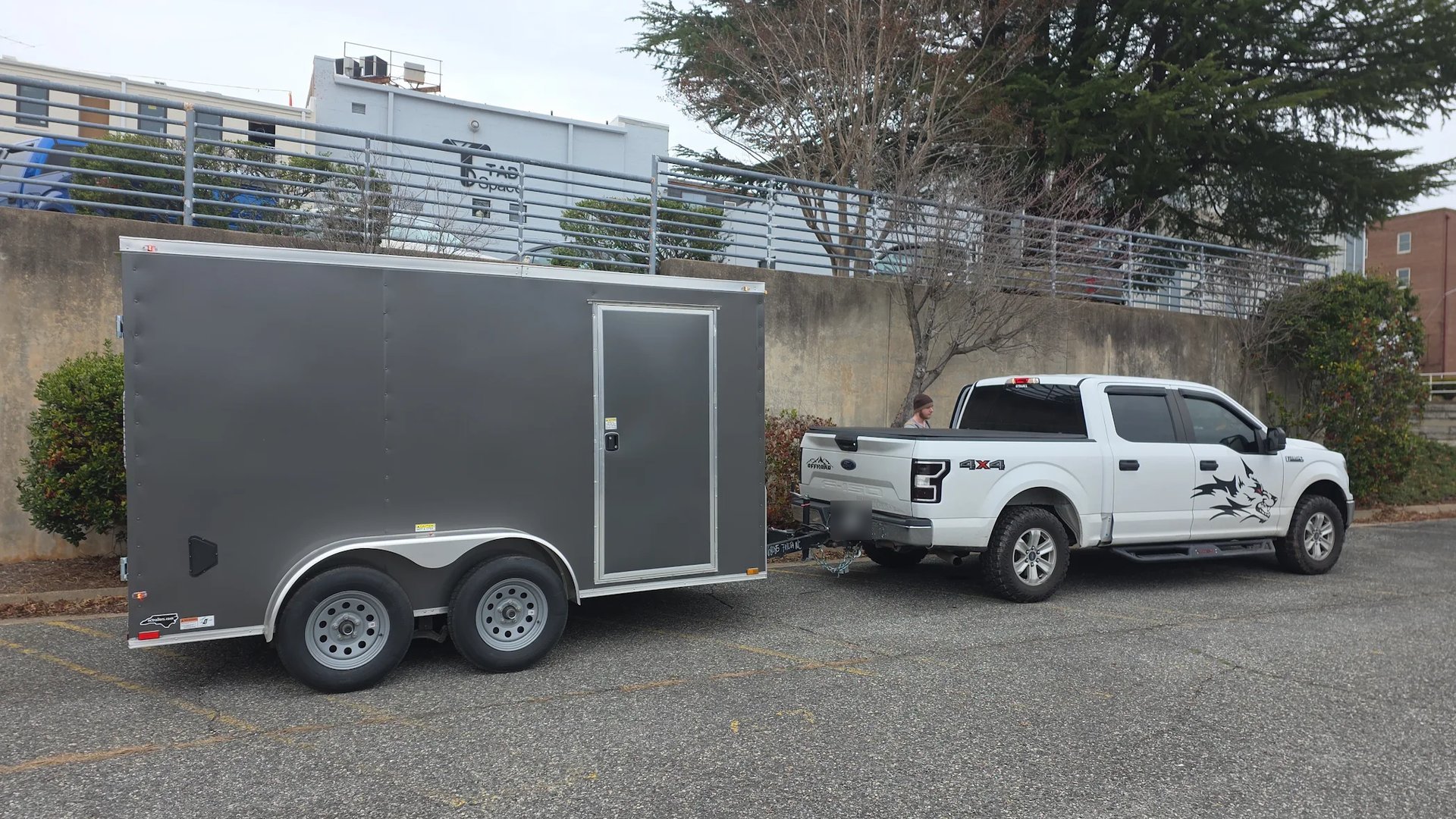


Single axle or tandem axle is one of the first calls a buyer has to make, and most people treat it as a price question. Tandem costs more, so single axle wins. That skips right past what actually decides which one fits the work: how much you need to carry, how the trailer behaves loaded at highway speed, how tight a space you have to back into, and how often it leaves the yard.
We carry both setups across our Big Tex, Air-Tow, and Currahee lines and our enclosed trailers at Thomasville and Winston-Salem. Here is what the second axle actually changes, and how to match the configuration to the work you do.
What the Axle Count Actually Changes
A tandem axle trailer has two axles set roughly 33 to 36 inches apart under the frame. A single axle trailer has one. That one difference changes how much the trailer can legally haul, how it behaves at speed, what happens when a tire lets go, and how tight it turns.
Start with GVWR, because that is where the gap shows up first. A single axle trailer in a standard utility or enclosed build usually tops out around 7,000 pounds. A tandem in the same footprint commonly rates 9,990 to 14,000 pounds. The second axle spreads the load across four tires instead of two, and that is what lets the trailer carry and stop more weight without being overworked.
Single Axle vs. Tandem Axle: Side-by-Side Comparison
| Factor | Single Axle | Tandem Axle |
|---|---|---|
| Typical GVWR range | 2,990–7,000 lbs | 7,000–14,000 lbs and up |
| Empty trailer weight | Lighter | 300–600 lbs heavier at the same size |
| Payload capacity | Lower | Higher at comparable GVWR |
| Purchase cost | Lower | $400–$800 more on average |
| Tire and brake maintenance | 2 tires, simpler | 4 tires, more brake surfaces |
| Tire blowout redundancy | None; a flat is an immediate problem | Second axle keeps the trailer stable |
| Turning radius | Tighter, easier in close quarters | Wider, needs more room to turn |
| Highway stability (loaded) | Less stable at speed | More stable, less sway |
| Best use | Light or occasional loads, tight-access jobs | Regular commercial work or heavy loads |
The Payload Difference in Practice
The payload gap between single and tandem at the same floor size is bigger than the GVWR numbers let on. A 7,000-pound GVWR single axle enclosed trailer that weighs 1,800 pounds empty gives you 5,200 pounds of usable payload. A 9,990-pound GVWR tandem version of the same trailer at 2,200 pounds empty gives you 7,790 pounds. That is roughly 2,600 more pounds you can put on the deck for about 400 pounds of extra trailer weight.
For a weekend hauler that margin rarely matters. For a trailer that works a job every day, it decides whether you are running at or past the limit every time it leaves the yard.
Highway Stability and the Loaded Trailer
A loaded single axle trailer is more prone to sway at highway speed than a comparably loaded tandem. The reason is simple. Two axles spaced apart create a wider base that resists side-to-side movement, while a single axle acts as one pivot point, so the trailer yaws more freely in crosswind, over uneven pavement, and through speed changes.
This does not make a loaded single axle trailer unsafe. Plenty of single axle trailers move down the road every day without trouble. It means the driver has to pay closer attention to load distribution and speed, and that a tandem at the same load tows with noticeably more confidence. If you regularly run loaded at highway speed, that stability is a real day-to-day and safety advantage.
The Tire Blowout Argument for Tandem Axle
This is the one most buyers never think about until it happens to them. On a single axle trailer, a blown tire means the trailer is down on one corner with nothing to carry the load, and you are stopping right where you are. On a tandem, a blowout on one tire still leaves three tires carrying the load. The trailer stays supported and controllable, which gives you time to slow down and get off the road before you stop.
That redundancy is worth real money if you haul on highways, run in remote areas, or work where a roadside stop with a loaded trailer turns into a serious problem.
Where Single Axle Makes More Sense
Single axle trailers are not a lesser choice. They are the right call for a specific kind of use. If your loads stay light, your hauls are short or local, and your tow vehicle is a half-ton or smaller, a single axle in the 3,500 to 5,000-pound payload range is plenty, and it is easier to tow, park, and store. The tighter turning radius also pays off in residential neighborhoods, tight driveways, and landscaping jobs where there is no room to swing a long trailer around.
Air-Tow single axle drop deck trailers are a good example. They are single axle by design, built so the deck lowers to the ground for walk-on or roll-on loading without ramps, which makes them a strong fit for solo operators moving equipment on and off all day.
The Cost Difference in Context
Tandem axle trailers usually run $400 to $800 more than the single axle version of the same trailer at the same size. That gap shrinks as the trailer gets bigger and the base price climbs. On a $3,500 single axle utility trailer, $600 is a 17 percent premium for the second axle. On a $9,000 enclosed trailer, that same $600 is under 7 percent of the price.
Look at it from the work side. If the trailer is going to run five days a week for landscaping or contracting, the extra payload and stability of a tandem pays for itself fast in fewer trips and fewer problems. The upfront price difference is rarely the right reason to buy single axle for commercial work.
Use Case Reference Guide
| Use Case | Recommended Config | Reason |
|---|---|---|
| Weekend homeowner hauls | Single axle | Light loads, infrequent use, easy storage |
| Landscaping crew, daily use | Tandem axle | Daily loading, highway use, payload demands |
| Motorsports, one vehicle | Single or tandem depending on car weight | Match GVWR and payload to vehicle curb weight |
| Contractor tool and material hauling | Tandem axle | Consistent heavy loads, highway stability |
| Light hobby or personal cargo | Single axle | Lower cost, easier towing with a smaller vehicle |
| Commercial enclosed cargo trailer | Tandem axle | Business use demands reliability and payload |
Finding the Right Configuration at NC Trailers
NC Trailers carries single and tandem axle configurations across its enclosed trailer inventory, landscape and utility trailers, and equipment trailer lines at both Thomasville and Winston-Salem. Big Tex Trailers builds both configurations across most of its product families, and the team at either location can walk through the GVWR and payload numbers on the trailers we have in stock right now.
If you need financing, NC Trailers handles it for both configurations through the trailer financing page. The monthly payment difference between a single and tandem at the same size is often small enough that the math favors the tandem for anyone doing regular commercial work. Ask the team to run both numbers before you decide, because the comparison is usually clear once you see the actual payments side by side.
Not sure whether you need one axle or two?
Call us, stop by either lot, or fill out the financing request just below and we will get right back to you.
 About the Author