


"Equipment trailer" and "flatbed trailer" get used like they mean the same thing, and they do overlap, but they describe two different things. "Equipment trailer" describes what the trailer hauls: wheeled or tracked equipment that loads onto the deck. "Flatbed" usually describes a deck style, a deckover where the deck rides over the wheels. A single trailer can be both at once. Here is how we sort it out at NC Trailers, and which units we actually stock at the Thomasville and Winston-Salem lots, from Nolan, Big Tex, Horizon, RawMaxx, Maxx-D, Superior, Southland, and Air-Tow.
What "Equipment Trailer" Means
An equipment trailer is defined by its job, not its deck. It is built to haul wheeled or tracked equipment that loads onto the deck and rides there: skid steers, mini excavators, tractors, mowers, and similar machines. That one purpose covers several builds. A fender (low-profile) equipment trailer drops the deck down between the wheels for a lower load height and an easier drive-on angle. A deckover equipment trailer rides above the wheels for a flat, full-width deck, and that is the build most people call a flatbed. A tilt trailer pivots its deck to the ground instead of using ramps. Any of those can be ordered as a bumper pull or a gooseneck, depending on weight and length.
So "equipment trailer" is the umbrella, and deckover, fender deck, tilt, bumper pull, and gooseneck are the configurations under it. Our fender equipment trailers run about 16 to 24 ft and 10K to 21K GVWR, like a Horizon HEH 8.5x22 at 21K or a Big Tex 14EH 7x16 with Mega Ramps, and most are bumper pull. Browse the equipment trailer inventory for what is on the lots now.
What "Flatbed" Means (and Why People Disagree on It)
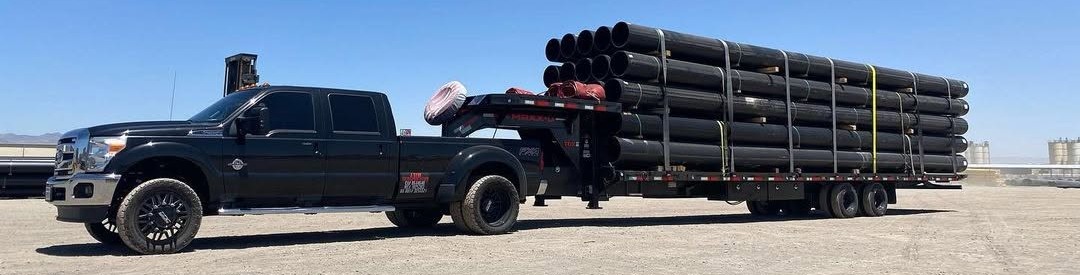
A flatbed is a deckover trailer, a deck that rides over the top of the wheels instead of down between them, so you get a flat full-width deck with no wheel wells to work around. Where the industry splits is on how strict the term is. Some people use "flatbed" to mean only a true deckover with no dovetail, no fold-up ramps, and no tilt, a deck you load strictly from the side or top with a forklift, crane, or excavator. Plenty of others use "flatbed" loosely for any deckover trailer, including ones with ramps, a tilt deck, or a dovetail. Both are common, so it is worth pinning down which one a buyer means.
However you define it, a deckover gets loaded primarily with a forklift, and with a crane or a loader when the job calls for it. We stock deckover equipment trailers from about 18 to 34 ft, like the Nolan 8.5x24 and 8.5x28 deckovers, the Big Tex 8.5x24, and the Superior 8.5x24 bumper-pull deckover. They show up in both the equipment trailer and gooseneck listings.
Deck Styles: Fender Deck vs. Deckover
Deck height is the practical fork in the road. A fender deck sits down between the wheels, which lowers the deck and cuts the ramp angle you need to drive a low machine on. That is why it is the common pick for skid steers and compact equipment. A deckover rides above the wheels, which raises the deck a little but gives you the full width with no wheel wells. Lower deck for an easy drive-on, deckover for a flat full-width surface.

Ramp and Tilt Options on Equipment Trailers
How a machine gets on the deck comes down to the ramp or tilt setup. Here are the common options and where each one fits.
| Ramp Type | How It Works | Best Application |
|---|---|---|
| Fold-down ramps | Hinged at the rear, fold flat for transport | General equipment, zero-turns, ATVs |
| Slide-in ramps | Store under the deck, slide out to load | Compact storage, lighter equipment |
| Mega Ramps | Wider, heavier-duty fold-down (a Big Tex feature) | Large equipment with a wide stance |
| Dovetail | Tapered rear deck section that cuts the loading angle | Low-clearance equipment, drive-off angle |
| Full tilt deck | Entire deck pivots to the ground, no separate ramps | Equipment with very limited ground clearance |
We stock tilt equipment trailers from RawMaxx, Big Tex, and Nolan.
Couplers: Bumper Pull vs. Gooseneck
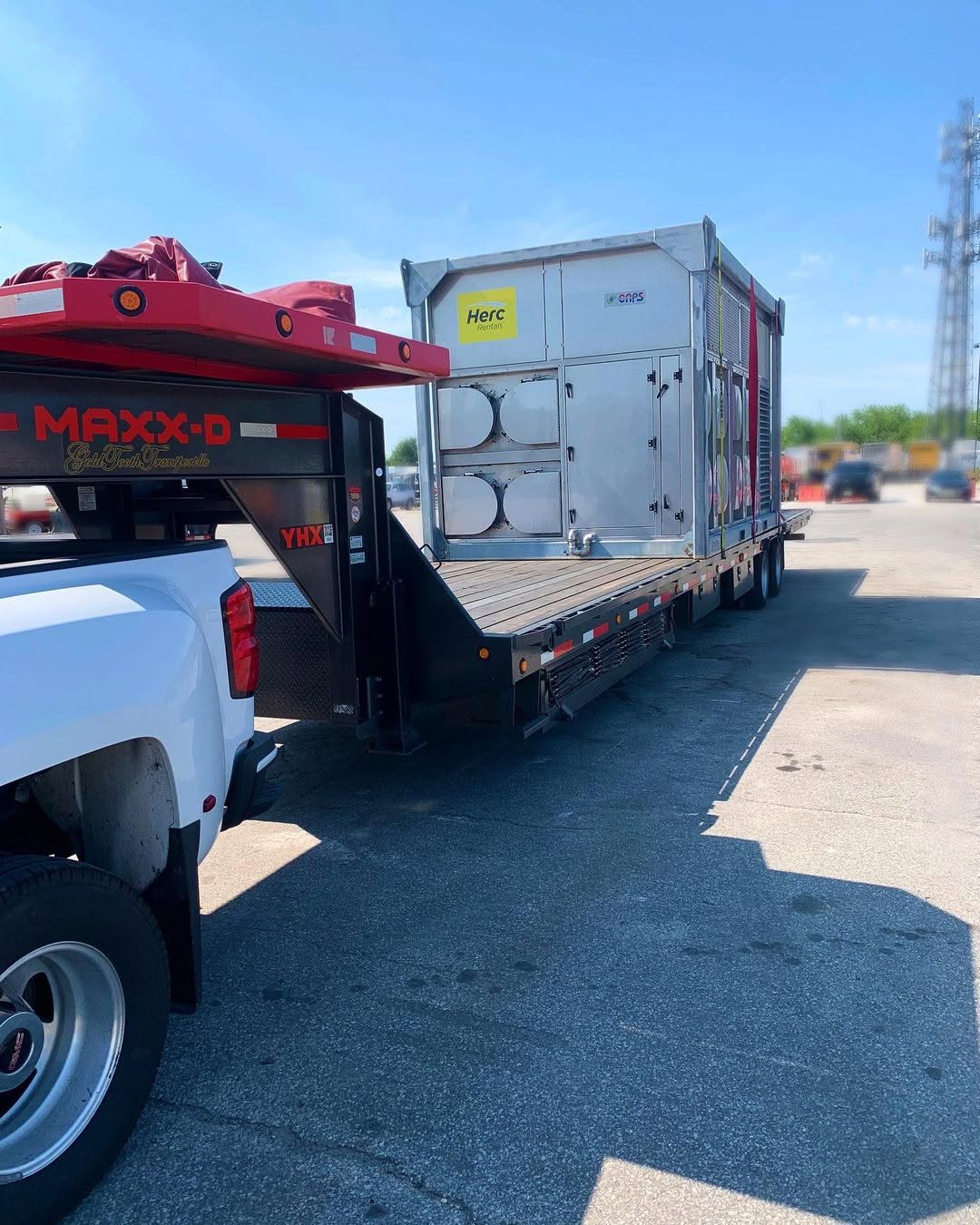
Both equipment trailers and flatbeds come with either a bumper pull or a gooseneck coupler. A bumper pull hooks to a ball mount behind the truck and covers most equipment trailers through the mid-weight range. A gooseneck hooks to a ball in the truck bed, which puts the load weight over the rear axle instead of behind it. That adds capacity and stability at length, so the heavier and longer deckovers usually run as goosenecks. Our gooseneck stock runs up to about 40 ft and 25,900 GVWR, like the Southland engineered gooseneck deckover, the Horizon FHZ 8.5x30, and Nolan deckover goosenecks. See the gooseneck inventory.
Drop Deck Trailers: Ground-Level Loading
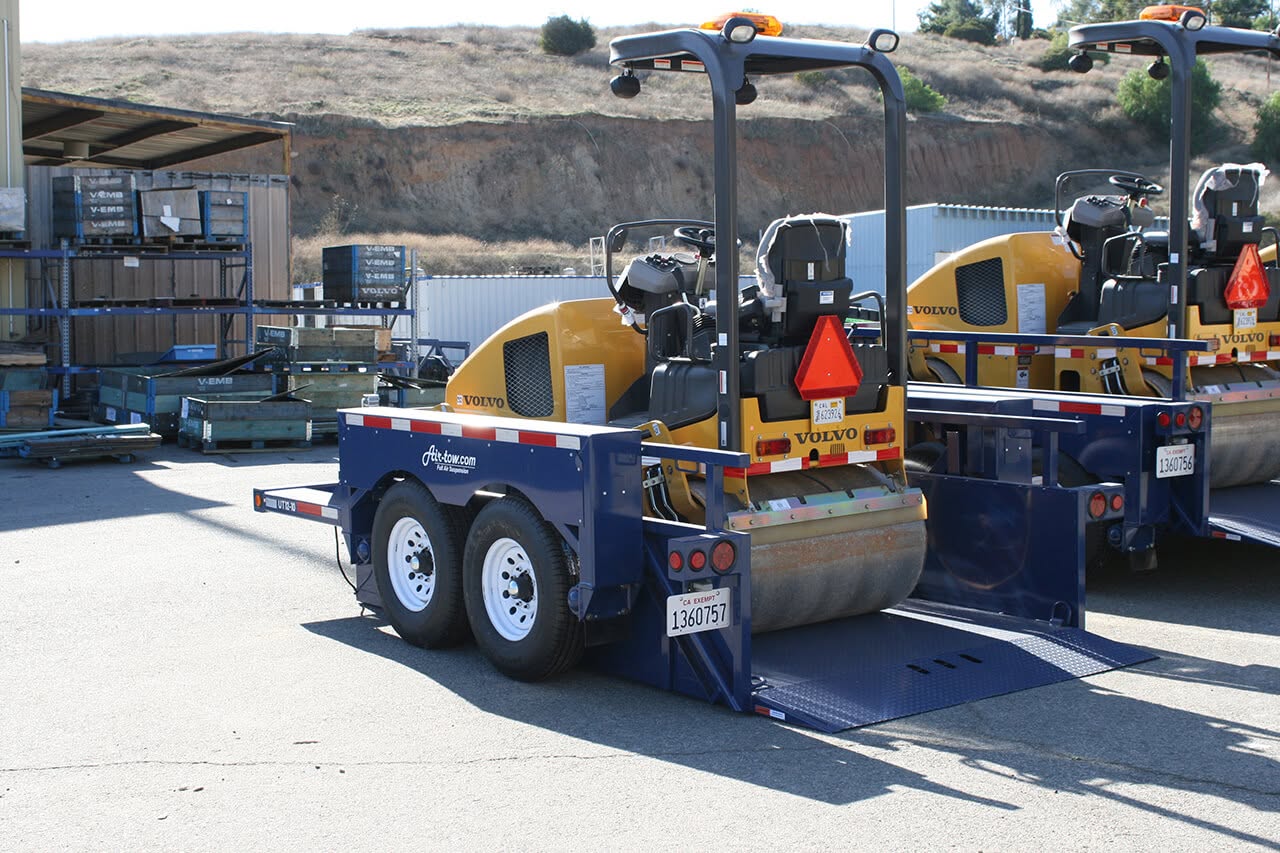
When we say drop deck, we mean Air-Tow trailers specifically. An Air-Tow uses a hydraulic system that lowers the entire deck level to the ground for loading in under 30 seconds, then raises it back to ride height for transport. That takes ramps out of the picture. You roll or push the load straight on at ground level, which helps with equipment that does not drive on well, with carts and scaffolding, and for anyone who would rather not deal with ramp angles. We stock Air-Tow drop decks from about 12 to 16 ft in open, dump, and enclosed configurations. Browse the drop deck inventory.
Side-by-Side Comparison
| Feature | Equipment Trailer | Standard Flatbed |
|---|---|---|
| Primary purpose | Drive-on equipment loading | Side-load or crane-load cargo |
| Loading method | Ramps, dovetail, or tilt deck | Forklift, with a crane or loader when needed |
| Deck height | Lower, for an easier drive-on angle | Deckover height, above the wheels |
| GVWR range (common) | 7,000 to 25,900 lbs | 7,000 to 25,900 lbs |
| Best for | Wheeled and tracked equipment | Lumber, pipe, steel, palletized cargo |
| Typical ramp types | Fold-down, slide-in, Mega Ramps, dovetail | None standard |
| Towing requirement | Half-ton to one-ton pickup | Three-quarter to one-ton truck |
Which One Is Right for Your Work
It comes down to how you load. If you are driving wheeled or tracked equipment on and off, an equipment trailer with the right deck and ramps is the tool. A deckover with ramps is the closest thing to a do-it-all unit, since you get the flat full-width deck for materials and still drive equipment on when you need to. If your loads are lumber, pipe, steel, or palletized freight that a forklift sets on the deck, a deckover flatbed is the better match. And when you want ramp-free loading at ground level for a machine that does not drive on well, the Air-Tow drop deck is the answer. If you are not sure which fits, tell the team what you are hauling and how you load it, and we will point you at the right deck.
Equipment Trailers and Financing at NC Trailers
We carry equipment trailers, deckover flatbeds, tilts, and Air-Tow drop decks at both Thomasville and Winston-Salem, from Nolan, Big Tex, Horizon, RawMaxx, Maxx-D, Superior, Southland, and Air-Tow. Most of these are financeable, and we work with multiple lenders across credit tiers. If you want to get the numbers going before you visit, start on the trailer financing page, then come walk the lot and we will match the deck to the work.
Not sure if you need an equipment trailer or a flatbed?
Call us, stop by either lot, or fill out the financing request just below and we will get right back to you.
 About the Author