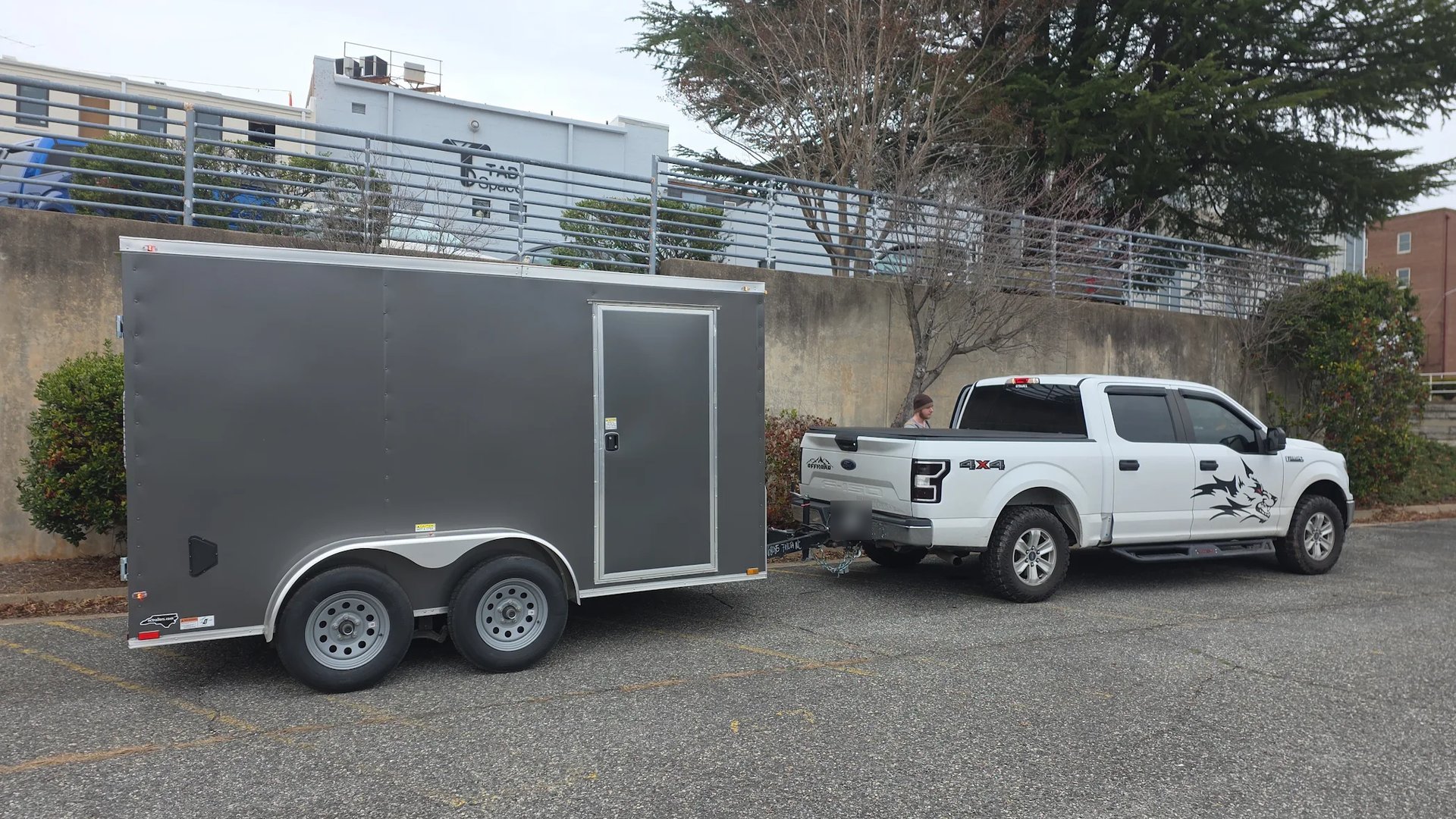

Most people picture an enclosed trailer as a box on wheels for hauling gear from one job to the next. That is one use, and it is the least interesting one. On our lots in Thomasville and Winston-Salem we watch enclosed trailers leave as mobile workshops, rolling storefronts, locked overnight storage, race haulers, and the one piece of equipment a small business runs its whole operation out of.
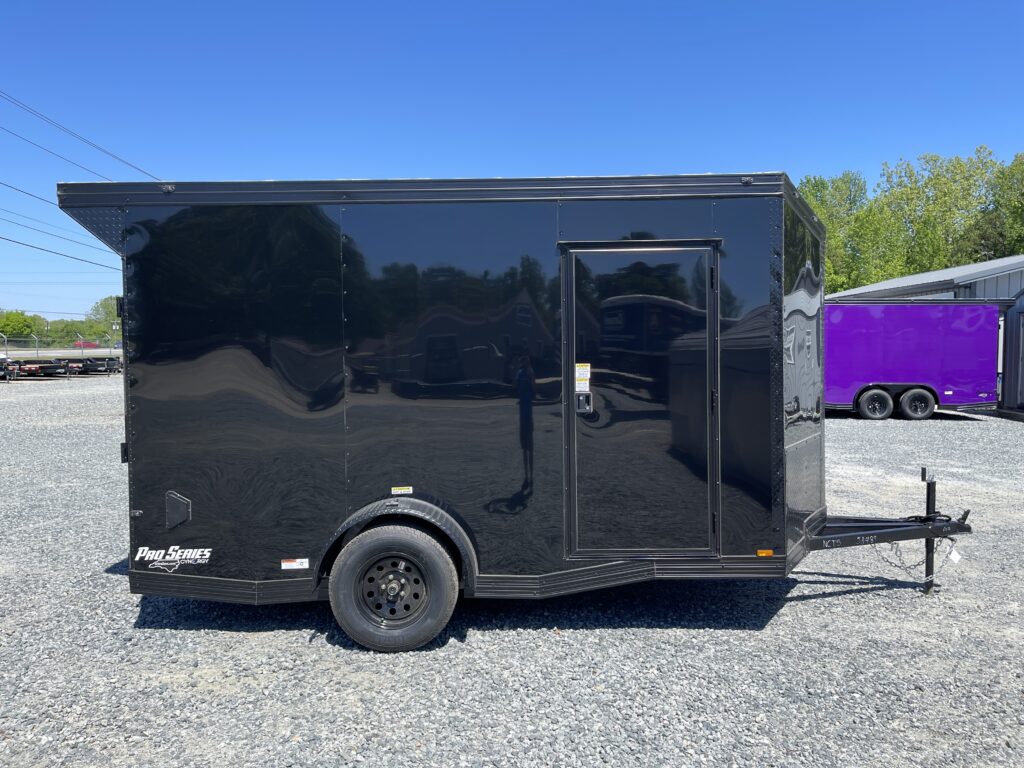
We carry enclosed trailers in sizes from 6x12 to 8.5x24, in steel and aluminum, from the all-aluminum Alcom Cargo Pro Stealth car hauler to steel-frame cargo trailers from Cynergy Cargo and Quality Cargo. The seven industries below are the buyers we see most, and what an enclosed trailer actually lets each of them do.
Industry Snapshot: Who Uses Enclosed Trailers and Why
| Industry | Primary Trailer Use | Key Feature That Matters |
|---|---|---|
| Landscaping | Equipment and tool transport | Secure overnight storage, branding surface |
| HVAC and plumbing | Mobile parts and tool storage | Organized interior, lockable, weatherproof |
| Mobile pet grooming | Rolling workspace | Ventilation, plumbing access, interior build-out |
| Motorsports | Vehicle and gear transport | Interior height, tie-down points, ramp capacity |
| Catering and food service | Food transport and prep staging | Temperature-stable interior, NSF access |
| Construction and roofing | Crew supply and equipment transport | Heavy-duty floor, high payload, organized storage |
| Event and production | AV equipment and staging gear | Custom interior, climate protection, security |
1. Landscaping: Equipment Protection and a Rolling Billboard
Landscaping is the most common commercial use for enclosed trailers we see in North Carolina, and it goes beyond keeping the rain off. An enclosed trailer keeps $15,000 to $40,000 of equipment locked up overnight, the zero-turn, walk-behinds, blowers, trimmers, and hand tools, without paying for a storage unit. For a crew that bounces between job sites and does not always get back to the shop at night, the trailer is the storage unit.
The second payoff is branding. A wrapped enclosed trailer with your name, number, and logo on the side is a billboard that drives the whole service area all day and parks in front of every job. You cannot wrap an open trailer the same way. We sell open landscape trailers too for crews that load that way, but the ones moving to enclosed for the security and the advertising will find both steel and aluminum enclosed options in our inventory.
2. HVAC and Plumbing: The Mobile Parts Room
HVAC and plumbing contractors run enclosed trailers as a mobile parts room. Fittings, pipe, wire, tools, and diagnostic gear stay organized and locked, ready on every call. The alternative is a cargo van, which carries less and adds another depreciating vehicle to the books. An enclosed trailer behind the work truck gives the crew more room for parts at a fraction of what a van costs.
Interior organization is where these buyers focus. Shelving, bin storage, and ceiling tracks for pipe and conduit turn the trailer into a parts room that stays stocked and loaded overnight instead of getting torn down and restocked at the end of every day. For a two-person crew running five calls a day, that time adds up over a season.
3. Mobile Pet Grooming: A Business in a Trailer
Mobile dog grooming is one of the fastest-growing uses for enclosed trailers we see, and it shows what the box can become once a buyer stops thinking of it as cargo space. A grooming trailer is a full workspace built inside the shell, tub, grooming table, dryer, water supply, and waste containment, parked in the client's driveway and running on its own power and water.
It costs less to build out and run than a purpose-built grooming van, and at the end of the day the trailer unhooks and leaves the truck free for everything else. For a groomer getting started, that lower entry cost is often what makes the business work in the first year.
4. Motorsports and Track Days: Protection for High-Value Vehicles
North Carolina's motorsports crowd, thick around Charlotte but spread across the state, is a steady market for enclosed car haulers. The logic is simple. A race car or collector vehicle worth $25,000 to $250,000 travels closed up, not strapped to an open deck where road debris, weather, and every set of eyes at the gas station get at it.
Interior height matters more here than in almost any other use. Seven feet of clearance fits most production-based race cars and lets a crew work on the car inside the trailer between sessions. The Alcom Cargo Pro Stealth aluminum car hauler weighs less empty than a steel trailer at the same GVWR, which puts more of the rating toward the car and the gear instead of the trailer itself.
5. Catering and Food Service: Temperature Stability and Staging
Caterers use enclosed trailers two ways: hauling prepared food and supplies to an event while holding temperature, and staging a service setup at a venue with no kitchen. A closed, insulated box holds temperature far better than an open trailer or an uncovered truck bed, which matters when the food has to arrive inside a safe range.
At outdoor events, festivals, and private venues, the trailer doubles as a backstage workspace: prep table, chafing fuel, organized equipment, and a locked staging area that stays accessible the whole event. Most caterers who move up from an open trailer find the convenience pays for the difference inside one busy season.
6. Construction and Roofing: The Crew Supply Trailer
Construction and roofing crews use an enclosed trailer as a rolling supply room and gang box. Power tools, safety equipment, fasteners, underlayment, and staging materials that need to stay secure and reachable on multi-day jobs live in the trailer instead of getting hauled back and forth from a shop. On a site where tools walk off overnight, a locked enclosed trailer is the practical answer.
Roofers especially lean on the trailer for steep-pitch work, where staging material at the base of the building keeps the crew moving. A well-organized trailer parked on site keeps everyone supplied without running back to the supplier, and the locked interior protects the expensive tools an open trailer or an unlocked job box leaves exposed.
7. Event and Production: AV Equipment and Staging Gear
Event production companies, AV crews, wedding vendors, and trade show exhibitors move gear that cannot take weather, dust, or road grime: speakers, lighting rigs, staging, displays, and rental inventory. The alternative, a purpose-built cargo van or freight shipping, is either pricier or harder to control for an independent operator.
An enclosed trailer lets an event company pack a complete setup, haul it to the venue, unload in order, and reload at the end of the night as one self-contained operation. For an operator running several events a weekend, the trailer is the logistics asset the whole schedule depends on.
Choosing the Right Enclosed Trailer for Your Industry
The right configuration comes down to what you are hauling, how you load it, and how much payload you need. Interior height decides whether you can stand up inside and whether tall cargo clears the ceiling. Floor size decides how much goes on one load. GVWR and empty weight decide your net payload and the truck it takes to pull it.
On nearly every enclosed trailer the outer skin is aluminum no matter the price, so the real choice is the frame. An all-aluminum trailer like the Alcom Cargo Pro weighs less at the same GVWR, which puts more of the rating toward your payload, and it shrugs off salt and coastal air better over the long haul. A steel frame costs less up front and is easier to get welded anywhere, which suits buyers watching the purchase price first.
Browse the enclosed trailer inventory to see what is on the lot right now across sizes and configurations, and if financing is part of the plan, the trailer financing page has terms for personal and business buyers. If you are buying for a business, ask your CPA about Section 179. A trailer used for business can often be written off in the first year, and trailers rated over 14,000 pounds GVWR are not capped the way work vehicles are. We can tell you the trailer's specs, but the tax treatment is a question for your accountant.
 About the Author