
As with any vehicle, properly working brakes is one of the most important parts of safely towing a trailer. Whether you’re hauling equipment, landscaping gear, or a fully loaded enclosed trailer, the brakes must work reliably to protect you, your cargo, and everyone else on the road. At NC Trailers, we help North Carolina drivers from Thomasville, Winston-Salem, Charlotte, Greensboro, and beyond keep their trailers in top condition through expert brake inspections and maintenance.
What Is a Trailer Brake System?
A trailer brake system adds extra stopping power when towing heavy loads. It works alongside the tow vehicle’s brakes to shorten stopping distance, prevent sway, and maintain control. In most states, trailers that have a gross weight over 3,000 lbs are required to have brakes and a breakaway. That is the number to plan around. North Carolina's own line is two tons (4,000 lbs), but South Carolina requires brakes on all wheels and a breakaway on any trailer over 3,000 lbs gross (S.C. Code 56-5-4850), so a trailer that is legal in NC can stop being legal at the state line. That is why new trailers are almost always built to the 3,000 lb rule. More on NC's rules: North Carolina trailer laws. Any trailer with brakes is required to have a breakaway system. These systems prevent the trailer from pushing against the tow vehicle during stops—especially on hills or when hauling heavy cargo.
Main Components of a Trailer Brake System
- Brake assemblies (each wheel, on 1 or more axles)
- Wiring harness connecting trailer and vehicle
- Brake controller inside the tow vehicle (electric brakes) or a surge actuator on the trailer tongue (surge brakes)
- Breakaway system for emergency stops
Electric brakes are most common on utility, cargo, and equipment trailers, while hydraulic brakes appear on boat trailers and heavy-duty haulers.
Types of Trailer Brakes
Electric Brakes
Electric brakes use electromagnets that activate when the driver presses the brake pedal. They require a brake controller inside the tow vehicle to regulate power. Electric brakes are dependable in most conditions and are standard on many equipment trailers and enclosed models.
Hydraulic (Surge) Brakes
Surge brakes are hydraulic, but the pressure does not come from the tow vehicle. A surge actuator on the trailer tongue makes it. When you slow down, the trailer pushes toward the truck, the actuator telescopes together, and that push presses on the actuator's own master cylinder, which sends brake fluid to the trailer brakes. Because the push is what applies them, surge brakes need no brake controller and no power from the truck. They are common on boat trailers because they keep working after being submerged, while electric brakes corrode much faster when they are dunked at the ramp over and over.
Backing up takes some planning, because backing pushes the trailer toward the truck the same way stopping does. Dexter pairs drum-brake surge actuators with free-backing brakes, and its disc-brake actuators come with a reverse solenoid wired to the tow vehicle's reverse lights. Dexter also warns that the actuator will not operate when you are backing down a hill, so your truck's brakes are doing all of the stopping. Source: Dexter light duty surge actuator installation manual.
Electric-Over-Hydraulic Brakes
A hybrid system combining both methods. An electric signal triggers hydraulic pressure through an actuator. This setup provides smoother braking control for large loads.
How the Brake Controller Works
The brake controller, installed inside the vehicle, manages how much braking force is applied to the trailer. When you step on the pedal, the controller sends a signal to the trailer brakes.
Types of controllers:
- Proportional controllers: Match the trailer’s braking force to the tow vehicle’s deceleration.
- Time-delayed controllers: Apply braking power gradually based on a preset time curve. Most modern tow vehicles use proportional controllers for smoother and safer braking performance.
Common Reasons for Trailer Brake Service
Trailer brakes wear down over time and need regular attention. Ignoring service warnings or noises can lead to unsafe driving and expensive repairs.
Faulty Wiring and Connections
Electrical issues are the top cause of brake problems. Corroded connectors, damaged wires, or loose grounds prevent proper power flow between the vehicle and trailer. Moisture and road salt accelerate corrosion.
Fix: Inspect the trailer plug and 7-pin connector monthly. Clean terminals, check for frayed wires, and ensure tight connections.
Brake Controller Malfunctions
Controllers can fail due to age, internal damage, or calibration errors. A failing unit might send inconsistent voltage to the brakes or stop working altogether.
Fix: Test the controller annually with a multimeter. Replace units every 5–7 years or sooner if warning lights appear.
Worn Brake Components
Time and friction cause pads, magnets, and drums to wear out with use. Over time, weak magnets or thin brake shoes cause poor braking and uneven stopping.
Fix: Replace brake shoes when the friction material drops below 1/8 inch. Dexter's service manual calls for replacing magnets when they wear unevenly, or as soon as any part of the magnet coil shows through the friction facing, and for replacing them in pairs on both sides of an axle.
Troubleshooting Trailer Brake Problems
Spotting early warning signs helps prevent accidents. Look out for:
- Pulling to one side while braking
- Longer stopping distances
- Grinding or squealing noises
- Dashboard brake warnings
- Hot smells or visible smoke from wheels
Quick Inspection Steps
- Check all wiring for corrosion or damage.
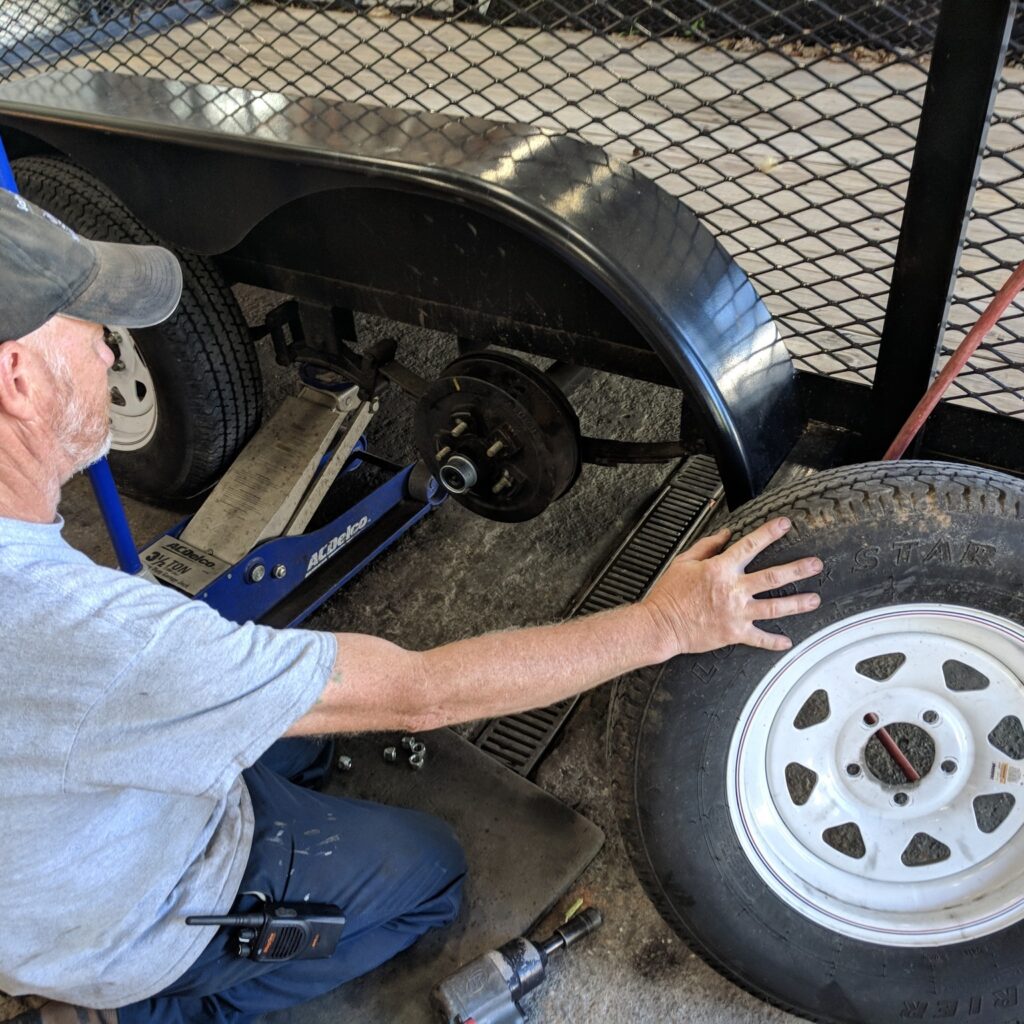
- Remove wheels to inspect brake shoes and drums.
- Test voltage at the trailer plug (should reach 12 volts when braking).
- Inspect hydraulic lines for leaks or low fluid.
- Manually adjust brakes to correct tight or loose settings.
Performing Trailer Brake Service
Trailer brake service usually includes replacing worn parts, fixing electrical issues, and restoring solid ground connections.
Replacing Brake Components
Common replacements include:
- Brake shoes and hardware
- Return springs
- Magnets or coils
- Wheel bearings
- Brake drums or rotors
Clean all surfaces with brake cleaner before installation. Apply a light layer of high-temp brake grease to contact points.
Fixing Electrical Problems
Test voltage from the brake controller to each wheel. Replace any corroded or broken wires using proper gauge replacements. Apply dielectric grease to terminals to prevent future corrosion.
Restoring Ground Connections
Clean rust from frame grounds and ensure resistance is less than one ohm between the brake magnets and the trailer frame. A poor ground connection can make brakes feel weak or unresponsive.
Preventive Maintenance and Safety Tips
Routine inspections can prevent major repairs and keep your trailer compliant with safety standards.
Inspection Schedule:
- Every 3,000 miles: Visual inspection of pads, drums, and wiring
- Every 6 months: Magnet and drum cleaning
- Every 12,000 miles: Full brake adjustment
Key Warning Signs
- Grinding noises when braking
- Trailer pulling to one side
- Spongy brake pedal feel
- Longer stopping distances
If you notice any of these, it’s time to schedule professional service.
Maintaining the Brake Controller
Test the brake controller before each trip:
- Use the manual override to confirm wheel lockup.
- Adjust gain settings to match trailer weight.
- Ensure proper synchronization between vehicle and trailer.
Replace controllers every 5–7 years and clean connections twice a year to maintain reliable function.
Safety Reminder: Schedule Professional Trailer Brake Service
Even with regular maintenance, professional inspection ensures your brakes meet safety standards. NC Trailers’ service department in Thomasville and Winston-Salem offers full trailer brake service and repairs, including diagnostics, part replacements, and controller calibration.
If you experience pulling, vibration, or delayed braking, schedule an appointment before your next trip. Our certified technicians handle all major trailer brands and brake systems to keep you road-ready and compliant.
Why Choose NC Trailers for Brake Service
- Certified technicians for all trailer types
- Competitive pricing and honest quotes
- Fast turnaround on brake repairs
- Genuine replacement parts
- Trusted by drivers statewide for safety and reliability
For those financing trailer upgrades or major repairs, explore financing options to make maintenance more affordable.
Brakes not feeling right on your trailer?
Call us, stop by either lot, or fill out the financing request just below and we will get right back to you.
 About the Author