
If you are looking up trailer repair near you, something already feels off. A wobble at highway speed, a light that will not stay working, a bunk worn down to bare wood. Before you book the appointment, fifteen minutes with a flashlight will usually tell you whether this is a driveway fix or a shop job, and it will tell the shop a lot more than "it makes a noise." NC Trailers services trailers at Thomasville and Winston-Salem, and this is the walkaround we would do first.
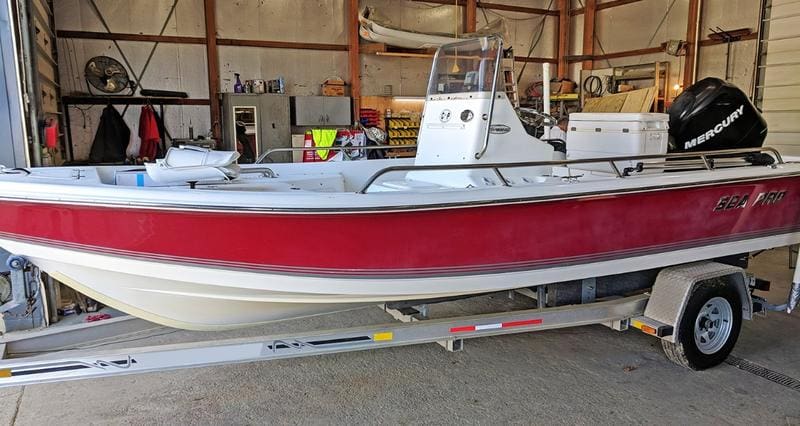
We service every kind of trailer that comes through the gate, including boat trailers, campers, RVs, horse trailers, and livestock trailers. Boat trailers get the most attention below because they are the hardest case. A boat trailer gets backed into water on purpose, over and over, which does things to hubs, wiring, and frame hardware that a road-only trailer never sees. If you can inspect a boat trailer properly, everything else is easier.
What Sends Trailer Owners to a Shop
Wheel Bearing Wear
Bearings are the number one repair call. On a boat trailer the hub goes underwater every launch and retrieval, which washes grease out and lets water in, and water in a bearing means pitting and then failure. On a road-only trailer it takes longer but gets there the same way, through age, miles, and rain. A bearing that has started to go usually announces itself with a low hum or a grind that changes pitch with speed.
Repack schedule is not the same for everybody. Freshwater or saltwater, repack every 6 months or 12,000 miles, whichever comes first. Saltwater or brackish: also inspect every three months. Salt does not wait.
Bunks, Rollers, Lights, and Wiring
Bunks and rollers wear from the friction of loading and unloading, and worn carpet or a cracked roller lets the hull sit crooked or rub the frame. Wiring is the other constant. Boat trailer harnesses get dunked on nearly every trip, so corrosion gets inside connectors and light housings long before anything looks wrong from the outside. On any trailer, a single bad ground can knock out several lights at once and make a five dollar problem look like a wiring nightmare.
Quick Checks You Can Do Before Calling a Shop
Get the boat off, grab a flashlight, and work through this list. Write down what you find, because handing a shop a specific symptom saves diagnostic time and money.
| Check | How | What a Bad Result Means |
|---|---|---|
| Bearing play | Grab each wheel at 12 and 6 o'clock and rock it | Any noticeable play means the bearing or the adjustment needs attention now |
| Bearing noise | Spin the wheel by hand and listen | Grinding or roughness means the bearing is already damaged |
| Hub temperature | Touch each hub after a short drive | One hub noticeably hotter than the others is friction, and a bearing that fails on the road can take the wheel with it |
| Seals | Look for grease residue behind the hub | A failed seal means water has probably already gotten in |
| Lights | Plug into the truck, run every function with someone watching from behind | Several lights out at once usually points to one bad ground, not several bad bulbs |
| Bunks and rollers | Look for cracked carpet, exposed wood, rollers that will not spin | The hull is sitting on something it should not be |
| Frame | Flashlight on welds, crossmembers, and any low spot that holds water | Flaking or pitted rust at a weld is structural, not cosmetic |
| Tires | Check tread wear across the full width, and check the date code | Uneven wear points back at alignment or a bearing. Replace trailer tires at six years regardless of tread. |
| Tongue jack | Crank it up and down under load | Grinding, sticking, or a jack that will not hold is a cheap fix worth bundling into the same visit |
That tire date code catches people out. Trailer tires age out before they wear out, and NHTSA and the major tire makers put the replacement interval at six years no matter how much tread is left. A trailer that sits between trips is exactly the case where this bites.
Signs That Point Specifically to a Bearing or Axle Problem
Some symptoms are not ambiguous. A hub that is hot to the touch after a short drive is bearing friction. Play when you rock the wheel, a grind or squeal that tracks with speed, or the trailer pulling to one side under normal towing all point at the bearings or the axle. Grease leaking from the hub cap or around the bearing, especially right after you pull the boat out of the water, means the seal is done and water is already in there.
Worth knowing before you call around: if an axle is bent, it gets replaced, not straightened. Torsion axles cannot be repaired in the field at all. On a spring axle, welding a spindle or straightening the tube is technically possible, but a welded spindle rarely matches factory alignment and you find out later through uneven tire wear, and straightening pushes the steel past its yield strength a second time, leaving that bend weaker than it left the factory. By the time you pay for either job you are close to the cost of a new axle with a worse result. We replace them.
Saltwater vs. Freshwater Wear: Why Location Matters
Where you launch matters as much as how often you tow. Saltwater eats hubs, wiring, and frame hardware far faster than freshwater, which is why coastal owners add a three-month inspection on top of the six-month repack every trailer should get. If you run to the coast, rinse the trailer with fresh water after every saltwater launch. It is the cheapest maintenance you will ever do.
When DIY Ends and a Shop Visit Is the Safer Call
Repacking a bearing or replacing a bulb is well within reach with basic tools. Once you are dealing with the axle itself, a hub that will not stay tight after a repack, or wiring that keeps failing after you have checked the obvious connectors and grounds, bring it in instead of chasing it. Towing on a suspect axle or bearing is a safety problem, not an inconvenience. Same goes for structural rust: surface rust you can wire-brush and treat is a completely different animal from rust that has taken metal out of the frame, and telling them apart takes a trained eye and sometimes a pick.
NC Trailers' Service Locations in Thomasville and Winston-Salem
If your walkaround turned up something past a simple fix, bring it to us. We handle bearings, axles, brakes, wiring, lights, and frame work at both locations, and you can read more about what a boat trailer repair visit covers. Bearing and axle work ties into general axle service, and if the problem is electrical, our guide to troubleshooting trailer light wiring problems covers the same connector and ground checks. See our full trailer service lineup, and call ahead so we can have the right parts on hand.
Found something on your walkaround?
Call us, stop by either lot, or fill out the financing request just below and we will get right back to you.
 About the Author